A Valentine’s table does not need to look like it came from a restaurant or require a cabinet full of decorations. In a smaller home, the dining table often serves more than one purpose. It may become a workspace during the day, hold everyday meals, or sit close enough to the living area that every decorative choice affects the whole room. That is why I prefer seasonal styling that feels special without creating clutter.
Valentine’s Day table setting ideas can be simple, personal, and surprisingly affordable. A soft table runner, warm candlelight, fresh flowers, folded napkins, and a few thoughtful details can change an ordinary table into a setting that feels ready for a February dinner. You also do not need to use bright red on everything. Softer blush tones, deep burgundy, cream, natural wood, and warm metallic details fit many modern homes.
In this article, I am sharing seven practical ways to style a Valentine’s table with ideas that work especially well in apartments, townhouses, and homes with limited dining space. You will find budget-friendly options, realistic decorating lessons, and simple styling choices that make the table look intentional while still leaving room for dinner.
1. Start With a Simple Color Palette
The easiest way to make a Valentine’s table look pulled together is to choose your colors before buying decorations. Early on, I made the mistake of bringing home red napkins, pink plates, heart shaped decorations, and shiny accessories without checking how they worked together. On the table, everything competed for attention.
Now I start with a neutral base. White, cream, beige, or natural wood gives the table room to breathe. Then I add one main Valentine’s color and one supporting accent.
For example, a warm and modern combination could include:
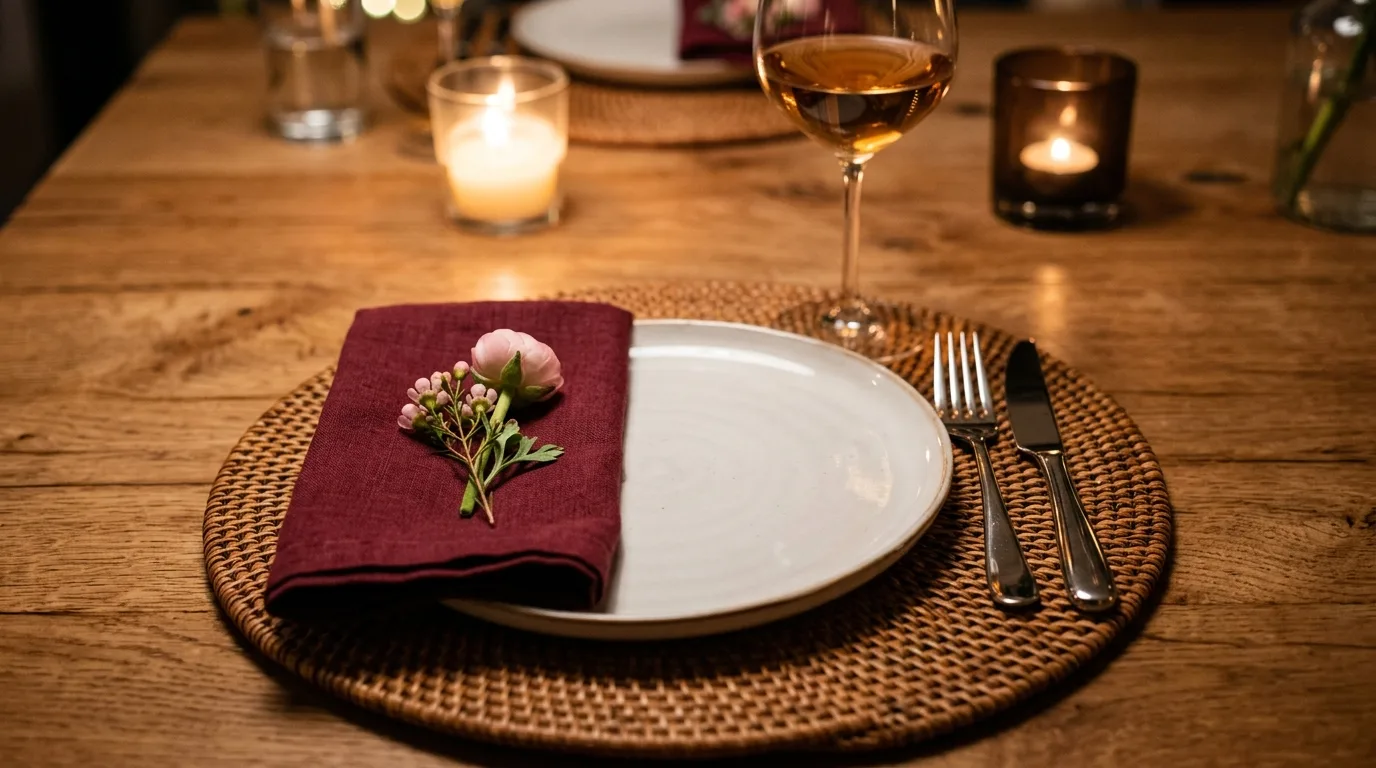
- Cream plates with burgundy napkins
- A natural wood table with blush flowers
- White dinnerware with muted red candles
- Beige linens with soft pink glassware
You do not need to buy a complete matching set. In fact, mixing existing pieces often creates a more relaxed and realistic look. A set of plain white plates can work for almost every holiday, while seasonal napkins or candles add the February mood.
For a budget-friendly update, start with one item under $20. A new table runner, cloth napkins, or small candleholders can change the appearance of the entire setup. Target, HomeGoods, and our local Goodwill can all be useful places to look, depending on what fits your budget.
The main lesson is to limit the number of strong colors. Let one or two shades carry the Valentine’s theme instead of turning every item into a seasonal statement.
2. Layer the Table With Everyday Dinnerware
You do not need expensive dinnerware to create an attractive Valentine’s table. Layering what you already own can make a regular plate look more intentional.
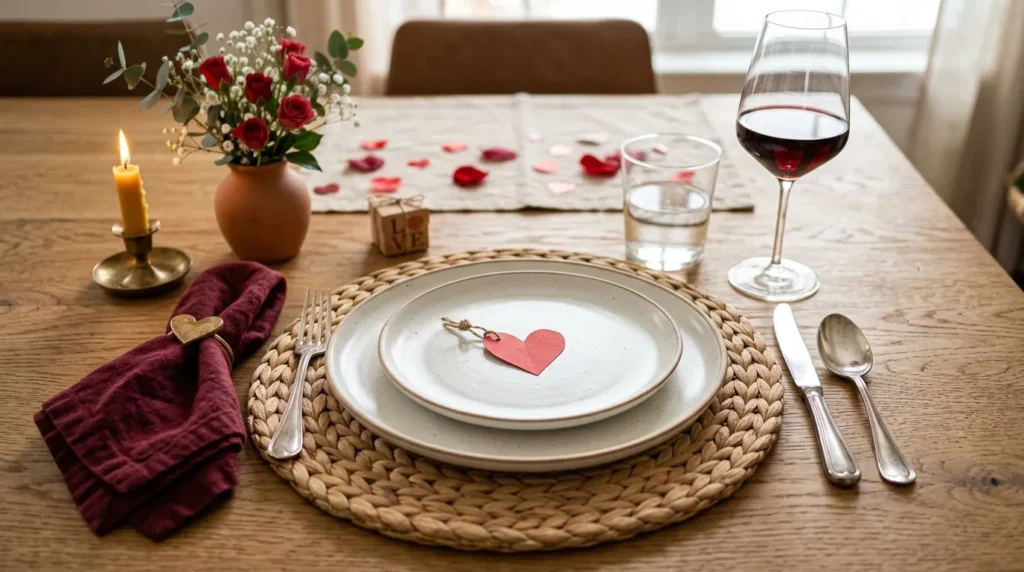
I usually begin with a placemat or charger, then add a dinner plate and smaller plate if the meal calls for one. A folded napkin finishes the place setting without requiring more decorations.
For a modest dining table, I avoid oversized chargers. They can make each place setting feel crowded and leave little room for serving dishes. Measure the table before buying anything large, especially if you have four or more place settings.
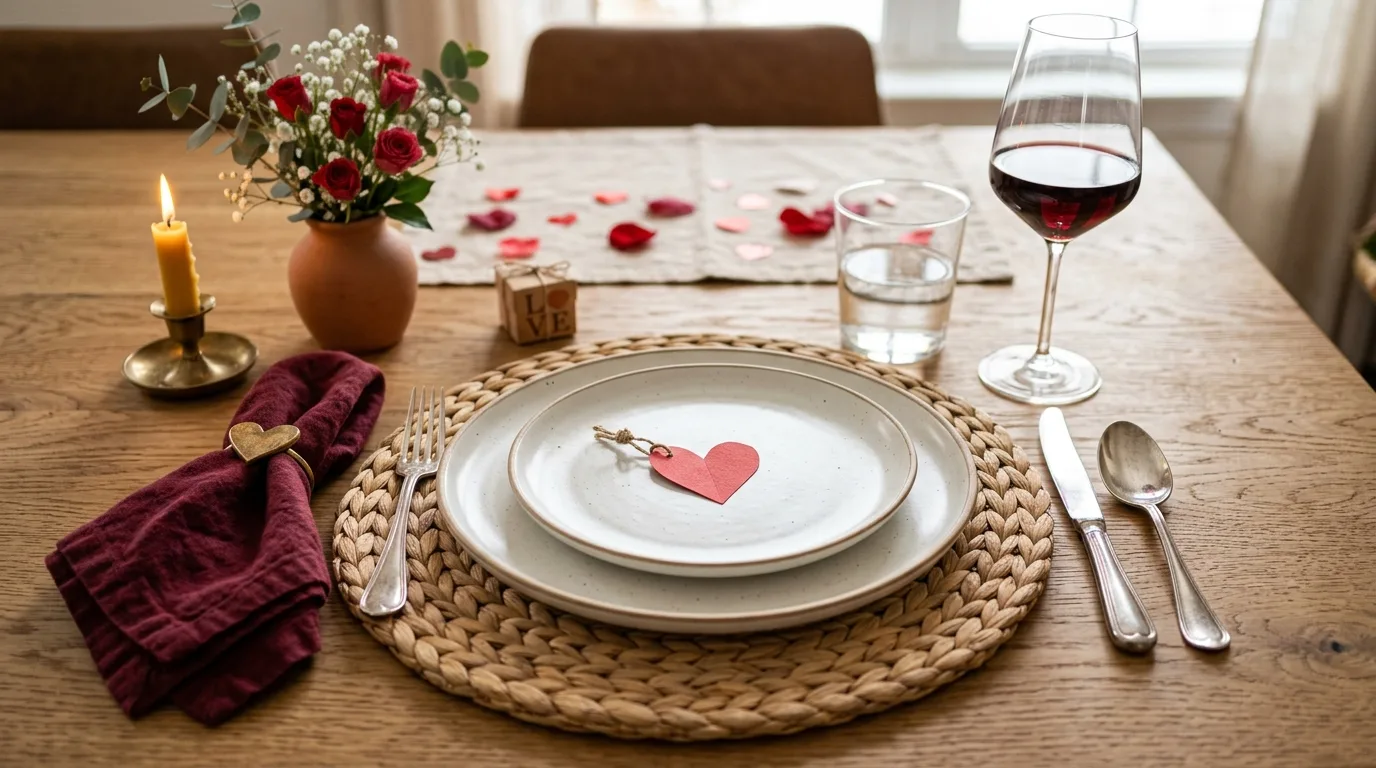
One arrangement might include a woven placemat, a white dinner plate, a small salad plate, and a burgundy cloth napkin. The colors feel seasonal, but the plates still work throughout the year.
I once bought larger decorative chargers because they looked great online. After placing them on our table, there was barely enough room for glasses and serving bowls. They looked good for about thirty seconds, then became completely impractical. That taught me to think about how the table will actually function.
If decorative chargers are outside your budget, use a simple placemat or even a clean piece of textured fabric. A set of reusable placemats for around $15 to $30 can work for Valentine’s Day and many other occasions.
For me, a good table setting should look finished without making guests wonder where to place their food.
3. Add a Low Floral Centerpiece
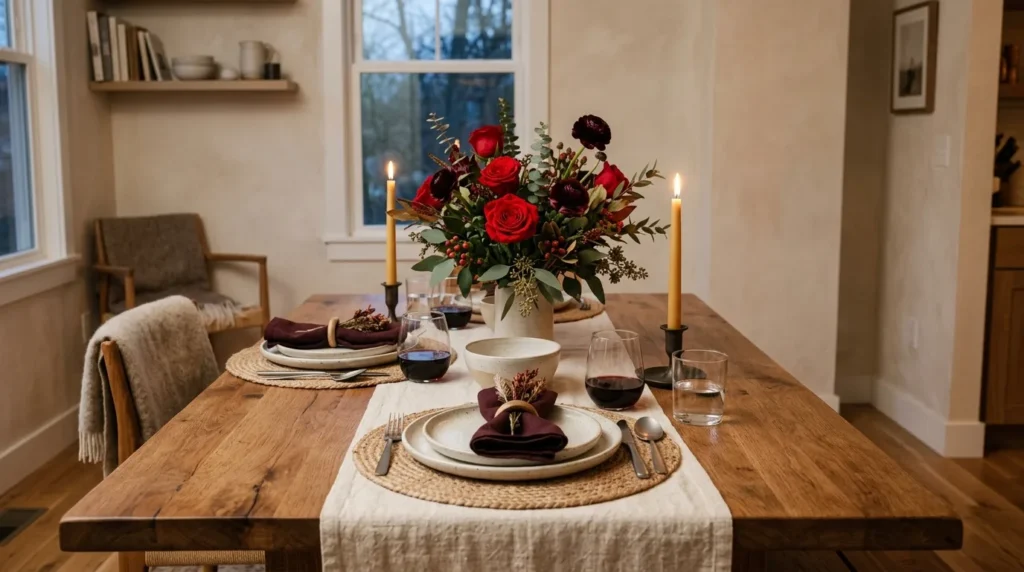
Flowers immediately bring color to a Valentine’s table, but the centerpiece does not need to be huge. A tall arrangement may look impressive in photographs, yet it can block conversation across a smaller table.
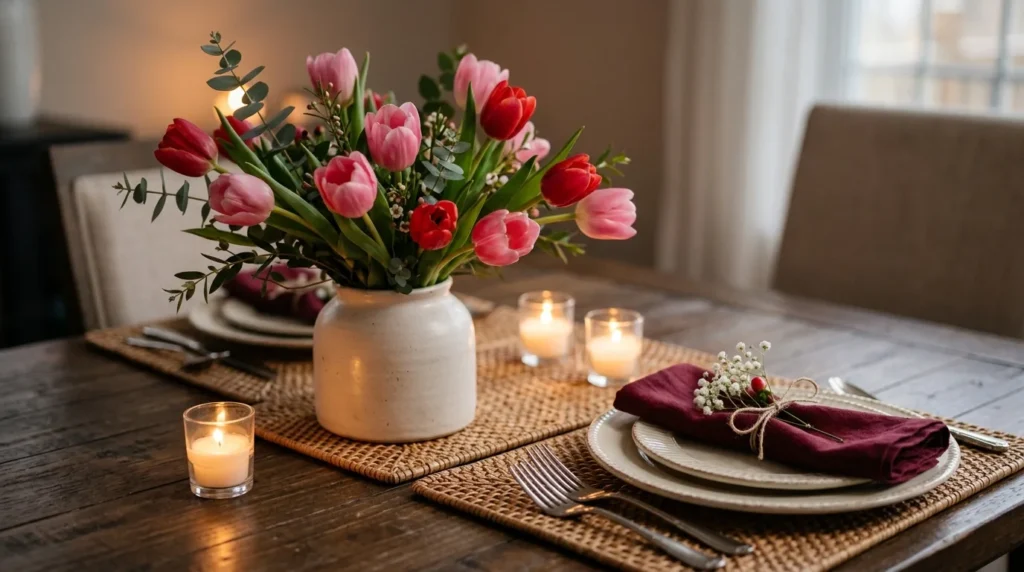
I prefer a low centerpiece that allows everyone to see one another. A short ceramic vase with red, pink, or white flowers usually works better for everyday-sized dining spaces.
Tulips, carnations, roses, and mixed grocery store flowers can all fit the theme. A simple bouquet often costs around $15 to $35, depending on the flowers and season. You can also divide one larger bouquet into two or three smaller containers.
This is one of my favorite budget tricks. Instead of buying several separate arrangements, I use small jars or vases I already own and spread the flowers along the center of the table. The result feels lighter and takes up less visual space.
A low centerpiece also works well if your table doubles as a workspace. After dinner, you can move one small vase instead of clearing a large decorative display.
Fresh flowers do need some attention. In dry Colorado air, indoor arrangements can lose their freshness faster than expected if you forget about them. I check the water regularly and remove anything that starts looking tired.
If fresh flowers are not practical, use quality faux stems that can return every February. Keep the arrangement simple so it still fits naturally with the rest of your home.
4. Make Candles Part of the Valentine’s Day Table Setting
Warm lighting can make even a simple dinner feel more special. For Valentine’s Day, candles are an obvious choice, but I prefer using them as part of the table design instead of covering every open area.
A few candleholders with different heights can add interest. I might use two slim taper candles beside a low floral arrangement or place a few flameless candles along a runner.
Real candles require attention, especially around fabric napkins, dried flowers, curtains, or pets. Since Miso can appear on furniture without warning, I would not leave an open flame unattended. Flameless candles can give a similar warm look with less worry.
Last year, I tried arranging too many candles down the center of a table. The table looked beautiful until it was time to serve dinner. There was nowhere to place the food.
The next attempt was much better. I used one small floral arrangement and two candleholders, leaving most of the center clear. That setup looked cleaner and worked better.
You can find simple candleholders for around $8 to $25, while a more expensive set may cost $50 or more. If you already own plain holders, changing the candle color can give them a seasonal purpose.
For a smaller table, less usually works better. Keep enough open space for plates, glasses, and serving dishes.
5. Use a Table Runner Instead of Covering Everything
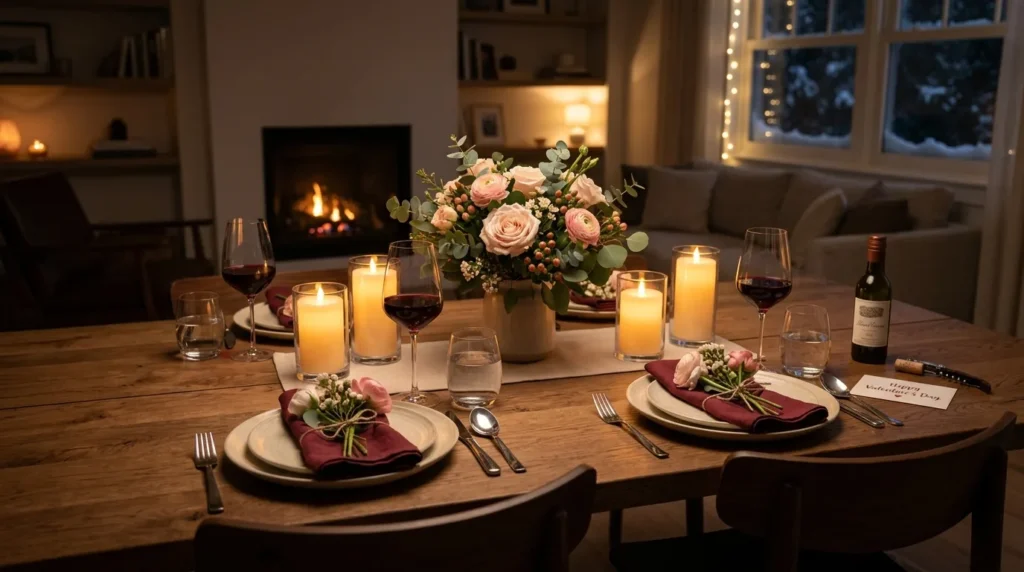
A full tablecloth can work beautifully, but it is not always necessary. On a smaller dining table, a runner can add color and texture while leaving part of the table visible.
I like this approach with natural wood tables because the wood itself becomes part of the design. A blush, cream, or muted red runner can guide the eye down the center without hiding the entire surface.
This also makes setup easier. You can place the runner first, add a low centerpiece, and then build the place settings around it.
My first DIY runner project did not go smoothly. I bought fabric, measured the table, and cut it slightly too short. The mistake became obvious as soon as I placed it down. Instead of using it as planned, I cut the fabric into smaller pieces and used them as placemats.
That mistake saved the project. The individual pieces actually worked better with our table size, and I did not need to buy another full runner.
If you want a ready-made option, simple runners often cost between $12 and $40. For a budget-friendly alternative, visit a fabric store and buy only the length you need.
Choose a fabric that fits your normal decorating style. That way, the runner may work again for birthdays, anniversaries, or other dinners instead of spending eleven months in storage.
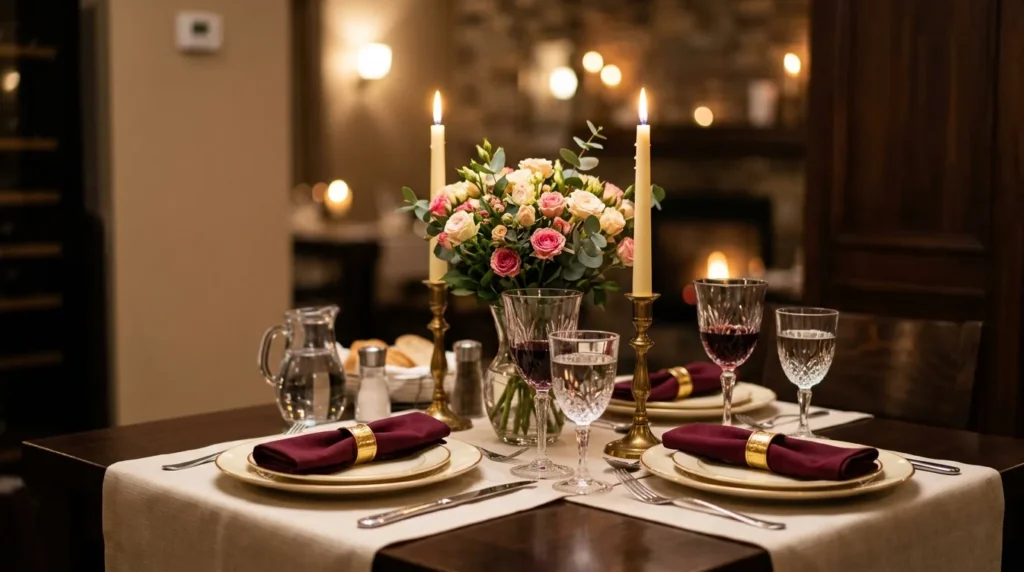
6. Add One Personal Valentine’s Detail at Each Place
Personal touches can make the table feel more memorable without requiring extra decorations everywhere. A handwritten name card, a small note, or a simple folded message can add warmth to each setting.
I would keep this detail small. The goal is not to create a complicated craft project before dinner.
For a simple DIY idea, cut small pieces of thick paper, fold them into place cards, and write each guest’s name by hand. You can place one tiny paper heart beside the name if you want more seasonal color.
My first batch of handmade cards looked uneven because I cut them without marking the paper first. Some were wider, others leaned slightly, and one folded crookedly. The second attempt went better after I used a ruler.
That small extra step made a noticeable difference.
For a dinner for two, you could leave a short handwritten note beside each plate. For a family meal, name cards can make the setting feel festive without adding much cost.
A pack of simple cardstock may cost around $6 to $12, and you can use the rest for future projects. You do not need professional lettering or elaborate designs. A personal message often means more than an expensive decorative item.
7. Finish the Table With Texture, Not More Decorations
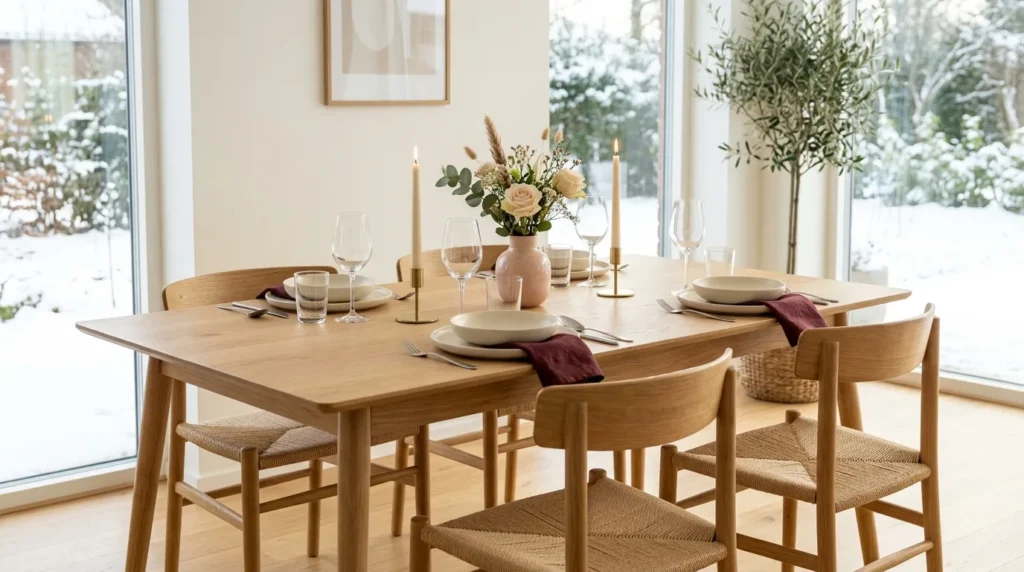
One of the easiest ways to improve a Valentine’s table is to add texture rather than buying more heart-shaped objects. Linen napkins, woven placemats, ceramic dishes, glass candleholders, and natural wood can make the table feel layered.
This approach works especially well in modern homes with neutral interiors. Instead of relying on one loud seasonal color, you can combine different materials.
For example, imagine a natural wood table with cream plates, a linen runner, burgundy napkins, ceramic candleholders, and soft pink flowers. The individual items are simple, but together they create visual interest.
Texture also helps seasonal colors feel more connected to the rest of the room. That matters in a townhouse or apartment where the dining area may sit directly beside the living room.
I would avoid adding too many small decorative pieces at this stage. Tiny hearts, signs, scattered petals, and multiple figurines can quickly make a modest table look crowded.
Before finishing the setup, remove one or two items. Then step back and look at the table from where people will actually sit.
If it feels busy, edit it again.
A table setting does not need more objects to feel special. Sometimes the right napkin, flower, and candleholder are enough.
What I’d Do Differently Next Time
If I were setting a Valentine’s table from scratch again, I would shop less before deciding on the layout.
My biggest decorating mistakes usually happened when I bought items individually because they looked good in the store. Once everything reached the table, I discovered that the colors did not match, the pieces were too large, or there was no room left for dinner.
I would also measure the table before buying runners, chargers, or centerpieces. A dining area with limited space needs decorations that fit the scale of the furniture.
Storage would be another priority. Large Valentine’s decorations may look fun for one evening, but they become a problem when you have limited closets and cabinets. I prefer cloth napkins, candleholders, and vases that can return for other celebrations.
The best change I made was learning to decorate for the meal, not just the photograph. Guests should have enough room to sit comfortably, move their glasses, and enjoy the food.
That makes the table both prettier and more useful.
Create a Table That Feels Personal This Valentine’s Day
The best Valentine’s Day table setting ideas do not depend on spending a large amount of money or copying a perfect photograph. Start with what you already own, choose a simple color palette, and add a few thoughtful details that fit your table size and home.
A runner, flowers, warm lighting, layered dinnerware, and a handwritten note can create a memorable setting without making the table difficult to use. Begin with one idea, place everything on the table, and remove anything that feels unnecessary. A Valentine’s dinner should feel relaxed, personal, and comfortable.
My favorite setups are always the ones that still feel like home after the candles are lit and the meal begins. Use these ideas as a starting point, then add your own details and create a table your guests will remember.