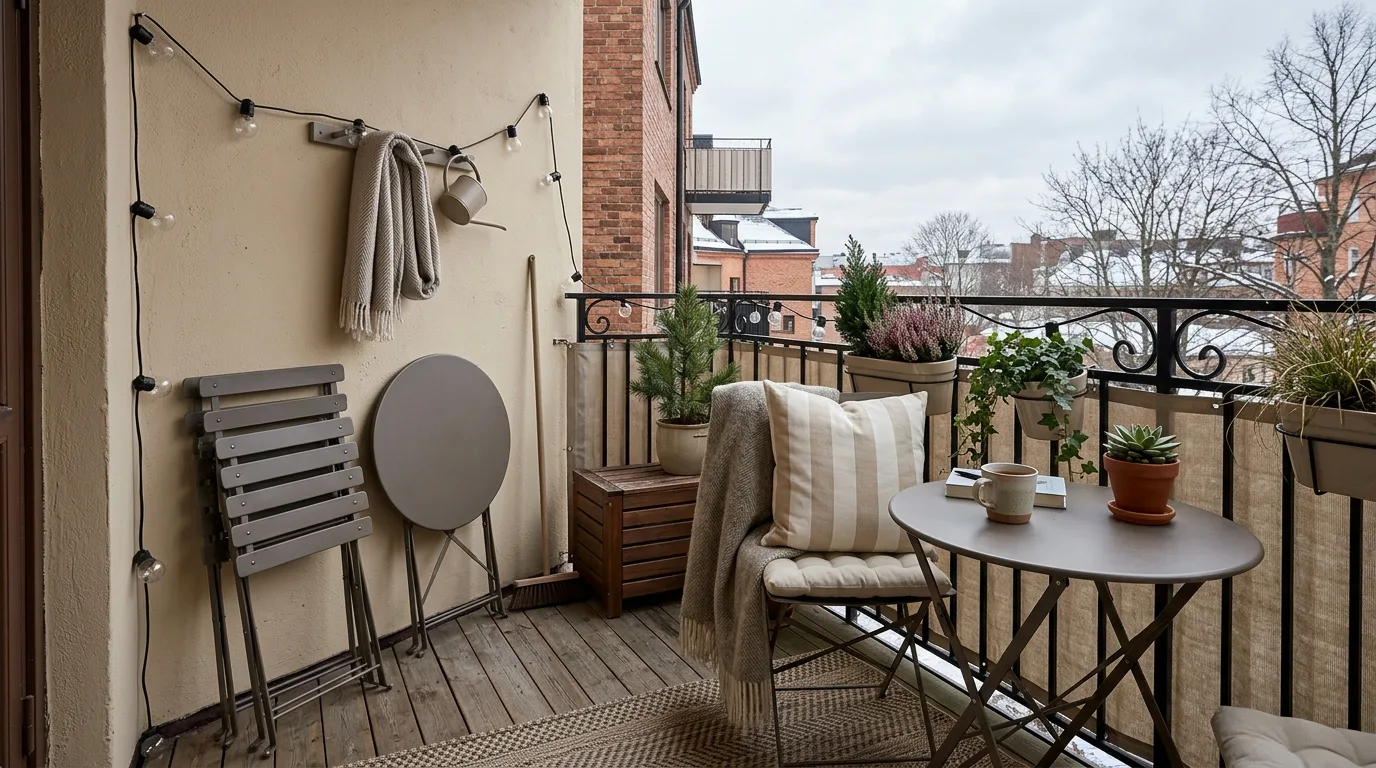
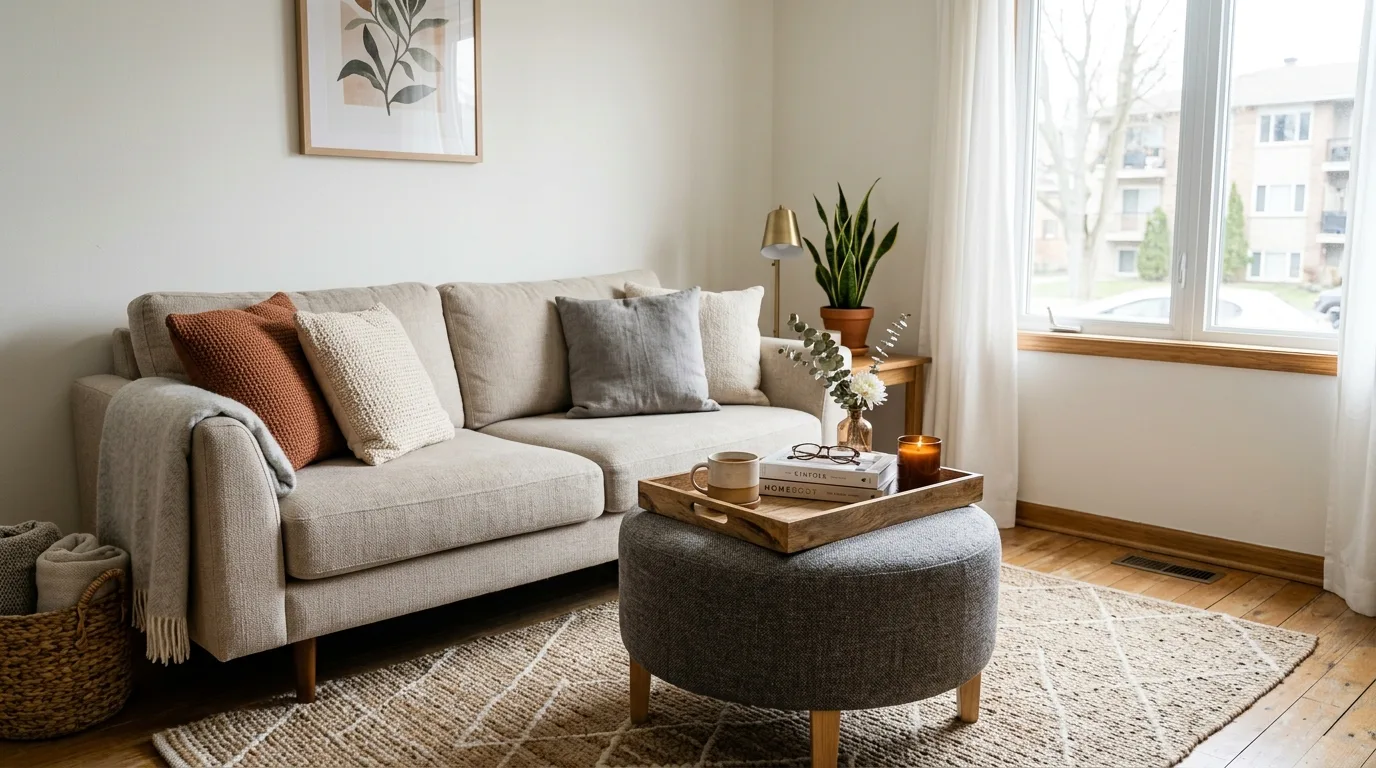
The first thing I noticed after renting a place was the wall color. It wasn’t terrible, but it didn’t feel like me either. The problem was simple: I couldn’t paint. Like most renters, I didn’t want to risk my security deposit just to make the room feel warmer.
That pushed me to find better solutions.
After years of decorating our 1,050 square foot townhouse outside Denver, I’ve learned that walls don’t need a fresh coat of paint to change the way a room feels. Furniture placement, lighting, removable decor, textiles, mirrors, and artwork can make a rental feel personal without leaving permanent marks.
That’s especially useful in 2026, when rental-friendly decorating has moved beyond basic peel and stick wallpaper. Renters now have more flexible options, including removable picture ledges, tension shelves, plug in lighting, oversized textiles, renter safe hooks, and lightweight furniture that can move with you.
If your lease says no painting, don’t see that as a decorating dead end. You can still create a room that feels intentional, comfortable, and completely yours.
Start With a Rental Friendly Decorating Plan
Before buying anything, look at the apartment as it is.
Take photos during the morning, afternoon, and evening. Natural light changes dramatically throughout the day, and a beige wall can look completely different at 7 a.m. than it does at sunset.
Measure the walls, windows, doorways, and major furniture areas. This step saved me from buying pieces that looked perfect online but didn’t work once they arrived.
For a rental apartment, I like to plan around five easy-to-change elements:
- Wall decor
- Lighting
- Textiles
- Furniture
- Accessories
The goal isn’t to cover every inch. A few larger pieces usually make more impact than a collection of tiny decorations.
For example, one oversized art print above a sofa can give a blank wall much more personality than eight small frames scattered across it. A large floor lamp can also add height without requiring ceiling fixtures or electrical work.
If your budget is tight, start with Target, your local Goodwill. I wouldn’t spend $300 on wall decor for a rental when a $25 thrifted frame and a $30 print can create a similar effect.
Use Removable Wall Decor Instead of Paint
The walls usually create the biggest decorating challenge, so start there.
One of my favorite rental friendly tricks is using lightweight artwork with removable hanging strips designed for the appropriate weight. Before hanging anything, check the product instructions and your lease. Some landlords don’t allow adhesive products, even if they claim to remove cleanly.
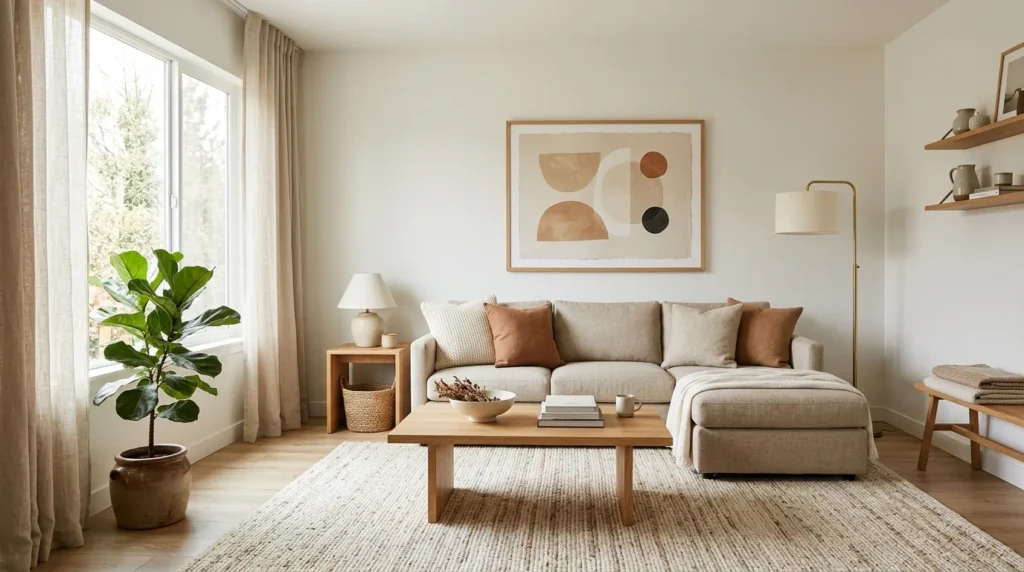
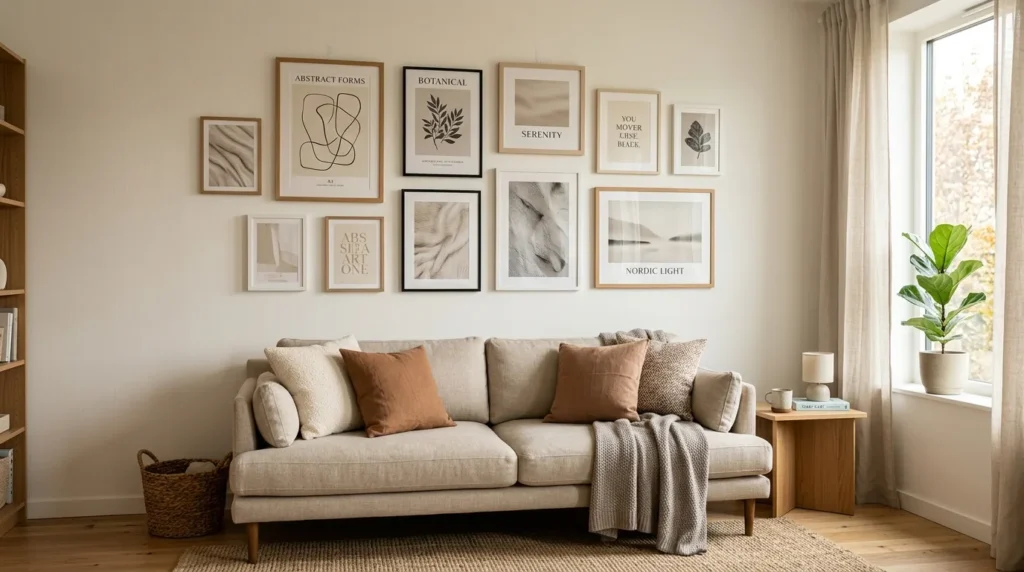
Large artwork works especially well because it changes the wall without changing the wall itself.
Try a large landscape print in the living room, botanical artwork in the bedroom, or a simple architectural print in a hallway. For a warmer look, choose wood frames instead of shiny metal.
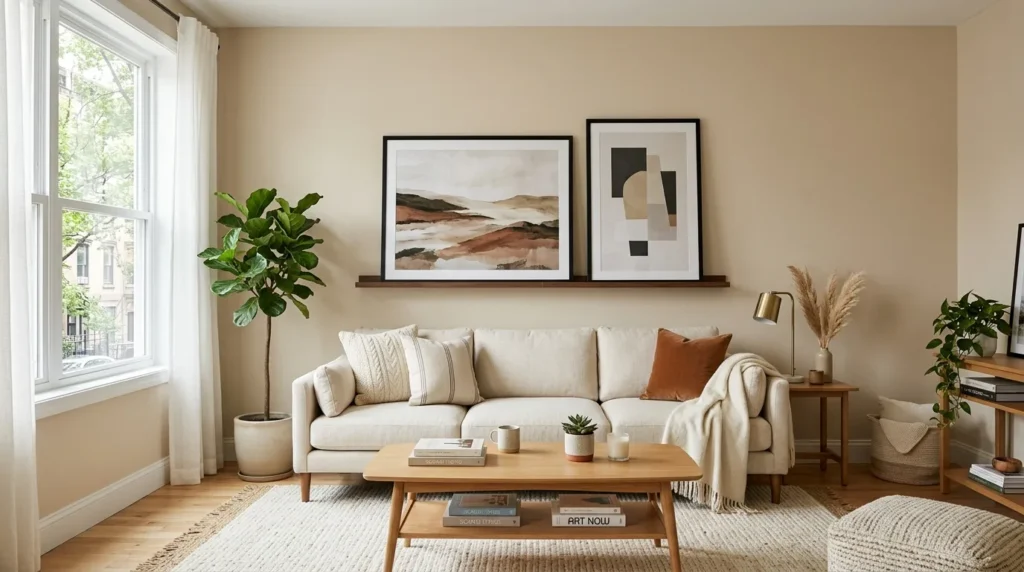
Another option is a removable picture ledge. It gives you a place for framed prints, small books, and decorative objects while keeping the arrangement flexible.
The DIY Project That Didn’t Go Perfectly
I once tried to create a simple art display using a narrow wood ledge and several thrifted frames. The plan looked easy.
It wasn’t.
The first ledge sat slightly crooked because I rushed the measuring. Then one frame was heavier than I expected, so I had to rearrange the whole display.
The second attempt worked much better. I measured twice, kept the heavier frames lower, and used lighter prints toward the top.
The lesson was simple: rental decorating still needs planning. Removable doesn’t mean careless.
If you’re watching your budget, skip expensive gallery sets. Buy three or four inexpensive frames from Target or your local Goodwill, print artwork yourself, and keep the colors connected.
Add Temporary Texture With Textiles
When you can’t change the walls, textiles become even more important.
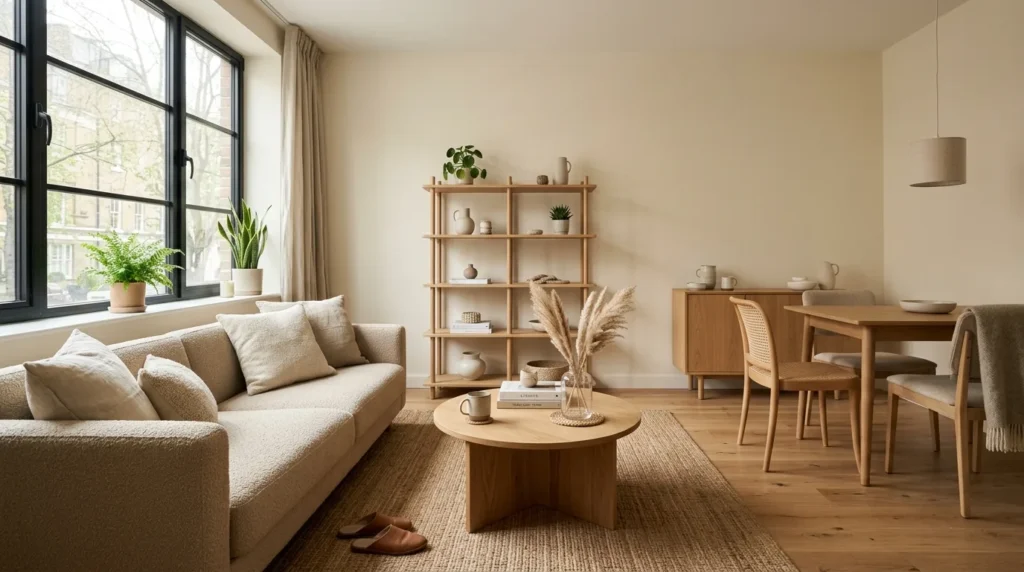
A large area rug can visually define a living room without changing the floor. Curtains can soften harsh window frames. Throw pillows can introduce color without committing you to a permanent scheme.
For a rental apartment, I’d rather spend $80 on curtains than $80 on small decorative objects. Fabric covers a larger visual area and can make basic builder-grade finishes feel less noticeable.
Layering also helps. A neutral rug with a textured throw and two patterned pillows can create depth without making the room feel busy.
In my own home, neutral colors work well because Colorado sunlight can feel intense even during winter. Strong afternoon light can make some colors look much brighter than they appeared in the store.
If the West Elm option isn’t in your budget, look at Target, HomeGoods, or Wayfair. You can often get the same general effect without spending designer-level money.
One mistake I made was buying curtains that were too short. They technically covered the windows, but they made the room look visually lower. Once I replaced them with longer panels, the whole window area felt taller.
That taught me to measure the window and the desired curtain height before shopping.
Change the Lighting Without Rewiring Anything
Bad lighting can make a rental feel cold even when the furniture looks great.
Fortunately, you don’t need an electrician to improve it.
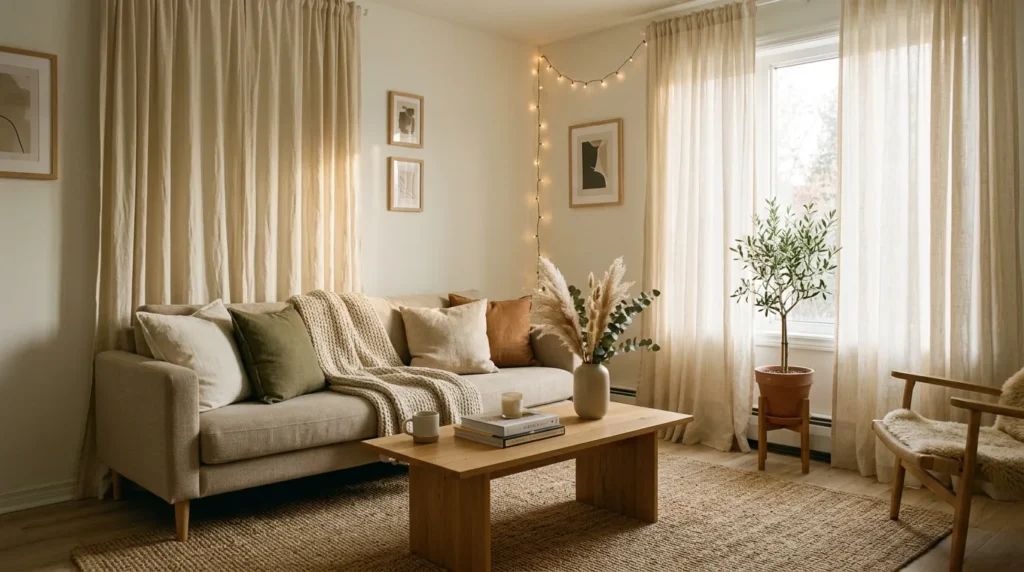
Use floor lamps, table lamps, plug-in sconces, and rechargeable lamps to create several light sources around the room. In 2026, rechargeable accent lights are especially useful for renters because they can add illumination in places where outlets aren’t convenient.
I prefer warm bulbs around 2700K for living areas and bedrooms. They create a softer evening atmosphere than very cool bulbs.
A floor lamp beside the sofa can fill a dark corner. A small table lamp can make a console feel more finished. A rechargeable lamp on a bookshelf can add a little glow without another cord crossing the floor.
Safety still matters. Keep cords away from walking paths, don’t overload outlets, and follow the manufacturer’s instructions for lamps and rechargeable lights. If an electrical change requires wiring, consult a licensed electrician rather than attempting it yourself.
For a budget option, Target are good starting points. HomeGoods can also be useful for finding lamps at lower prices, although availability changes frequently.
Make the Furniture Work Harder
Rental furniture doesn’t need to stay in one arrangement.
That’s one of the easiest ways to decorate a rental apartment without painting because furniture changes the visual balance of the entire room.
Start by creating clear walking paths. Then choose one main focal point, such as the sofa, bed, or dining table.
In a tighter living room, avoid pushing every piece against the wall just because the room is small. Sometimes pulling the sofa forward by several inches creates a more intentional arrangement.
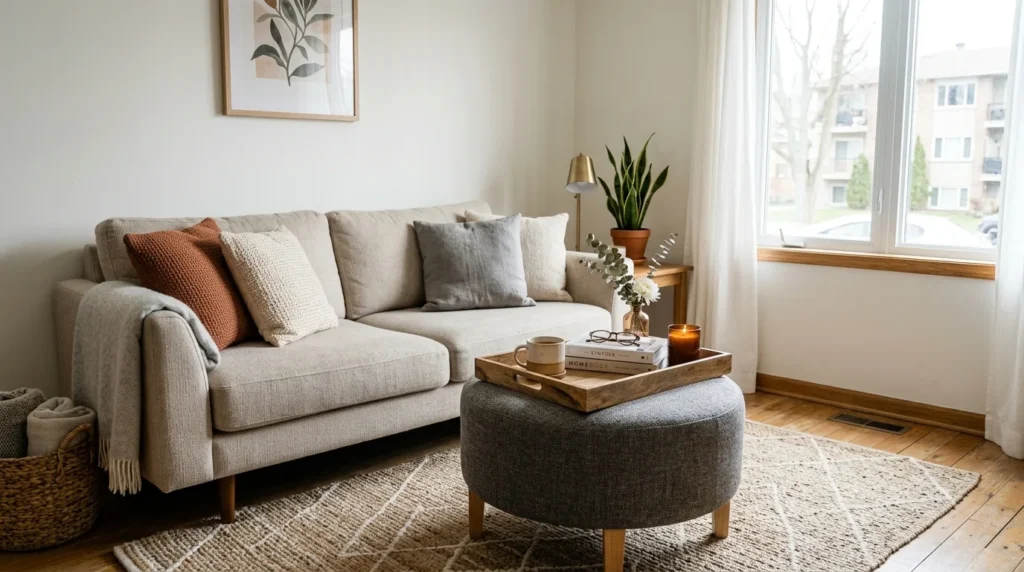
Multifunctional furniture also earns its place. An ottoman can provide seating, storage, and a surface for a tray. A slim console can work behind a sofa or against an entry wall. A small nesting table can move around when guests arrive.
I’ve learned this through trial and error. One console looked great online, but once it arrived, it blocked part of the doorway. Returning it was annoying, but the replacement was narrower and worked much better.
Measure twice before ordering.
For a lower-cost alternative, check, Facebook Marketplace, OfferUp, or your local Goodwill. Look for pieces with simple shapes that can move into another room when your lease ends.
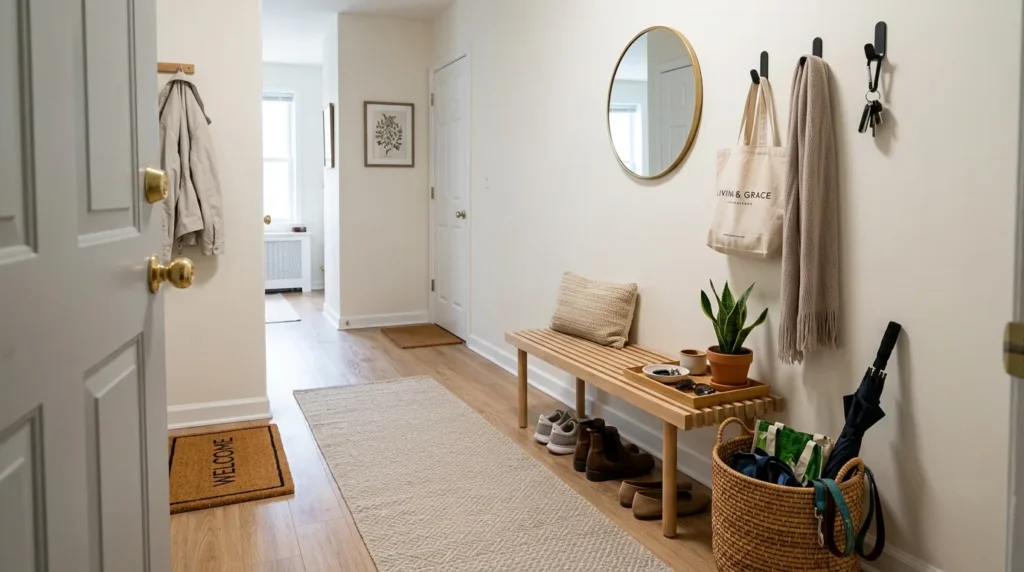
Use Mirrors to Add Light and Visual Space
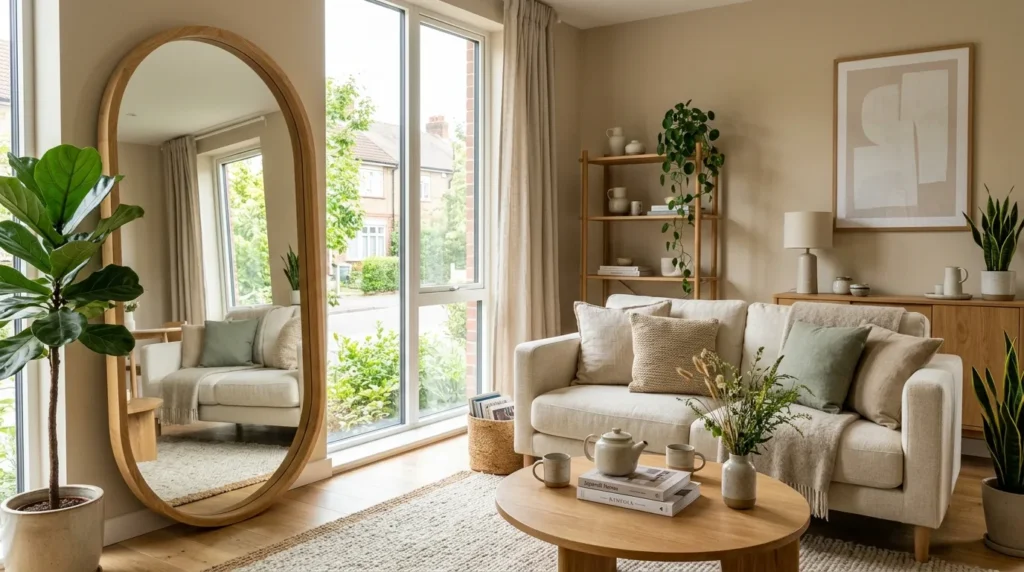
A mirror can change the way a rental room feels without changing its permanent finishes.
Place one opposite or near a window so it can reflect natural light. In a darker hallway, a mirror can also break up a long blank wall.
Size matters, though. A tiny mirror on a large wall often looks disconnected. A larger mirror with a simple frame usually has more visual weight.
In my experience, rounded mirrors work well with softer furniture, while rectangular mirrors can reinforce clean, modern lines.
Don’t automatically hang a mirror wherever there’s an empty wall. Check what it reflects first. You don’t want it pointing directly toward clutter, a litter box, or a messy work area.
For renters who can’t drill, choose a lightweight mirror with a renter-approved hanging method. Heavy mirrors may require stronger hardware, so check the wall type and lease before installation.
If you’re saving money, search HomeGoods, Target, Facebook Marketplace, or your local thrift store.
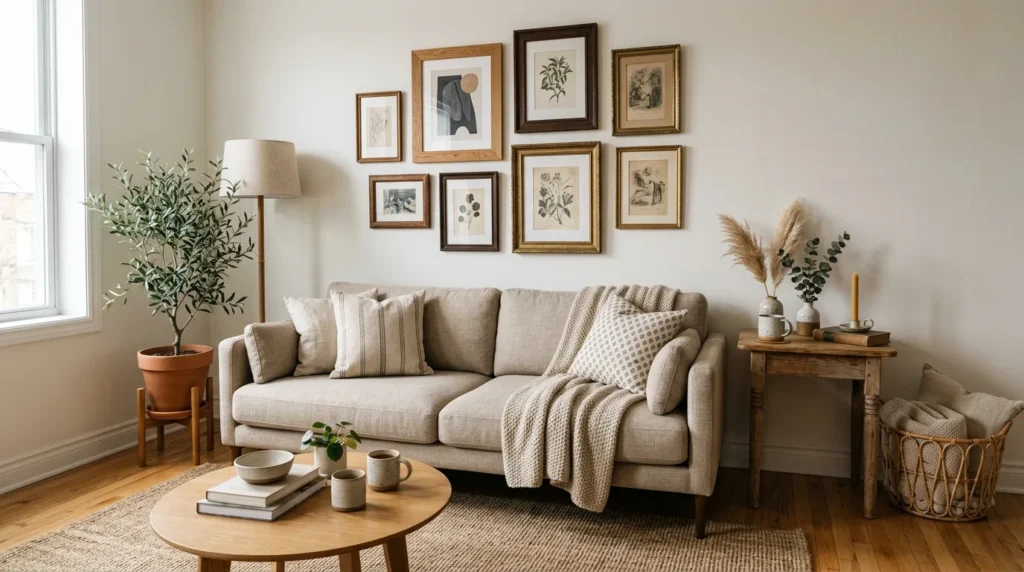
Bring Personality Through Small Details
Once the major pieces are in place, add the details that make the apartment feel lived in.
Books, ceramic pieces, baskets, framed photographs, plants, and small collected objects can make a rental feel less temporary.
The trick is to avoid buying everything at once.
I prefer collecting a few useful pieces over time. A basket can hide extra blankets. A tray can organize remote controls. A small plant can soften a shelf. A favorite print can make a plain wall feel personal.
For renters with pets, think carefully about placement. My rescue cat Miso has knocked enough things off shelves to teach me that lightweight decorative objects shouldn’t sit near every edge.
Tall furniture should also receive appropriate anchoring where required. A rental-friendly setup still needs to be safe, especially in homes where people and pets move through narrow areas.
Plants can work beautifully, but don’t buy them solely because they look good in a photo. Colorado’s dry air can be tough on some houseplants, so choose varieties suited to your indoor conditions.
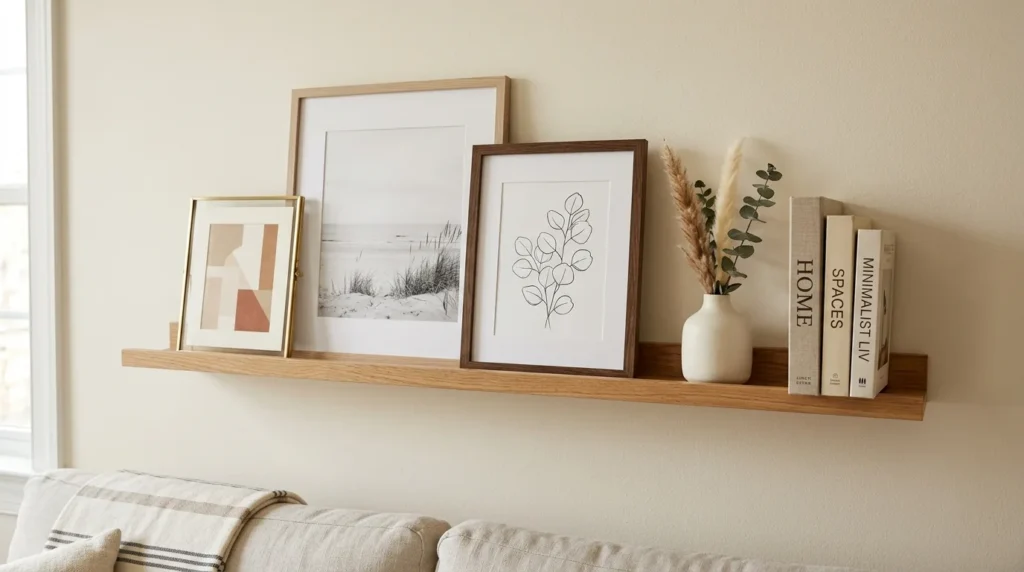
Create a Rental Friendly Entryway
The entryway often gets ignored, but it can make the entire apartment feel more organized.
You don’t need built in storage.
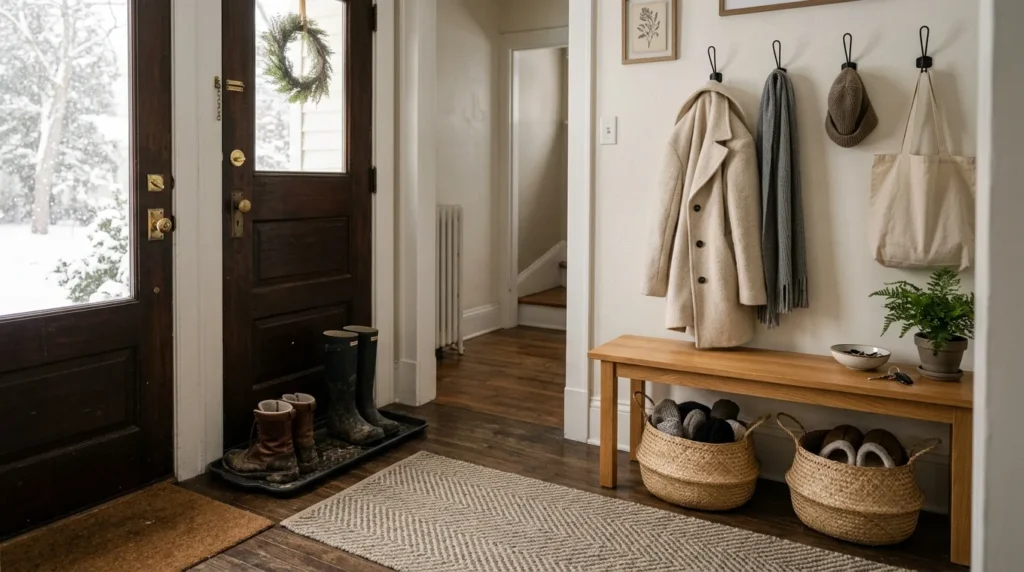
A slim bench, small shoe tray, hooks approved by your lease, and a basket can create a useful landing zone. If floor space is limited, use a narrow console or a freestanding shelf instead.
This matters even more during snowy winters. Wet boots, coats, and winter accessories can quickly make a rental entry feel chaotic.
A washable runner can help protect the floor, while a small basket keeps gloves and hats from spreading across the room.
For a budget version, combine an inexpensive bench with a basket from Target and a secondhand mirror from Goodwill.
The result doesn’t need to match perfectly. A few related wood tones and neutral fabrics can make inexpensive pieces feel connected.
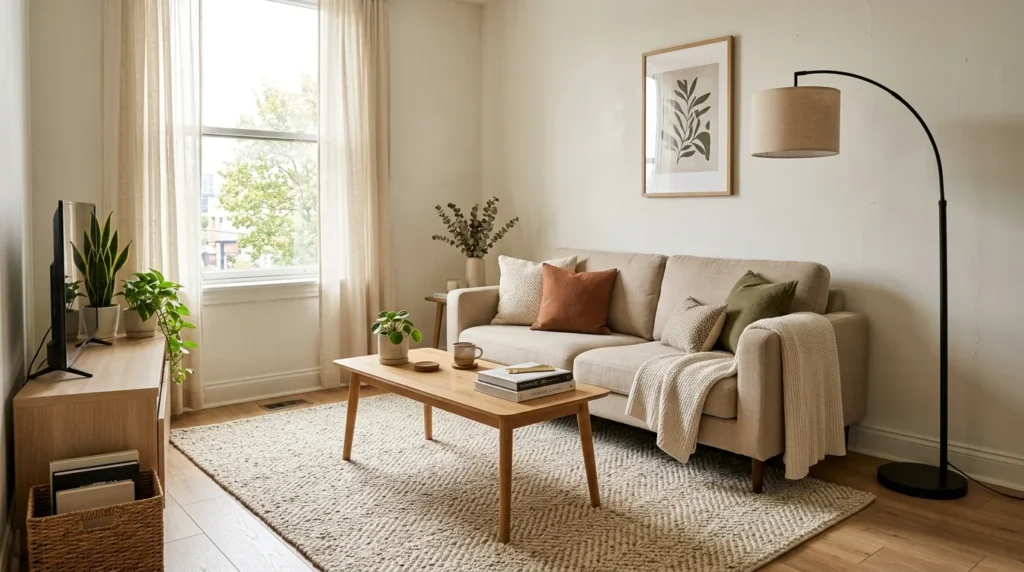
Decorate the Bedroom Without Touching the Walls
The bedroom can change dramatically through bedding and lighting alone.
Start with the bed because it takes up a large percentage of the room. A duvet cover, two standard pillows, one or two decorative pillows, and a throw can create a finished look without changing the wall color.
Then add a bedside lamp and one large piece of artwork.
If your rental bedroom has plain beige or white walls, don’t fight the color. Work with it. Warm wood, cream bedding, soft gray, muted green, or dusty blue can all pair well with neutral walls.
For an inexpensive update, Target offer accessible bedding and storage options. Quince, Brooklinen, and other mid-range brands can work if you’re willing to spend more on pieces you’ll keep after moving.
Avoid filling every surface. A clear nightstand usually feels better than one covered with candles, books, plants, and decorative objects.
What I Got Wrong and What I’d Change
Two mistakes taught me the most about rental decorating.
The first was buying furniture before measuring the room properly. The piece looked proportionate in the listing photos, but it was too deep for the available walkway. I ended up rearranging half the room.
The second was buying too many little accessories before choosing the larger pieces. The apartment started to feel visually noisy, and I spent more money fixing it than I should have.
Now I work in this order:
- Measure the room and photograph the existing space.
- Choose the main furniture pieces.
- Add lighting and textiles.
- Finish with artwork and smaller accessories.
That order keeps the budget under control and makes the apartment easier to adjust later.
Make the Apartment Feel Like Yours
You don’t need permission to paint every time you want your rental to feel more personal.
Start with the things you can change easily. A large rug can anchor the room. Better lighting can change the mood at night. Artwork can give blank walls character. Curtains can soften hard window frames. Furniture can create a better layout.
After living with limited square footage for years, I’ve found that the best rental updates aren’t always the expensive ones. They’re the changes that solve an actual problem while still looking good.
If you’re planning your own rental refresh, start with one room instead of buying everything in one weekend. Measure first, choose a simple color direction, and build from the pieces you already own.
And if you want more practical ideas for making a rental or compact home work harder, browse the other room by room decorating guides on CompactDecorHub. There are plenty of ways to make your home feel personal without reaching for a paint roller.