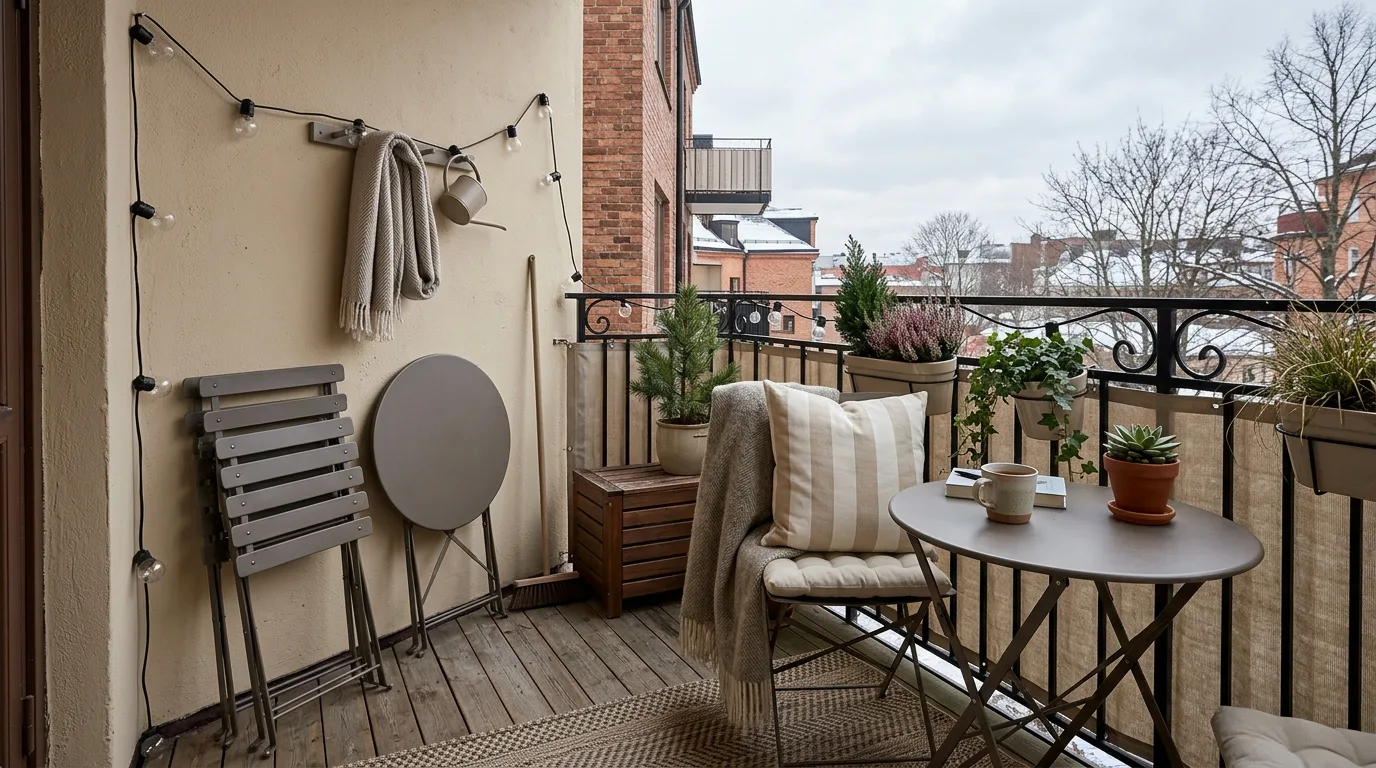

Curtains can make a rental feel finished, but hanging them becomes frustrating when drilling isn’t allowed. I’ve been there. You find the perfect window, buy the curtains, and then realize the lease, landlord, or wall material won’t let you add permanent hardware.
The good news is that you don’t need a drill to get a polished window treatment. Several no drill curtain rod alternatives can hold lightweight curtains, create privacy, divide a room, or soften a bare window without putting holes in the wall.
After living in a 1,050 square foot townhouse, I’ve become much more careful about hardware. Every wall has a job, and every unnecessary hole becomes another repair later. That experience has made renter friendly solutions especially appealing.
For 2026, the best options focus on flexibility. Tension rods, adhesive hooks, magnetic rods, twist and fit systems, and freestanding solutions can all work when you match the hardware to the curtain weight and window type.
The key is knowing which option fits your situation before you buy. A lightweight café curtain needs very different support from a full length blackout panel. This guide breaks down the practical alternatives, what I would use for each situation, and the mistakes I’d avoid.

1. Tension Rods Are the Easiest Starting Point
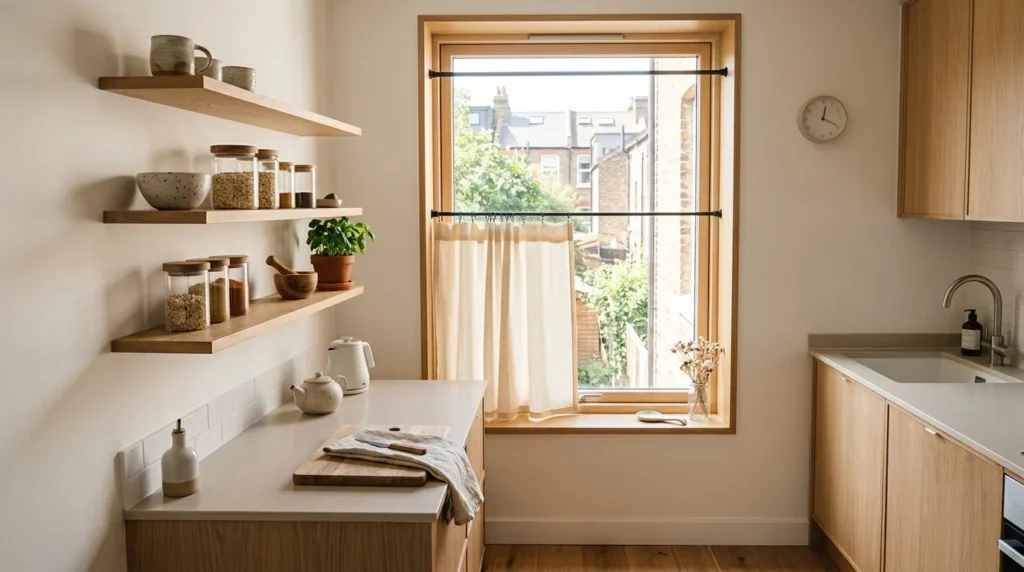
A tension rod is usually the first option I’d consider because it doesn’t require screws, brackets, or permanent installation.
The rod sits inside the window frame and uses pressure to stay in place. That makes it useful for renters and anyone who wants to avoid wall damage.
Tension rods work especially well for:
- Lightweight curtains
- Café curtains
- Kitchen windows
- Bathroom windows
- Small bedroom windows
- Temporary privacy panels
Measure the inside width of your window before purchasing. Don’t assume the listed size will fit perfectly.
A tension rod can also work inside a doorway when you want a soft visual divider. For heavier curtains, though, check the manufacturer’s weight rating carefully. A rod that holds a lightweight cotton panel may not support thick blackout curtains.
The Problem I Ran Into
My first instinct was to choose the largest rod that fit the opening. That wasn’t actually better. The thicker hardware looked visually heavy against the simple window frame.
A slimmer rod looked better and worked just as well for the lightweight curtain I had chosen.
If you want an inexpensive option, basic tension rods are often available at Target, Walmart, home improvement stores, and online retailers for around $10 25.
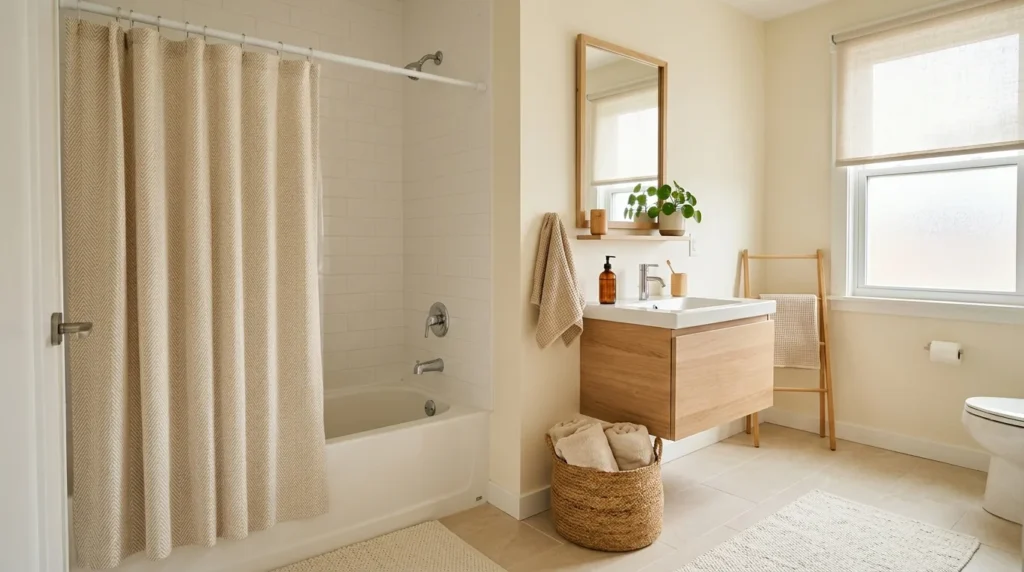
2. Adhesive Hooks Can Create a Flexible Setup
Adhesive hooks can support certain curtain setups when you can’t use conventional brackets.
Instead of placing the curtain rod into the wall, you can use compatible hooks or clips designed for the weight you’re trying to support. This works best with lightweight curtains and temporary installations.
Before using adhesive hardware, clean and dry the surface according to the product instructions. Dust, grease, textured paint, and moisture can reduce how well the adhesive holds.
Don’t guess about weight capacity. Read the manufacturer’s specifications and leave a safety margin.
Adhesive hooks can also work for lightweight fabric panels used as decorative room dividers. They’re particularly useful when you want to create a soft boundary around a desk or sleeping area.
For a budget friendly setup, basic adhesive hooks may cost less than $10 for a small pack. The curtains themselves can cost much more, so don’t risk them by attaching them to hardware that can’t support their weight.
Where I Wouldn’t Use Them
I wouldn’t rely on adhesive hooks for very heavy lined curtains, large blackout panels, or anything positioned where a falling rod could cause injury.
If the room has high humidity or the wall has a textured finish, I’d also choose a different solution.
3. Magnetic Curtain Rods Work on Metal Surfaces
Magnetic curtain rods offer another clever solution, but they only work when you have a suitable metal surface.
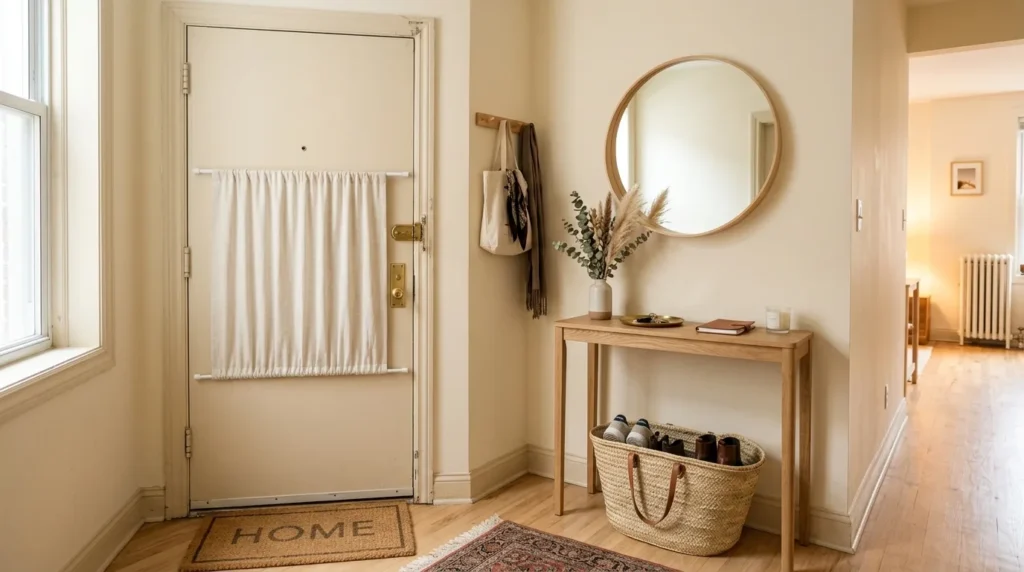
They can attach to steel doors, metal window frames, and other compatible surfaces without drilling.
This option works particularly well for:
- Metal exterior doors
- Steel framed windows
- Small privacy curtains
- Lightweight decorative panels
- Temporary seasonal curtains
The important part is checking whether the surface actually attracts the magnets strongly enough. Painted metal can also behave differently depending on the construction.
Magnetic rods can be especially useful in apartments where the window or door frame provides a ready-made mounting surface.
For a simple rental setup, choose a lightweight curtain and avoid pulling hard on the fabric. Even a strong magnetic mount has limits.

4. Twist and Fit Rods Give You More Flexibility
Twist and fit curtain rods use adjustable pressure to stay in place. They work similarly to tension rods but can have different shapes and adjustment mechanisms.
They’re useful when you want a cleaner look than a basic spring rod provides.
For example, a narrow window might need a short rod while a wider opening requires more adjustment. The right system can give you flexibility without permanently changing the wall.
Before installation, check:
- The minimum and maximum rod width
- Recommended curtain weight
- Surface compatibility
- Whether the ends need a smooth frame
- How the adjustment mechanism locks
Don’t hang the curtains first and hope the rod holds. Install the hardware, test it gently, and then add the fabric.
If you want to keep costs down, look for simple adjustable models rather than decorative versions with oversized finials.
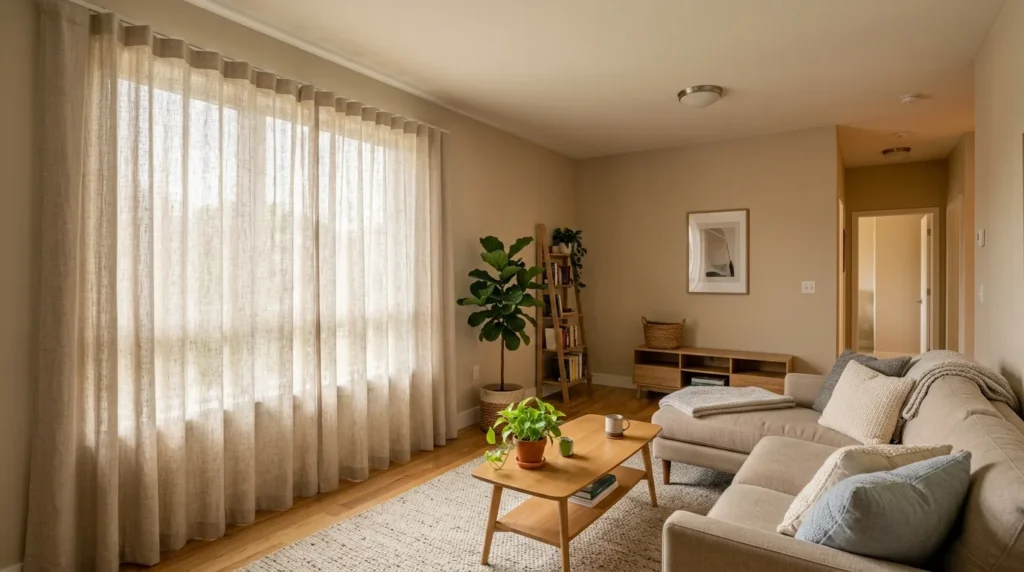
5. Command Style Hooks Can Hold Lightweight Panels
Removable adhesive hooks can work for very lightweight curtains when you choose a product designed for the intended load.
One approach uses two or more hooks to support a lightweight rod. Another uses clips or rings attached directly to the hooks.
This can be useful for a bedroom where you only need privacy during certain hours.
The main limitation is weight. Heavy velvet curtains, thick thermal panels, and large lined drapes may exceed the capacity of removable hooks.
Adhesive removal also needs care. Follow the manufacturer’s instructions rather than pulling the hook directly away from the wall.
My Budget Friendly Approach
For a lightweight linen look panel, I’d rather spend $15 25 on suitable removable hardware than install permanent brackets that I’ll need to patch later.
The goal isn’t to make adhesive hardware carry more weight than it should. It’s to choose curtains that match the hardware.
That distinction saves frustration.
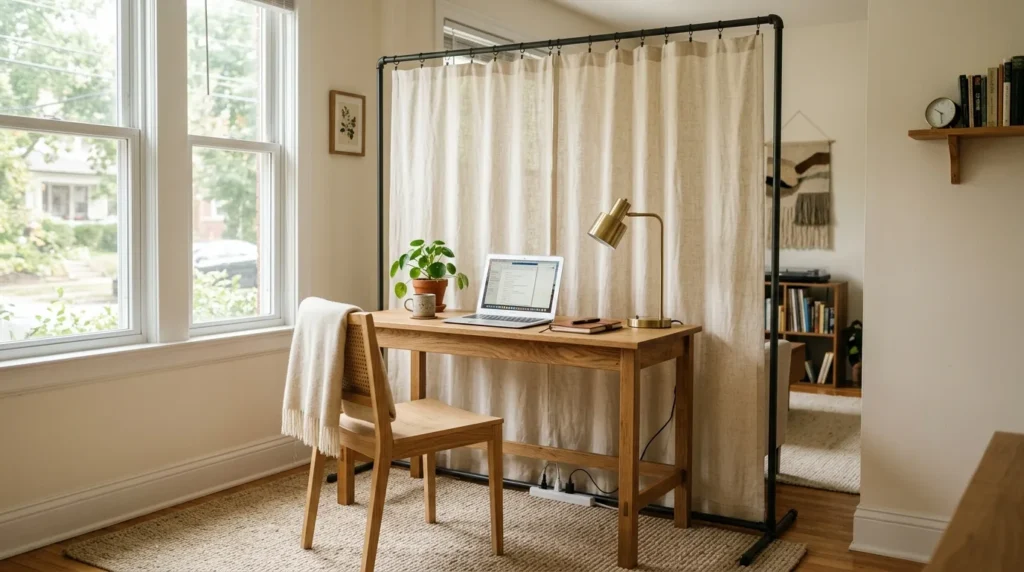
6. Freestanding Curtain Stands Skip the Wall Completely
If you don’t want to attach anything to the wall, a freestanding curtain stand can solve the problem.
These stands work particularly well in studio apartments, bedrooms, dressing areas, and home offices.
A freestanding frame can separate a bed from the living area without making permanent changes. It can also create a temporary background for video calls or hide an open clothing rack.
The downside is floor space.
In a tight room, the base of the stand can become an obstacle. Measure the footprint before buying and make sure it doesn’t interfere with the main walkway.
For renters with very strict wall restrictions, this is one of the most flexible no drill curtain rod alternatives because the wall stays completely untouched.
A simple garment rack can sometimes serve a similar purpose if its design safely supports the curtain and remains stable.
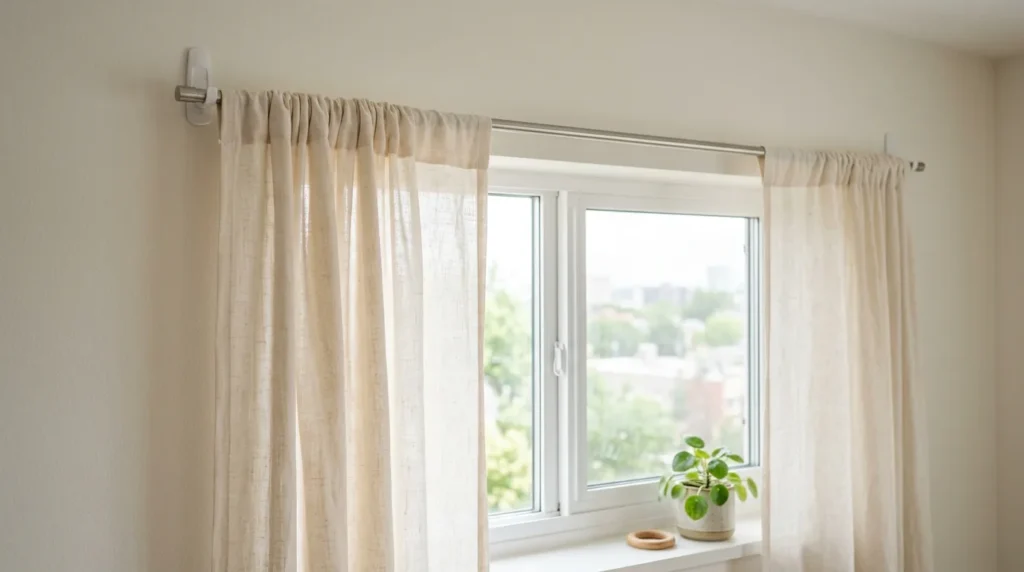
7. Use a Tension System for a Soft Room Divider
Curtains don’t always need to cover a window.
In a studio apartment, a tension mounted curtain can separate a sleeping zone from the living area. This gives the room a little privacy without building a wall.
Choose a lightweight fabric so the setup doesn’t require excessive tension.
I like cream, oatmeal, soft gray, or natural linen-look fabrics for this purpose because they allow some light through while still creating a visual boundary.
Avoid placing the curtain where it blocks a heater, vent, or required exit path.
For a budget option, a simple tension rod paired with an inexpensive curtain panel can cost far less than a permanent divider.

8. Try a Wire or Cable System for Lightweight Fabric
A thin curtain wire can create a very minimal window treatment when the hardware allows a safe no-drill installation.
This works best with lightweight fabric. Think sheer panels, café curtains, or decorative fabric rather than heavy blackout curtains.
The advantage is the nearly invisible appearance. The downside is that the system needs reliable support at both ends.
For renters, I would only use a wire system when the attachment method is genuinely removable and rated for the intended load.
Don’t improvise with random string, fishing line, or household cord. Curtain hardware should remain stable and shouldn’t create a snagging or falling hazard.
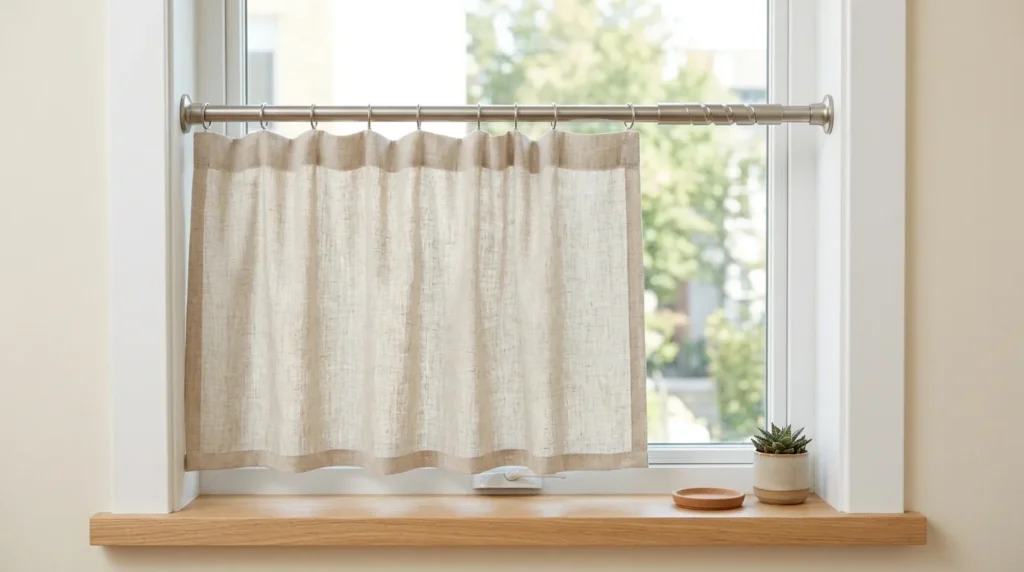
9. Use Existing Hardware Instead of Adding New Holes
Before buying anything, look around the room.
Sometimes the best solution already exists.
A curtain rod can occasionally attach to an existing tension system, freestanding shelf, wardrobe frame, or other suitable structure. In a bedroom, a sturdy freestanding clothing rack can support a lightweight curtain and double as clothing storage.
In a studio apartment, multifunctional furniture can make this approach especially useful.
A bookshelf can create a boundary. A garment rack can divide the room. A tension rod can cover the window. The right choice depends on the room rather than a single universal solution.
This approach also helps avoid buying hardware you’ll only use once.
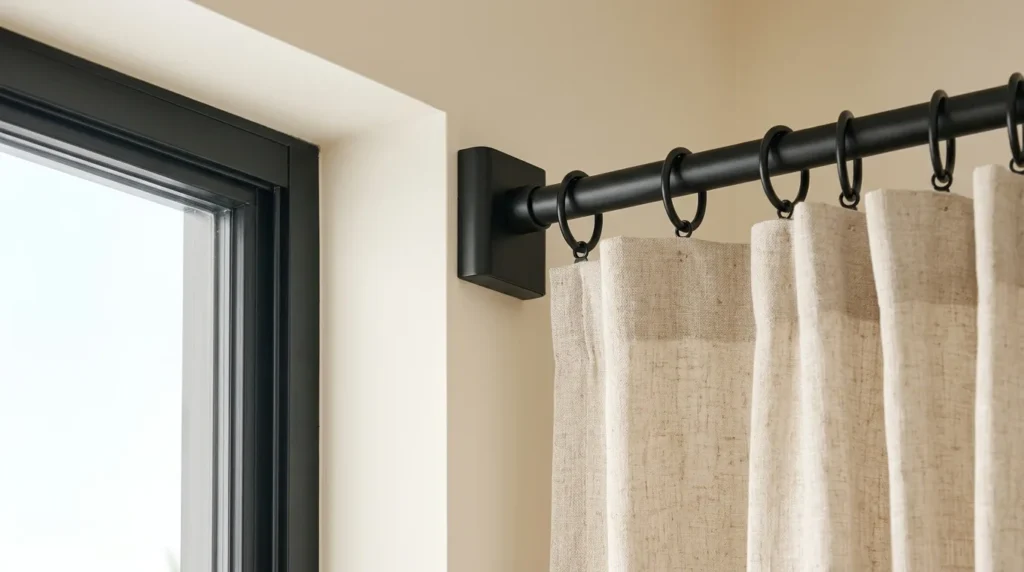
10. Match the Curtain to the Hardware
One of the easiest ways to make a no drill installation fail is choosing the curtain first and the hardware second.
A lightweight cotton panel may work perfectly on a tension rod. A thick blackout curtain may need a much stronger support system.
Before purchasing, consider:
- Curtain material and lining
- Panel width
- Total curtain weight
- Window width
- Frame depth
- Moisture level in the room
- How often you’ll open and close the curtains
If you open the curtain ten times a day, the hardware experiences much more movement than a decorative panel that stays closed.
This is especially important in a bedroom. A curtain that slowly slides downward every morning becomes irritating very quickly.
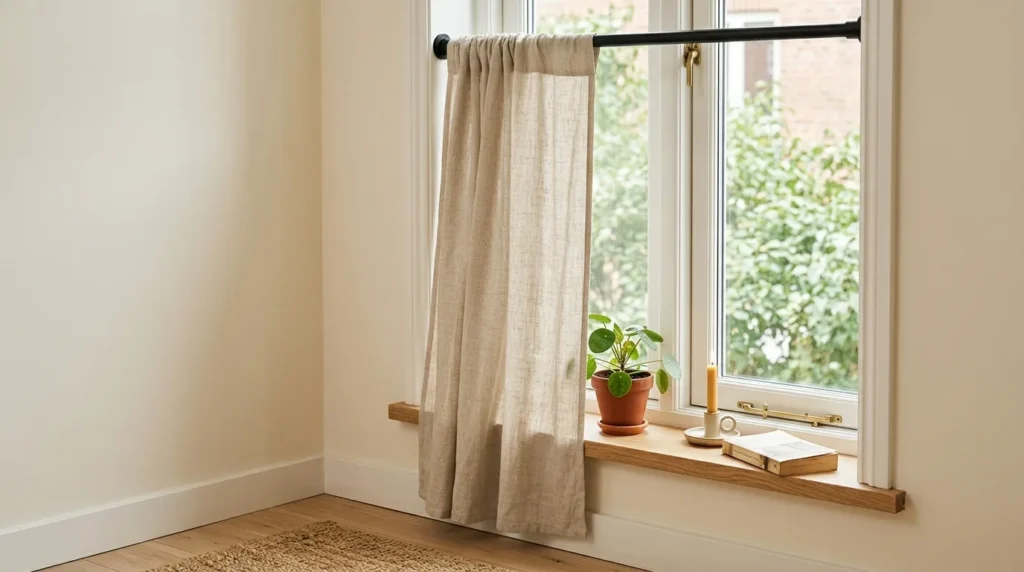
A Simple Renter Friendly Styling Project
One of my favorite low commitment approaches is a soft divider around a sleeping area.
Start by measuring the width you want to cover. Then choose a lightweight curtain panel and a tension rod rated for its weight.
Install the rod according to the manufacturer’s instructions. I prefer testing the tension before hanging the fabric.
Then hang the curtain and open and close it several times.
The first time I tried a similar setup, I made the mistake of choosing fabric that was too wide and heavy for the hardware. The rod stayed up at first but shifted after repeated movement.
That was my lesson: the curtain and hardware need to work as a pair.
A lighter panel solved the problem without changing the entire layout.

What I’d Avoid With No Drill Hardware
Not every renter friendly solution deserves a place on the wall.
I’d skip anything that requires you to exceed its weight rating or modify the hardware. I’d also avoid mounting heavy curtains over areas where a falling rod could hurt someone.
Another mistake is ignoring the wall surface. Adhesive products may behave differently on textured, dusty, damp, or freshly painted surfaces.
If you’re unsure about a mounting method, check the manufacturer’s instructions before installation. For anything involving electrical fixtures, structural attachments, or unusual mounting conditions, consult an appropriate licensed professional.
In homes with pets, think about stability too. A curious cat can pull on fabric, jump onto nearby furniture, or turn a loose curtain into a climbing opportunity.

Which No Drill Option Should You Choose?
The right solution depends on your room.
For a basic apartment window, I’d start with a tension rod. For a metal surface, magnetic hardware may be easier. For lightweight panels, suitable adhesive hooks can work. For a studio divider, a freestanding frame or tension system offers more flexibility.
Here’s the simple comparison:
- Tension rod: Best for standard window frames and lightweight curtains.
- Adhesive hooks: Best for lightweight panels and temporary setups.
- Magnetic rod: Best for compatible metal surfaces.
- Freestanding stand: Best when you don’t want to touch the walls.
- Twist-and-fit rod: Best when you want adjustable pressure mounting.
- Curtain wire: Best for very lightweight fabric and minimalist styling.
Final Thoughts on No Drill Curtain Rod Alternatives
Finding no drill curtain rod alternatives doesn’t mean settling for a temporary looking room. The right hardware can give you privacy, softness, and visual separation while keeping your walls intact.
Start with the window or area you’re trying to cover. Measure it carefully, check the curtain weight, and choose hardware that can handle the job without being pushed beyond its limits.
For renters, that extra five minutes of planning can prevent damaged walls and falling curtains. And if the first setup doesn’t look right, change the fabric before replacing the entire system.
For more practical renter-friendly decorating ideas, keep exploring CompactDecorHub for smart layouts, storage solutions, and room ideas that work without unnecessary permanent changes.