After Christmas decorations come down, a living room can feel plain and unfinished during the long weeks of February. That’s the perfect time to add a few simple Valentine’s touches that bring warmth and personality back into the space. Valentine’s Day living room decor doesn’t require expensive furniture, a complete makeover, or decorations on every surface. With the right colors, soft textures, warm lighting, flowers, and a few meaningful details, you can create a romantic look while keeping your living room comfortable for everyday use.
In this article, you’ll find 7 practical Valentine’s Day living room decor ideas for creating a warm and inviting home. You’ll learn how to style your sofa, coffee table, walls, lighting, flowers, and personal accents without making a smaller room feel crowded. I’ll also share budget-friendly alternatives, common decorating mistakes, and simple ideas that work with modern neutral interiors. Whether you want a subtle February update or a more romantic seasonal look, these ideas will help you decorate with purpose and keep your space functional at the same time.
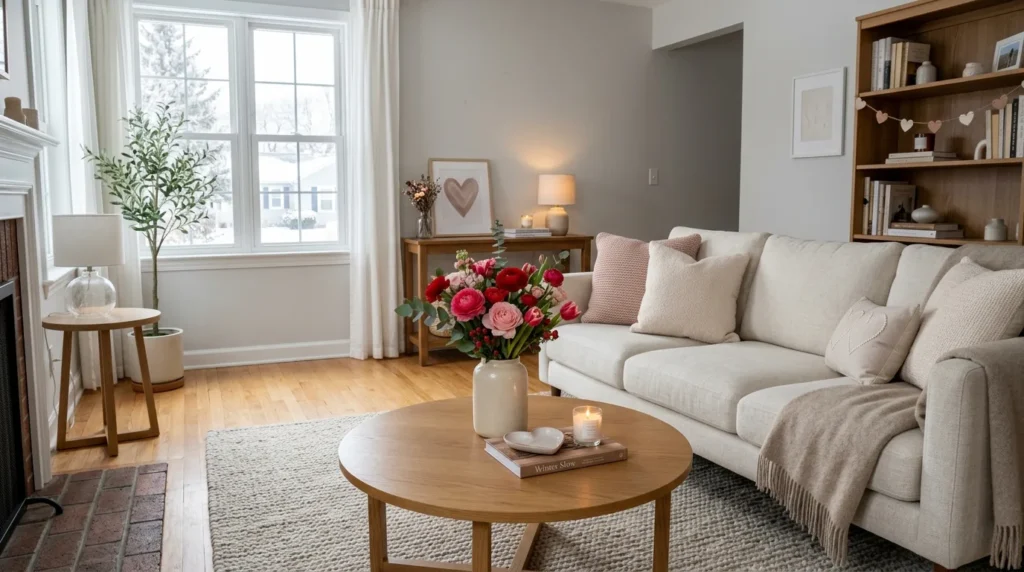
1. Start Your Valentine’s Day Living Room Decor With Softer Textiles
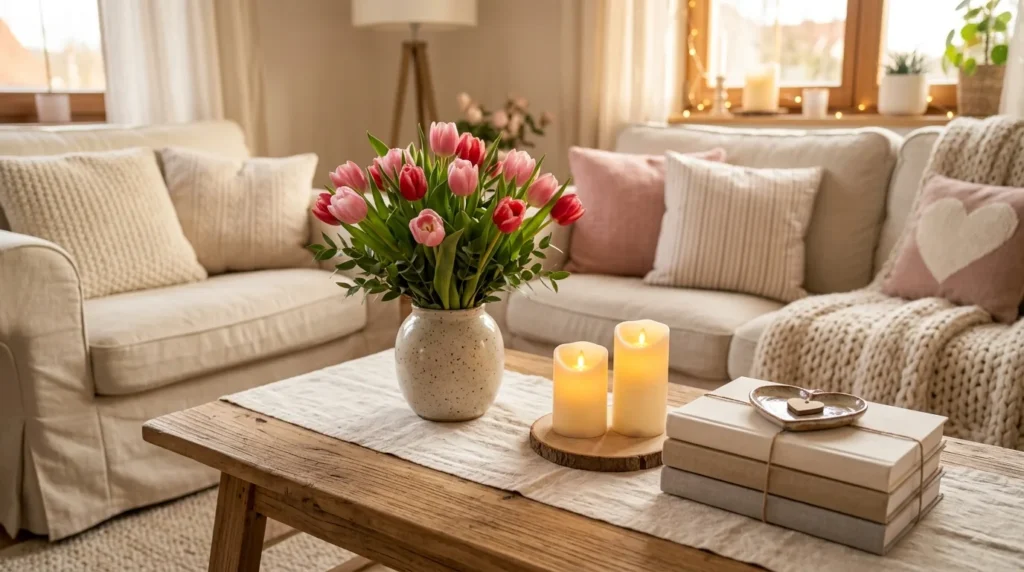
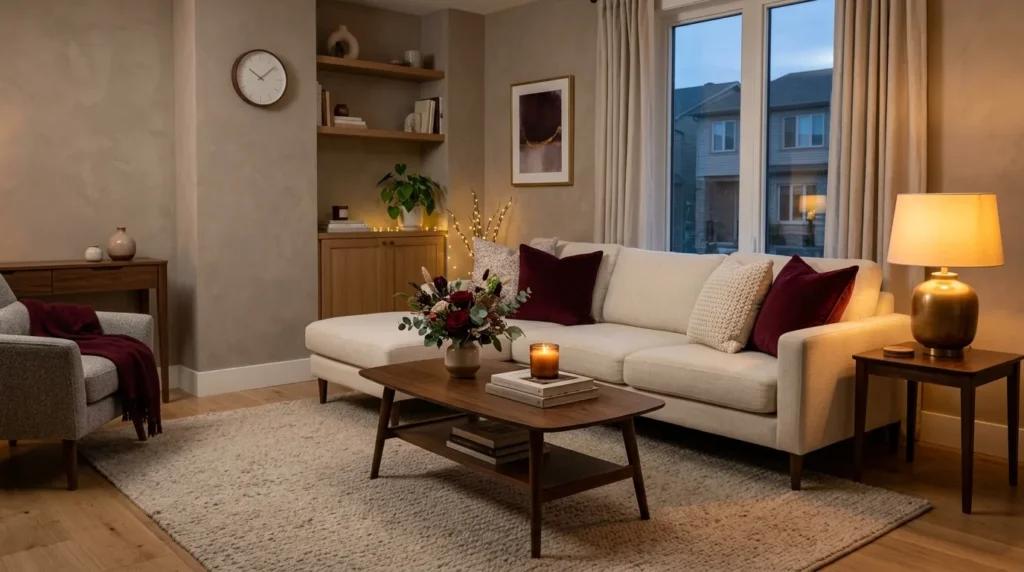
Textiles are usually my first change with Valentine’s Day Living Room because they alter the room without taking up extra floor space for Valentine’s Day Living Room. A few pillow covers and a throw blanket can make the sofa feel ready for February in less than ten minutes.
I avoid buying pillows that only work for Valentine’s Day. Instead, I use neutral covers as a base and add one or two seasonal colors. Dusty rose, muted red, burgundy, cream, and warm blush all work with the wood tones and neutral colors already in our home for Valentine’s Day Living Room.
Last year, I bought two red pillow covers for around $18 and paired them with cream covers I already had. The combination looked much better than buying five matching heart pillows. It also made storing everything easier after the holiday.
For a tighter living room, I would keep the arrangement simple:
- Two seasonal pillow covers in red, blush, or burgundy
- One soft throw blanket, usually between $25 and $60
- One textured neutral pillow to connect the seasonal colors with your existing furniture
My first attempt went wrong because I added too many pillows. Miso, our rescue cat, immediately claimed the tallest pile, while everyone else had to move pillows before sitting down. I removed three of them the next day. The lesson was simple: decorations should not make your furniture less usable.
If new textiles are not in the budget, try folding a blanket you already own across one corner of the sofa and adding a single inexpensive pillow cover from Target.
2. Create a Simple Valentine’s Focal Point Above the Sofa
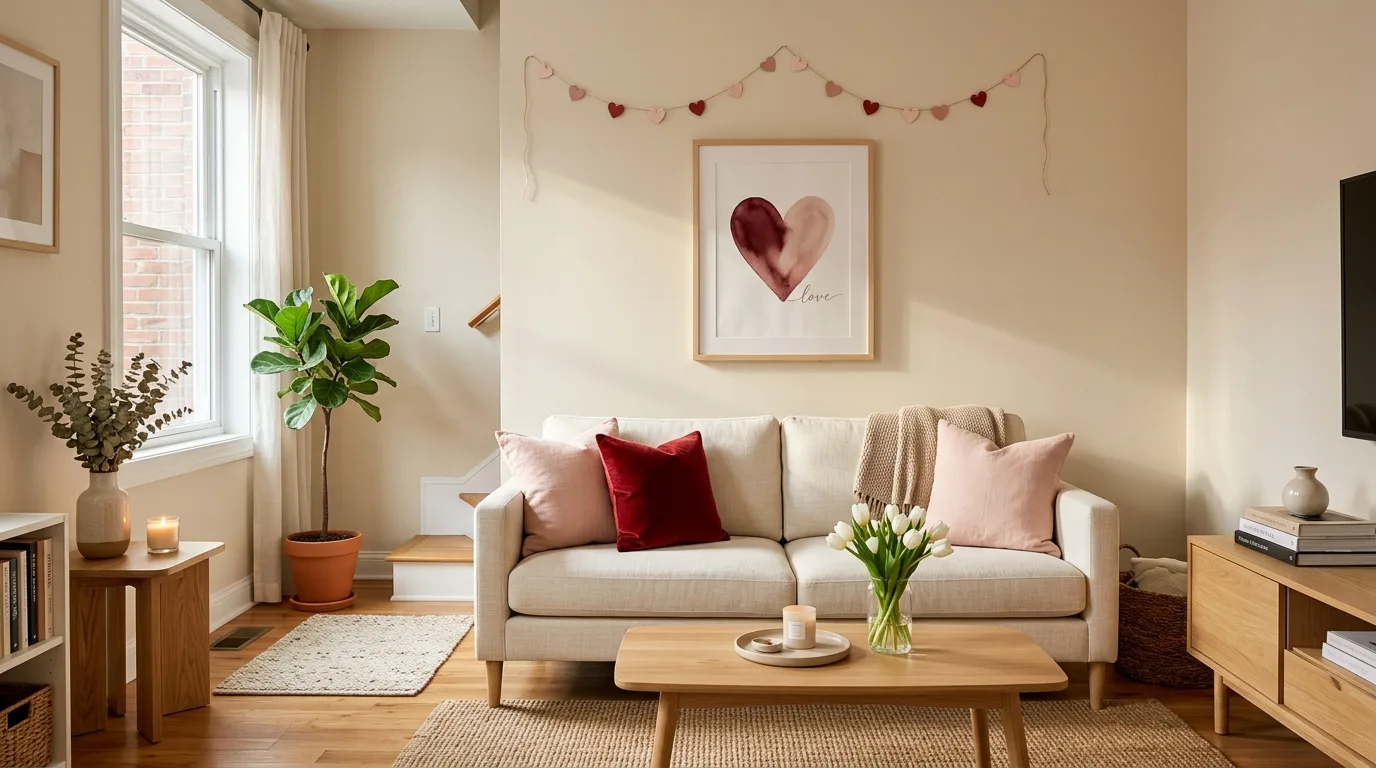
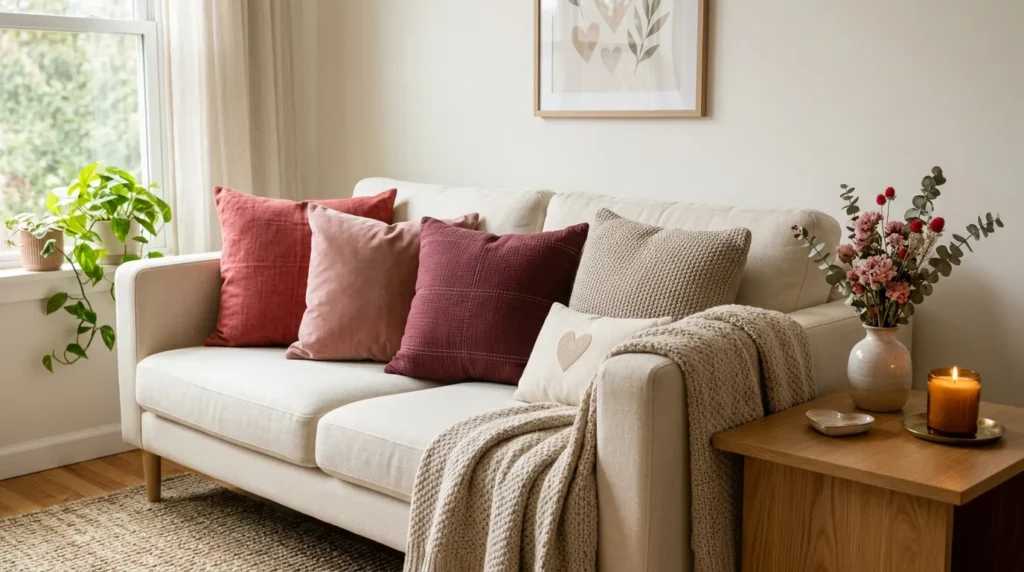
The wall above a sofa often gives you the easiest place to add seasonal personality. Since wall space does not reduce your usable floor area, this approach works particularly well in a smaller living room.
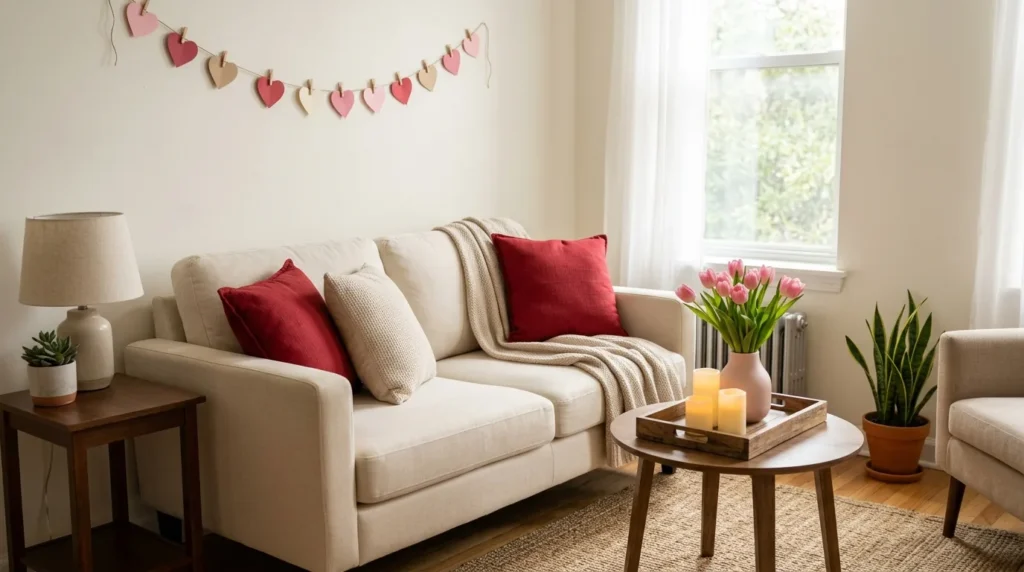
I prefer changing only one or two pieces instead of creating a large Valentine’s Day Living Room display. A framed print, a heart-shaped wall hanging, or a small arrangement of removable paper decorations can be enough.
For our townhouse, I usually work with what I already have. One February, I printed a simple love-themed design, placed it in an existing frame, and added a small fabric garland. The project cost less than $8 because I already owned the frame.
The imperfect part came when I tried cutting the paper hearts by hand. Several were uneven, and the string looked crooked after I hung it. Rather than starting again, I spaced the hearts farther apart and trimmed two pieces that looked especially rough. It was not perfect, but from across the room, nobody noticed.
If you rent, removable adhesive strips can help, but always follow the manufacturer’s directions and check that the product suits your wall surface.
A larger art print from West Elm or Pottery Barn may look great, but you do not need to spend $135 on seasonal wall art. A printable design, thrifted frame, or simple DIY project can create a similar result for under $20.
3. Add Warm Lighting Without Crowding the Room
Lighting changes the mood of a room faster than many decorations. During Colorado winters, the sun can still feel intense during the day, but evenings get dark and cold. That makes warm lighting especially useful in February.
For Valentine’s Day living room decor, I like lamps with warm bulbs rather than bright overhead lighting. A bulb around 2700K generally gives a warmer appearance than a very cool daylight bulb, which can make reds and soft pinks feel harsher.
Candles can also add atmosphere, but I stay careful with them because our cat jumps onto furniture. Open flames near curtains, blankets, pets, or clutter are not worth the risk. Flameless candles offer a simpler option, especially for homes with pets or young children.
A few options that do not require much space include:
- Flameless candles on a stable tray
- A table lamp with a warm bulb
- Battery-operated string lights inside a clear glass container
- One small lamp near a reading chair
I once tried placing string lights behind our sofa, thinking they would create a soft glow. The cord placement looked messy, and I realized I had not planned where the cable would go. That project ended with an extra trip to Home Depot for cable-management supplies. Now I choose battery operated lights for temporary decorating or plan the cord route before setting everything up.
For electrical work beyond simple plug in decorating, consult a licensed professional rather than trying to modify wiring yourself.
4. Style the Coffee Table, but Leave Room to Use It
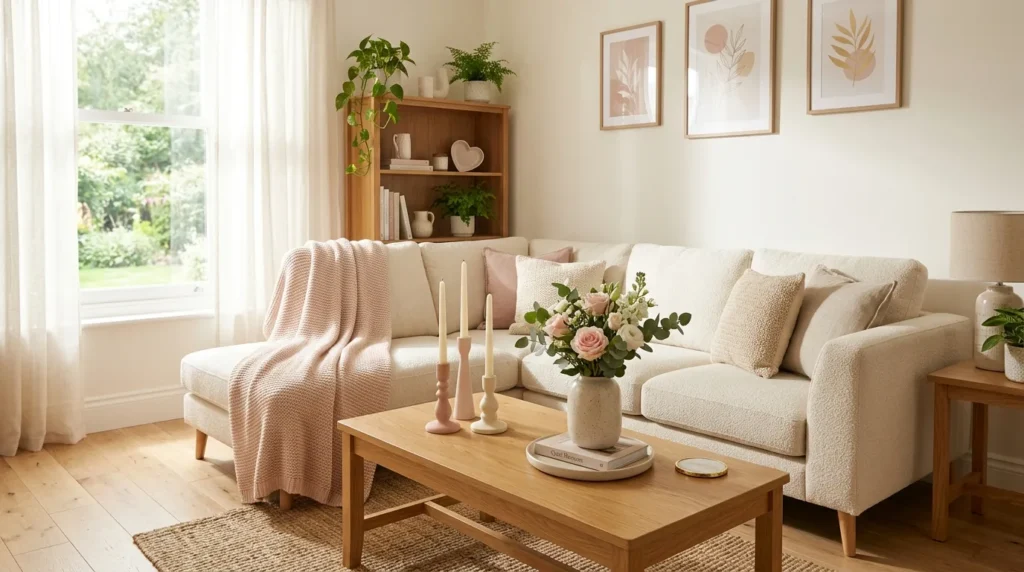
A coffee table is one of the easiest places to add Valentine’s touches, but it is also one of the easiest places to overcrowd. In a living room with limited square footage, every surface can quickly become storage.
My preferred setup uses a tray because it keeps smaller items visually contained. I might place a candle, a small vase, and one seasonal object inside it. The rest of the table stays clear for coffee mugs, remotes, or whatever else we actually need during the week.
One year, I bought a group of decorative items from HomeGoods for around $42. They looked fine individually, but together they made the coffee table feel like a store display. Half of them went back into the cabinet after one day.
For me, the better formula is fewer pieces with different heights. A low candle beside a small vase creates enough variation without making the table difficult to use.
Fresh flowers can work beautifully, although they do not need to be expensive. Grocery store flowers around $14 to $25 can look polished in a simple vase. If you want something reusable, faux stems or branches can return each year.
Before placing anything on the table, think about how people use the room. If you regularly eat dinner there, play games, or work from the sofa, keep the setup easy to move.
5. Use Red and Pink in Smaller, More Intentional Areas
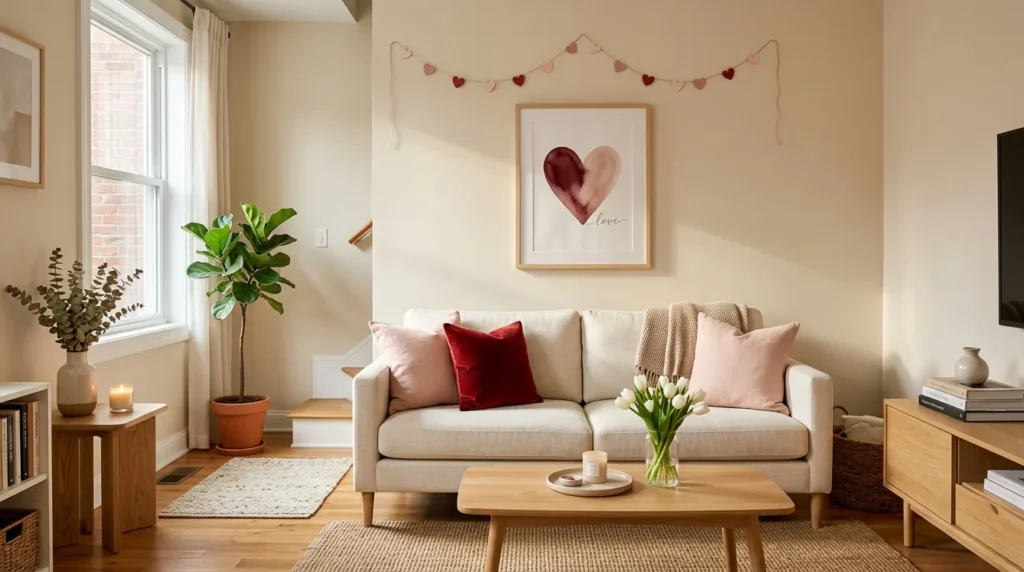
One mistake I made early on was treating Valentine’s decorating like a requirement to change every color in the room. I added red pillows, pink decorations, a bright garland, and several heart-shaped pieces. Against our neutral furniture, the room looked busier than romantic.
Now I use seasonal color in smaller areas. One red pillow, a muted pink flower arrangement, or burgundy candles can give the room a February feel without changing everything else.
For modern Valentine’s Day living room decor, softer shades often blend more easily with existing furniture. Rose, terracotta-pink, wine red, and dusty mauve can work beyond February, so you may get more use from what you buy.
This approach also saves money. Instead of replacing a $250 area rug for one month, add a $19.99 pillow cover or a $12 decorative candle. Seasonal decorating becomes much easier when the largest furniture and expensive textiles stay in place.
If you already own a red book, pink vase, or warm-toned artwork, try using that before shopping. Moving familiar objects into a new arrangement can sometimes give you the seasonal change you wanted.
6. Bring in Flowers and Natural Texture
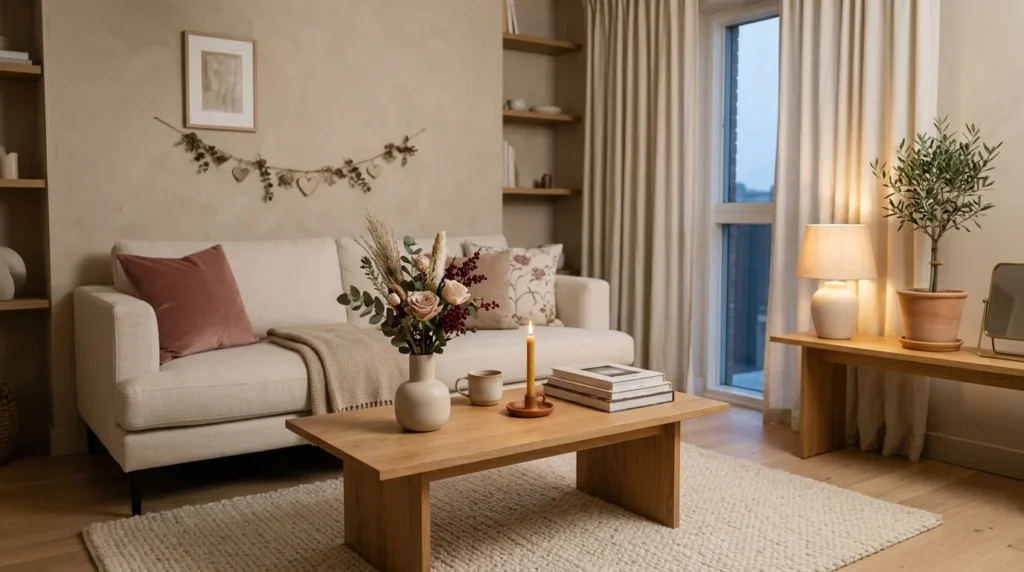
Flowers add color without requiring permanent decorations. For February, I like simple arrangements rather than oversized bouquets. A large vase can take over a small coffee table, while a smaller arrangement often fits the room better.
Red tulips, pink carnations, white flowers, or branches with subtle color can work nicely. The goal is not to create a wedding-style arrangement. I want the room to feel lived in.
A small arrangement in the center of the coffee table or on a side table can cost around $15 to $30, depending on what you choose. For a longer-lasting option, faux stems from Target, Michaels, or HomeGoods can be reused.
Natural texture also helps balance the sweeter side of Valentine’s decorating. I pair flowers with wood, ceramic, linen, or woven materials already in the room. That combination keeps the seasonal details connected to the rest of the home.
Living in dry Colorado air has taught me another lesson: real flowers and indoor plants need attention, especially during winter. I do not assume every arrangement will look fresh for a full week. Checking water levels and keeping delicate plants away from strong heating vents can help, but specific plant care depends on the variety.
7. Finish With One Personal Detail
The most memorable Valentine’s decorations usually have some connection to the people living in the home. This does not need to mean covering the room with framed photos.
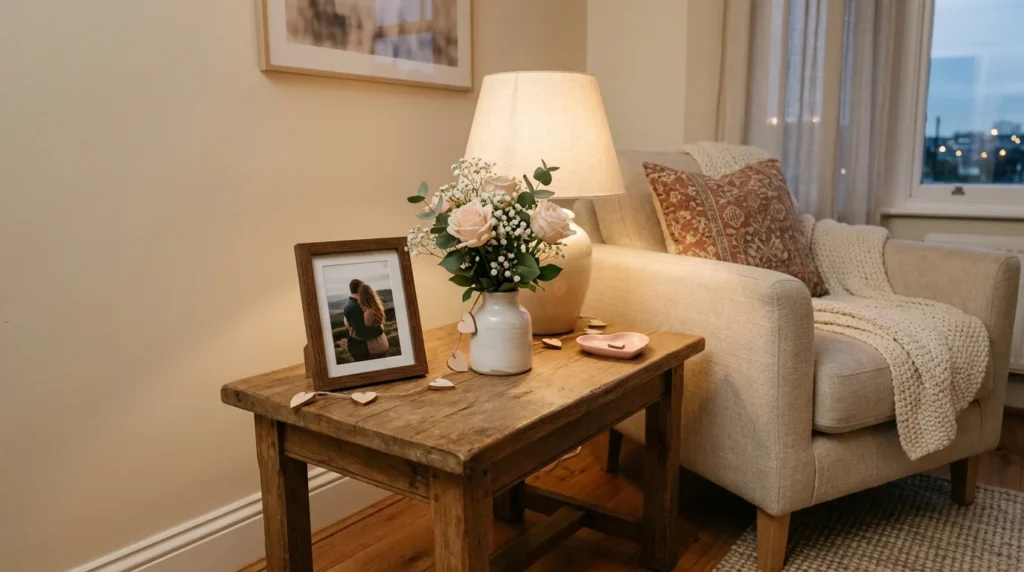
I prefer one small personal detail. It might be a framed photo from a favorite trip, a handwritten note, or a book with a meaningful connection placed on the coffee table. These items make the seasonal setup feel less generic.
For a simple DIY, I made a small memory display using twine, mini clips, and printed photos. The supplies cost about $16. I measured the wall area, cut the twine, and thought I had everything ready.
Then I cut one piece too short.
That meant another trip for supplies, and I had to start that section again. It was frustrating at the time, but the final display looked more personal than anything I could have bought ready made.
If wall displays are not your style, place one framed photo on a shelf and change the surrounding decor slightly. That costs nothing if you already own the frame.
This is where Valentine’s decorating feels most useful to me. The room does not need more stuff. One meaningful piece can give the entire setup a reason to exist.
What I’d Do Differently Next Time
After decorating our living room for several Valentine’s seasons, I would plan less shopping and more editing.
My biggest mistake was buying decorations before deciding where they would go. A heart shaped object might look cute in a store, but that does not mean it works in a 1,050 square foot townhouse. I now walk through the room first and choose two or three areas to update.
I would also measure before buying larger seasonal pieces. We once considered a decorative floor basket that looked perfect online, but its size would have narrowed an already busy walkway. That saved us from another piece of furniture taking up valuable space.
Storage matters too. If I cannot easily pack something away after February, I think twice before buying it. Foldable textiles, reusable candleholders, and small decor items make more sense for our home than large holiday specific displays.
The second lesson involves color. I used to buy decorations that matched each other too closely. Now I look for pieces that also work with our normal furniture. That gives me more flexibility and reduces wasteful purchases.
A good Valentine’s setup should still allow you to sit comfortably, walk through the room, and use your furniture normally.
Make February Feel Different Without Redecorating Everything
Valentine’s decorating works best for me when it feels like a seasonal layer rather than a complete redesign. A few soft textiles, warmer lighting, flowers, and one personal touch can change the mood of the room without filling every available surface.
If you are starting this week, choose one area first. Update the sofa, coffee table, or wall above the seating area. Live with that change for a day before adding more. In a home with modest square footage, restraint often looks better than trying to display every idea at once.
My suggestion is to shop your home before buying anything new, then add only the pieces that genuinely improve the room. Start small, adjust as you go, and create a Valentine’s space that still feels comfortable enough for everyday life.