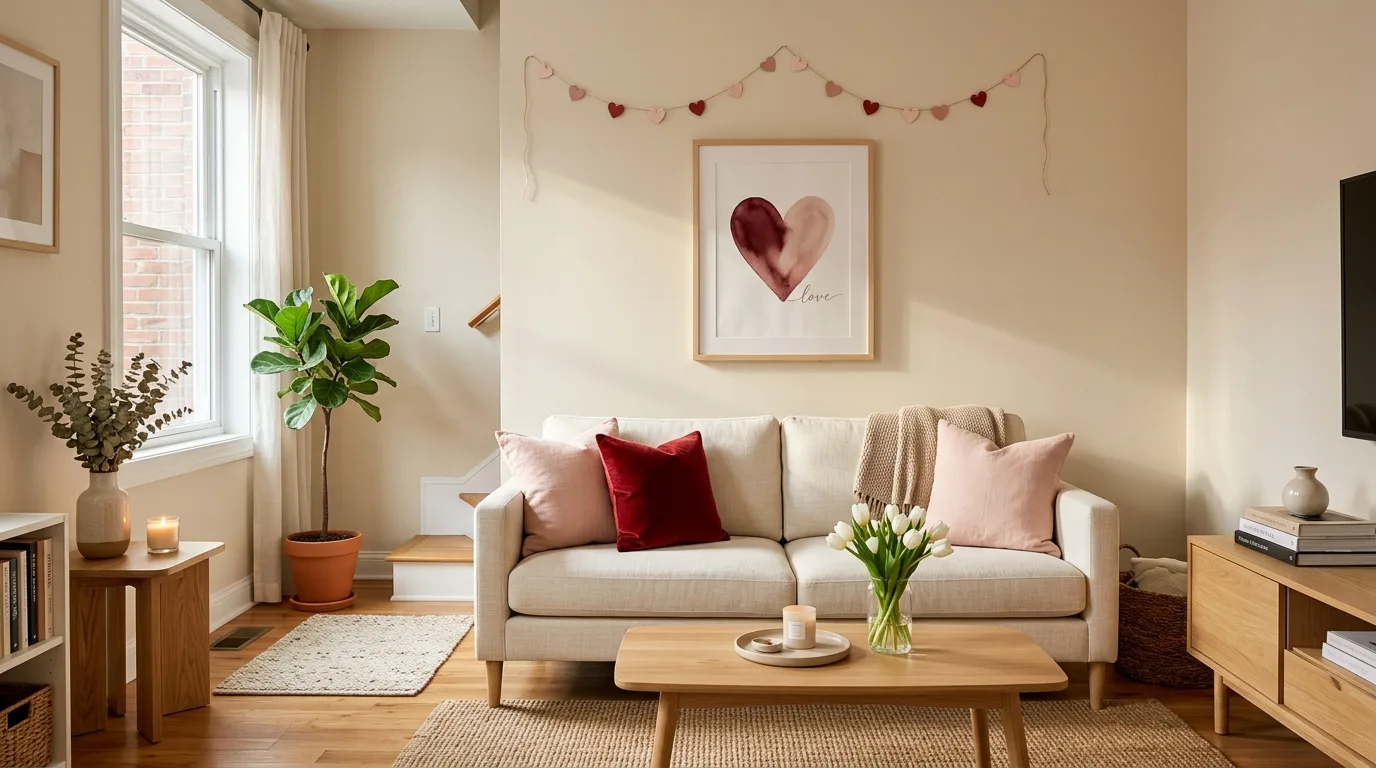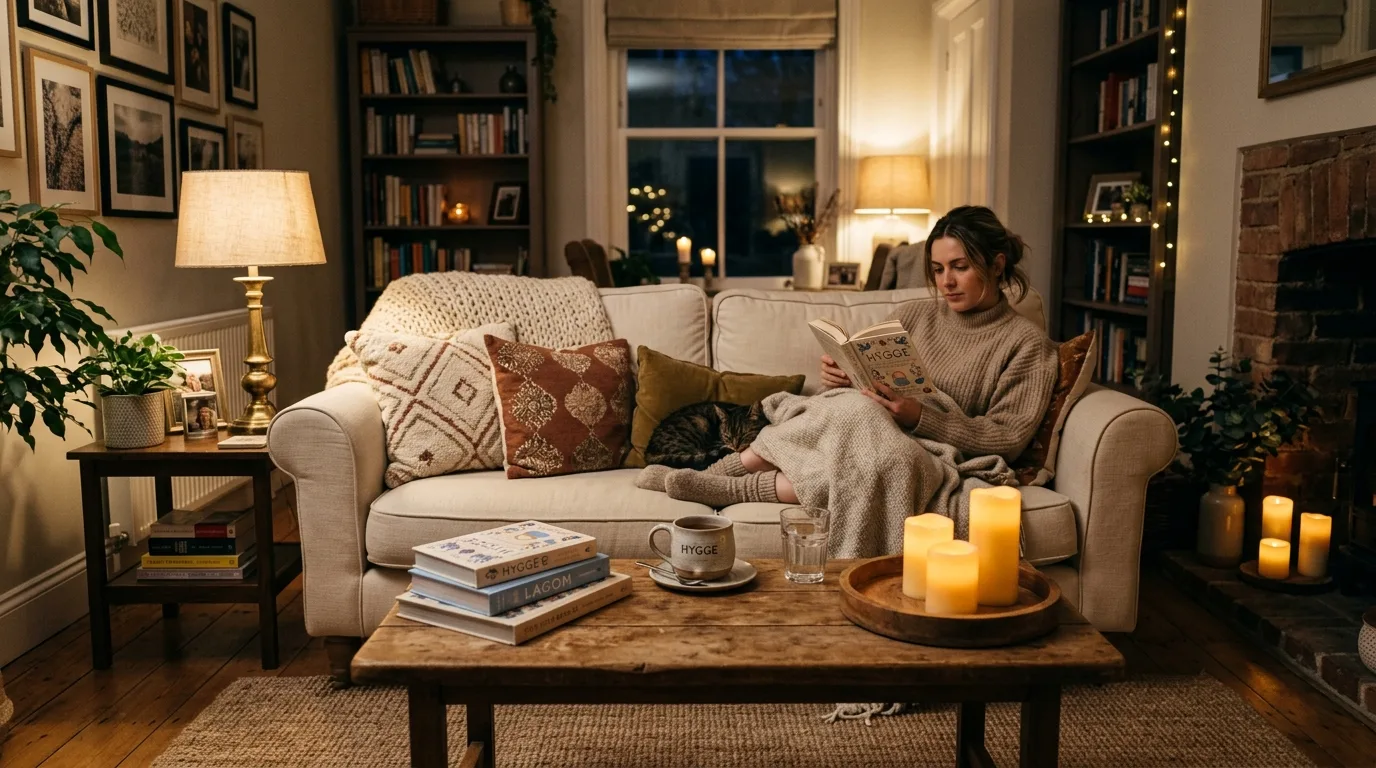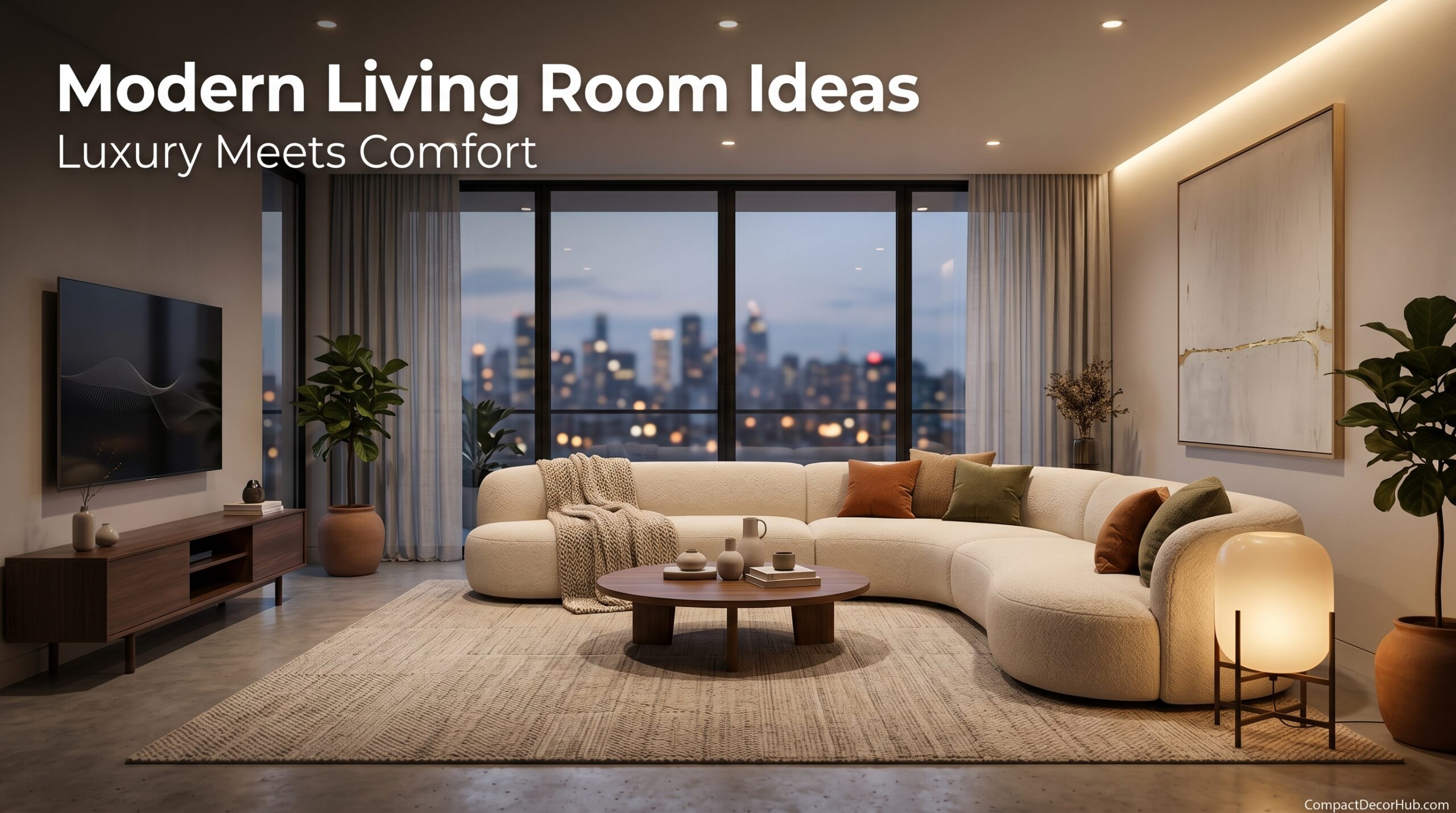
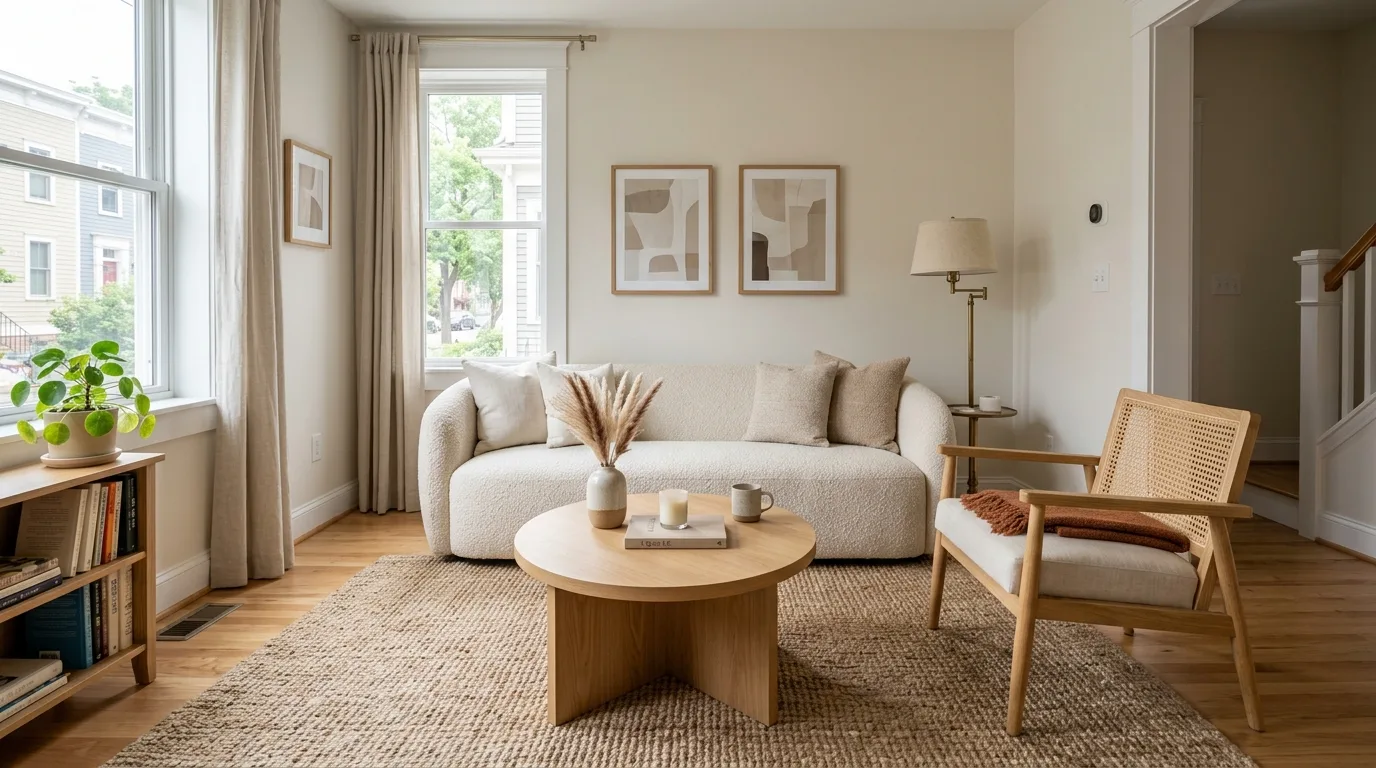
Our living room looked crowded even after I removed things I barely used. The sofa took up more floor than expected, the coffee table interrupted the walking path, and the dark curtains made the window feel smaller. Nothing was technically wrong with the room, but it didn’t feel comfortable.
After living in our 1,050 square foot townhouse for three years, I’ve learned that a room doesn’t need more furniture to feel bigger. It needs better spacing, lighter visual weight, and a layout that lets your eyes move across the room. The right changes can make a modest living room feel noticeably more open without remodeling, replacing everything, or spending a fortune.
In this guide, I’ll walk through the changes that have worked best in our home, including furniture placement, mirrors, curtains, lighting, rugs, color, and a few inexpensive styling tricks. I’ll also share the mistakes I made along the way, because some of the ideas that looked great online didn’t work once they were inside our actual living room.
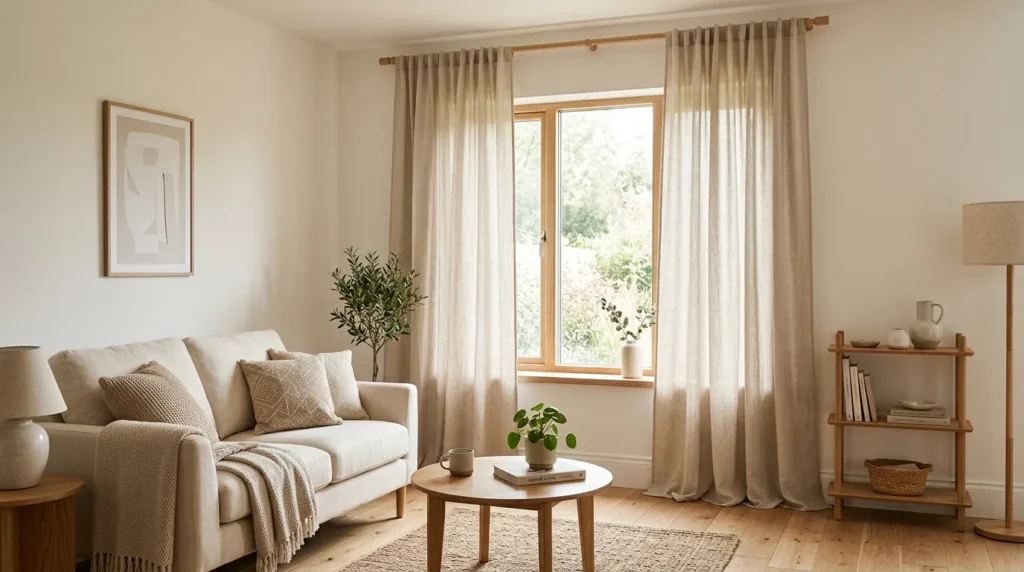
Start With the Furniture Layout
Furniture placement creates the biggest visual difference of a Small Living Room Look Bigger in a modest living room. Before changing paint colors or buying mirrors, move the furniture and look at the floor.
Our first sofa arrangement left almost no comfortable path between the seating area and the rest of the room. The sofa looked fine by itself, but the room felt blocked. Moving it several inches changed the walking path more than I expected.
Try keeping the main route through the room as clear as possible. Don’t push every piece against a wall simply because the room is small. Sometimes pulling a sofa slightly forward creates better balance and makes the walls feel less crowded.
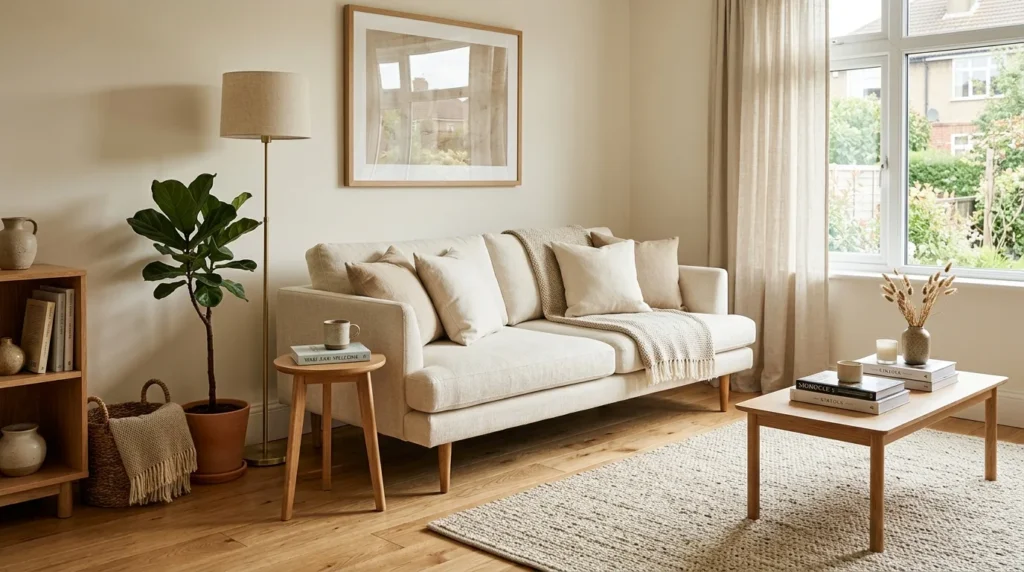
Give Each Piece Enough Breathing Room
A large sectional may provide plenty of seating, but it can overwhelm a tight living room. A sofa with a slimmer profile often works better.
Look for:
- Narrower arms and a moderate seat depth.
- Open legs that reveal more of the floor.
- Furniture that fits the wall without extending into walkways.
- One useful coffee table instead of several small tables.
Measure the sofa before ordering it. I once liked a sofa online that looked reasonable in photos. The actual depth made our walking area feel cramped, so I had to rethink the arrangement.
For a budget alternative, check Target, or Facebook Marketplace for sofas with raised legs and slimmer frames. You don’t need designer furniture to create visual breathing room.
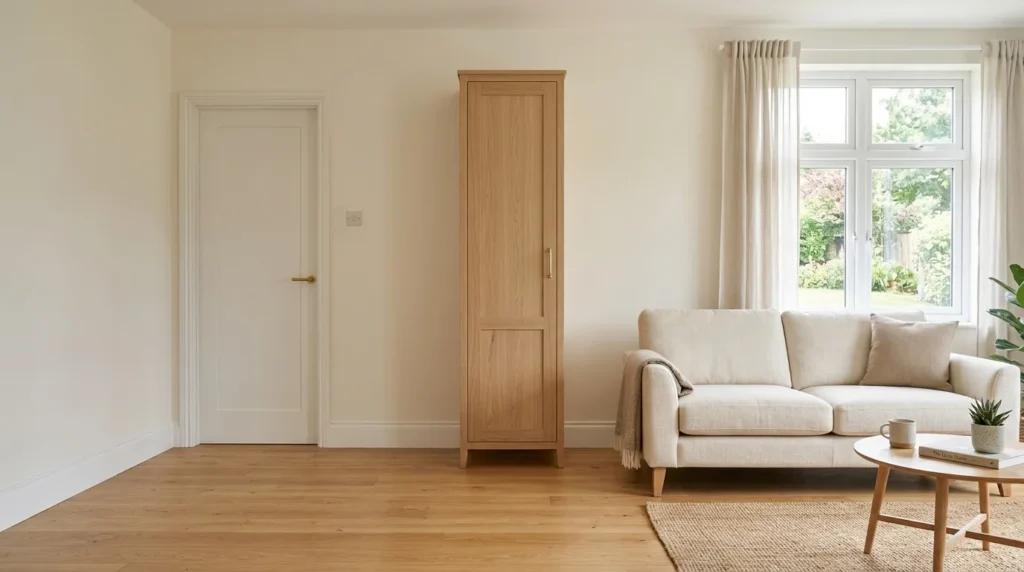
Choose Furniture That Shows More Floor
Visible floor area can make a living room feel more open. That’s one reason raised furniture works so well in rooms with limited square footage.
A sofa with visible legs allows the floor to continue underneath the furniture. The same idea works with a console table, accent chair, and coffee table.
Our living room has warm wood tones, so I prefer furniture with simple legs rather than heavy pieces that sit directly on the floor. That choice also works nicely with the modern Scandi Japandi style I’ve been using throughout the townhouse.
Don’t go too far, though. Furniture that looks extremely delicate can feel uncomfortable or impractical. You still need pieces that work for everyday life.
If a West Elm or CB2 piece isn’t in your budget, look at Wayfair for similar silhouettes. A $150 300 coffee table with an open base can create more visual space than a solid storage table at the same size.
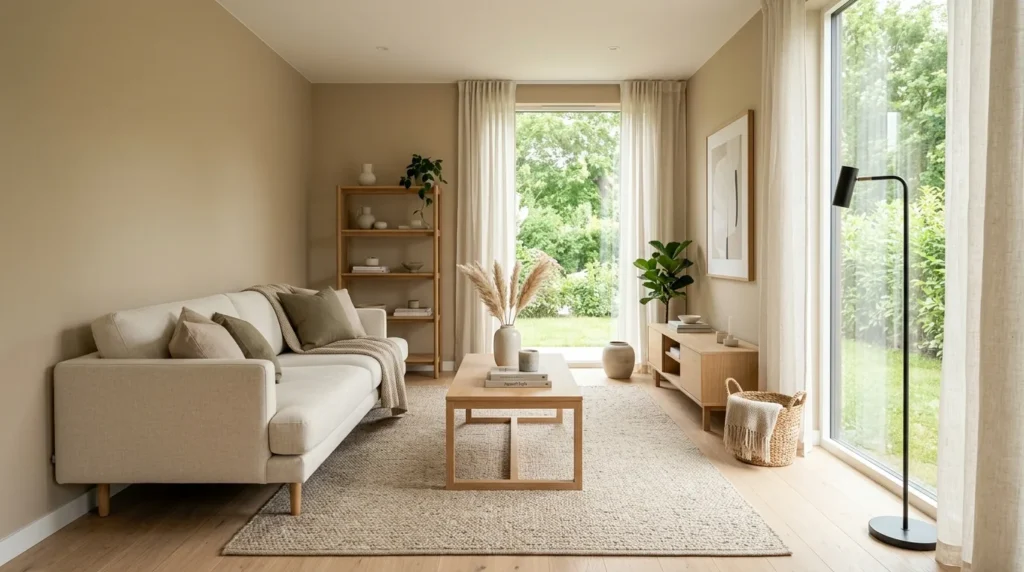
Use One Large Mirror Instead of Lots of Decor
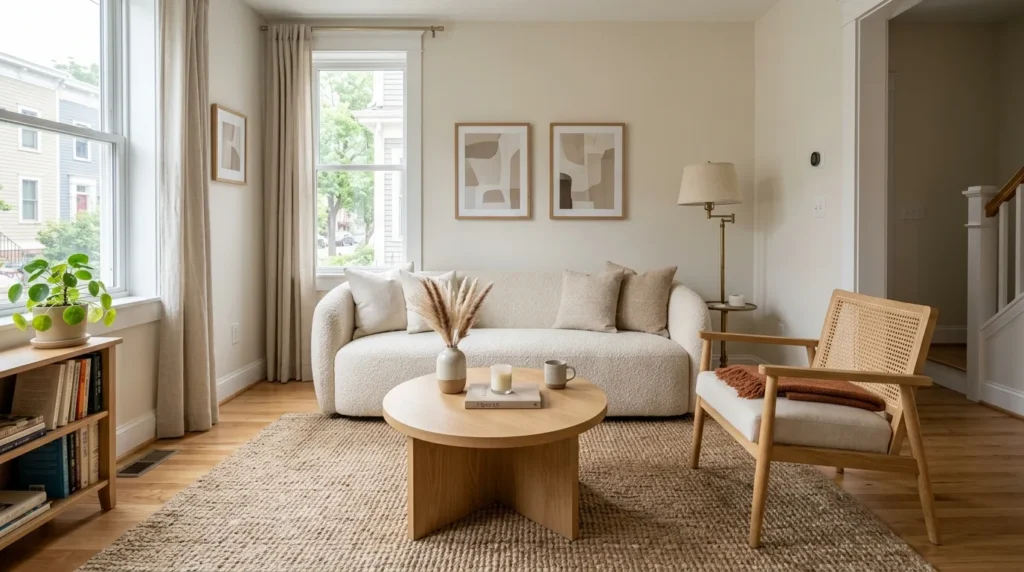
A mirror can help bounce light around the room and make the walls feel less closed in. Placement matters more than size alone.
I prefer one larger mirror over several tiny decorative mirrors. A group of small mirrors can add visual activity, while one simple frame creates a cleaner view.
Place the mirror where it can reflect natural light or another attractive part of the room. Avoid positioning it where it reflects clutter, a television screen, or an awkward corner.
Our Colorado sunlight gets especially bright during the day. A mirror near a window catches that light and spreads it across the room without requiring another lamp.
A large framed mirror can cost $80 200 or more. For a lower cost option, check Target, HomeGoods, or our local Goodwill. A secondhand frame can work beautifully if the proportions suit your wall.
Keep the Color Palette Light and Connected
Light colors can help walls recede visually, but you don’t need an all-white living room. Warm neutrals are still useful in 2026 because they work with wood, linen, black accents, and natural textures without making the room feel cold.
In our home, cream, warm beige, soft gray, and light wood create a consistent backdrop. Instead of introducing a different color on every surface, I repeat two or three tones throughout the room.
That repetition helps the room feel connected.
Let the Windows Do Some of the Work
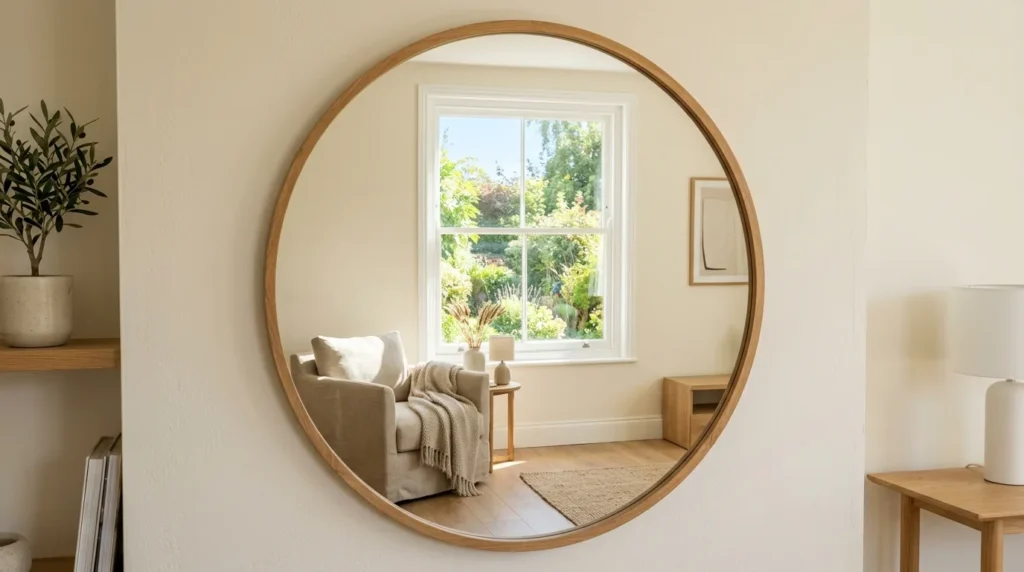
Heavy curtains can make a window look smaller. Mounting a curtain rod higher and extending it slightly beyond the window can make the opening feel wider.
Choose curtains that hang close to the floor without creating a bulky puddle of fabric. Sheer or lightweight panels can also keep natural light moving through the room.
One mistake I made was choosing curtains that looked beautiful in the store but felt too heavy once they went up. Colorado’s strong sunlight made the fabric read much warmer during the afternoon. A lighter linen-look panel worked better.
For a budget alternative, Target have simple curtain panels that can create a similar effect. Around $30 70 can be enough for a basic pair, depending on size and material.
Pick a Coffee Table With an Open Shape
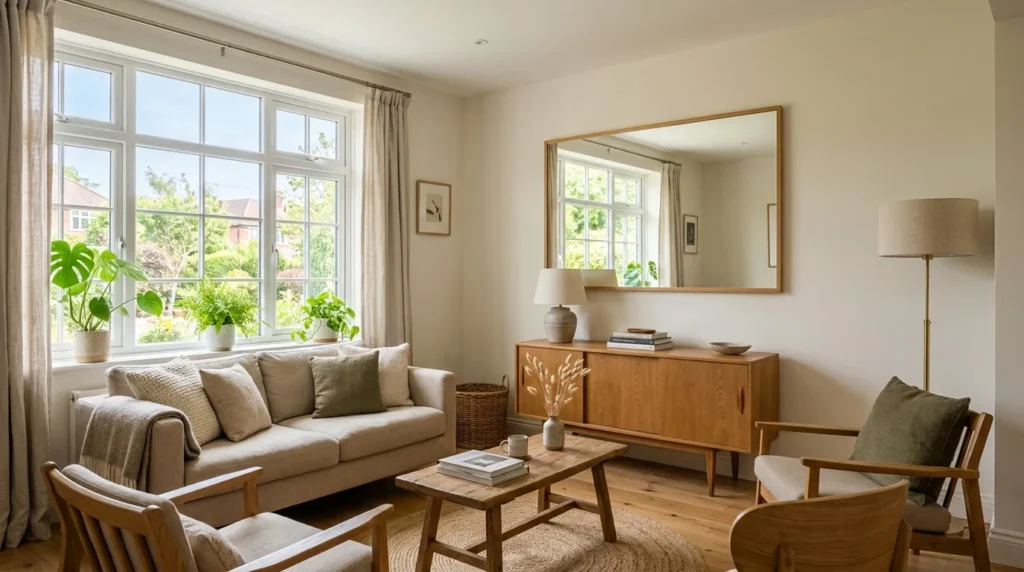
The coffee table sits near the center of the room, so its shape has a large visual impact. A solid, oversized table can make the seating area feel crowded.
Round or oval tables often make movement around the corners easier. A glass or open-frame design can also reveal more floor, although glass requires extra care around pets.
With Miso racing around the house at unexpected times, I wouldn’t choose a fragile glass table just because it looks airy. A wood table with an open lower frame gives us a similar visual effect while feeling more practical.
Keep the table proportionate to the sofa. You should be able to reach it comfortably without squeezing between furniture.
If a $200+ designer table isn’t practical, look at Target, or Facebook Marketplace. A simple wood table around $60 150 can work just as well when the scale is right.
Use Lighting to Create More Depth
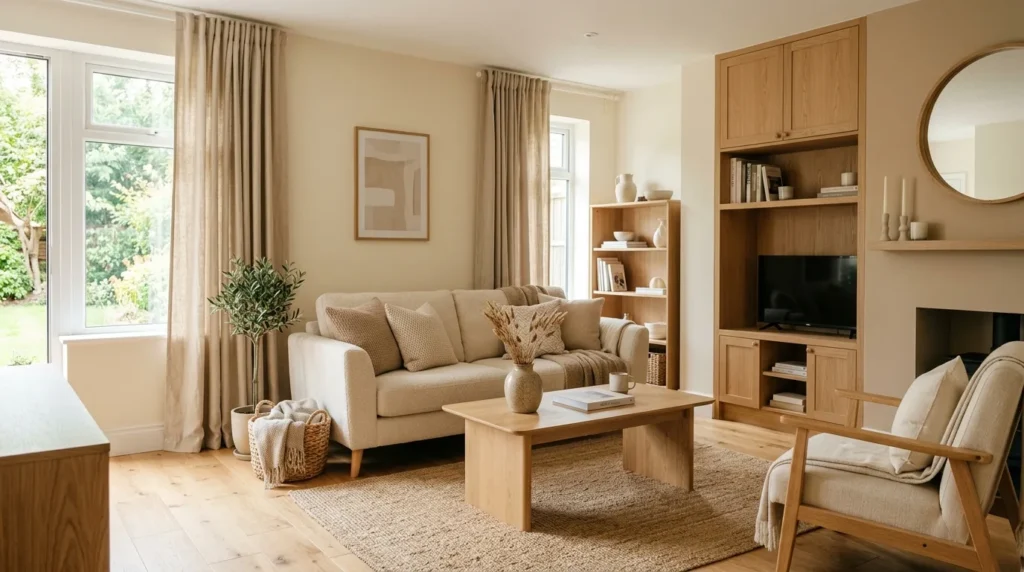
A single ceiling light can make a living room feel flat. Layered lighting creates different points of brightness and helps the room feel deeper after sunset.
Our living room looks completely different at 6 a.m. than it does at noon. In the evening, a floor lamp beside the sofa creates a softer pool of light that makes the seating area feel more defined.
Use a combination of:
- One main ceiling fixture.
- A floor lamp beside the sofa or chair.
- A small table lamp on a console or side table.
Keep the fixtures visually simple. Oversized lamps can take up valuable visual space.
For warm evening lighting, bulbs around 2700K usually create a softer feel than very cool bulbs. If you need brighter task lighting, adjust the bulb rather than adding several more fixtures.
A simple floor lamp may cost $40 100.Target can be useful starting points when you want a clean shape without a large decorating budget.
Take Advantage of Vertical Space
When floor area is limited, walls become valuable. But filling every wall with shelves and artwork can have the opposite effect.
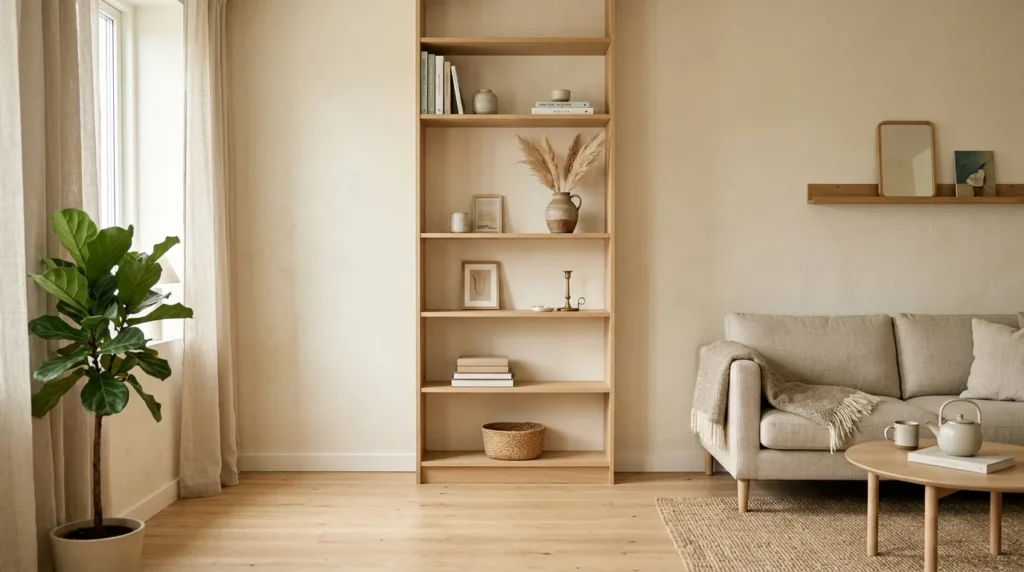
Choose one strong vertical feature instead. A tall bookcase, narrow cabinet, or vertical artwork can draw the eye upward without spreading furniture across the floor.
Our townhouse has 9-foot ceilings on the main floor, so vertical height gives us room to work with. A tall, narrow piece uses that height without taking much floor space.
Avoid placing heavy storage units directly beside every seating area. One narrow storage piece can be enough for books, baskets, or a few decorative objects.
If a tall cabinet costs several hundred dollars, try simpler shelving systems or search Facebook Marketplace for a narrow secondhand bookcase. Paint it in a color close to the wall if you want it to blend in.
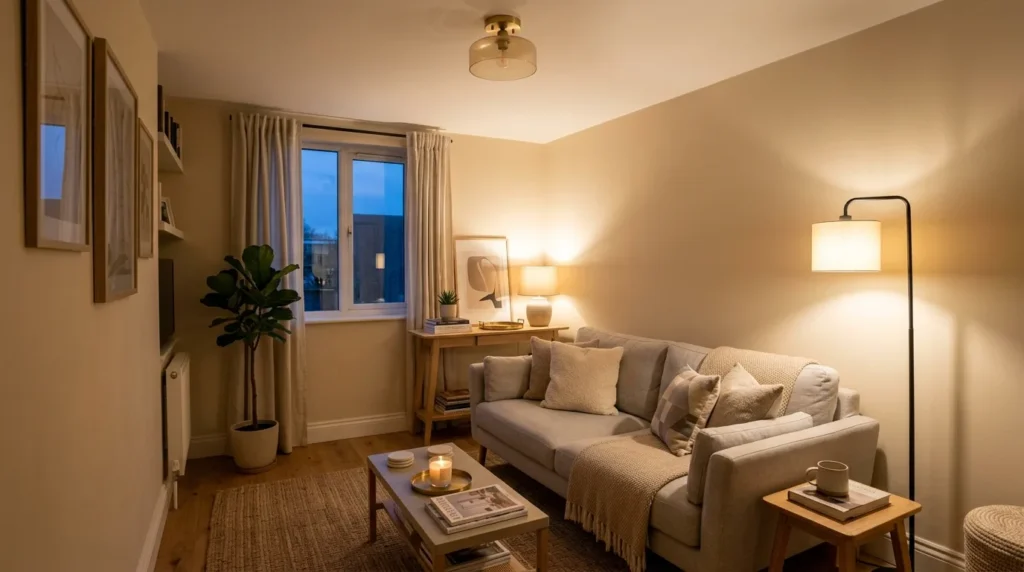
Make the Walls and Floor Feel Connected
One overlooked way to make a living room feel bigger involves reducing visual breaks. Too many contrasting colors can divide the room into separate sections.
This doesn’t mean everything should match. Instead, repeat similar tones in the rug, curtains, sofa, and wood accents.
A rug that is too small can also make the seating area look disconnected. In many cases, a larger rug that allows the front legs of the sofa and chairs to sit on it creates a more unified arrangement.
I made this mistake with a smaller rug. It technically fit the coffee table, but the sofa looked disconnected from the rest of the seating. Moving to a larger rug made the entire arrangement feel more intentional.
If a large wool rug isn’t in the budget, consider a washable or low pile option from Target, Wayfair. Prices vary widely, but you can often find practical options around $80 250.
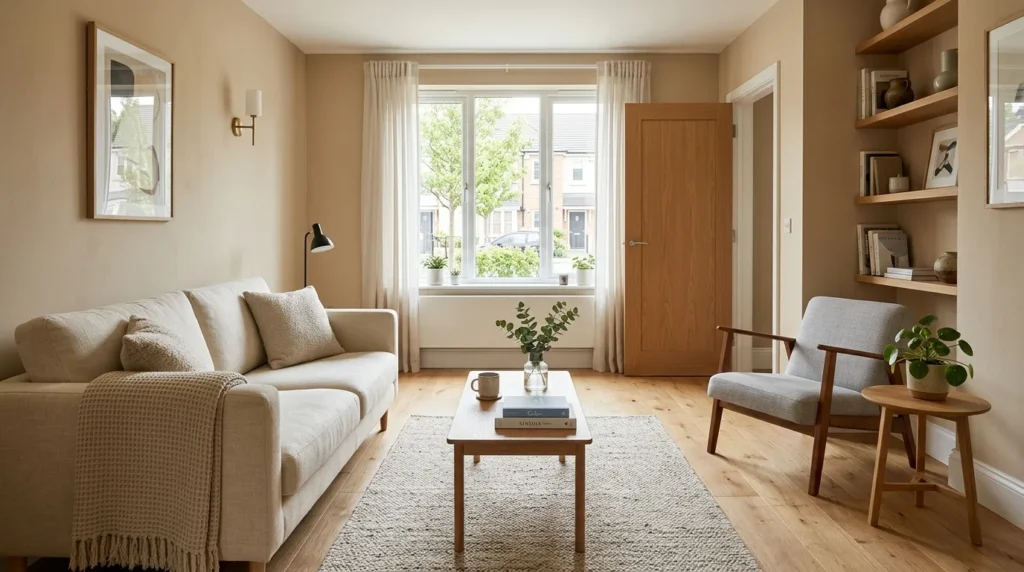
Declutter the Surfaces You See First
Making a room feel larger doesn’t require removing everything you love. It means giving the eye a few clear areas.
The coffee table, media console, and entry into the room usually deserve the most attention. Keep everyday essentials contained instead of spreading them across every surface.
I use a small basket for remotes and charging accessories. It isn’t fancy, but it keeps the coffee table from becoming a pile of electronics.
The same rule applies to open shelving. Leave some empty space between objects. A shelf packed from end to end can make the entire wall feel heavier.
For renters, this approach works especially well because it doesn’t require permanent changes. A few baskets, trays, and removable hooks can improve organization without drilling into the walls.
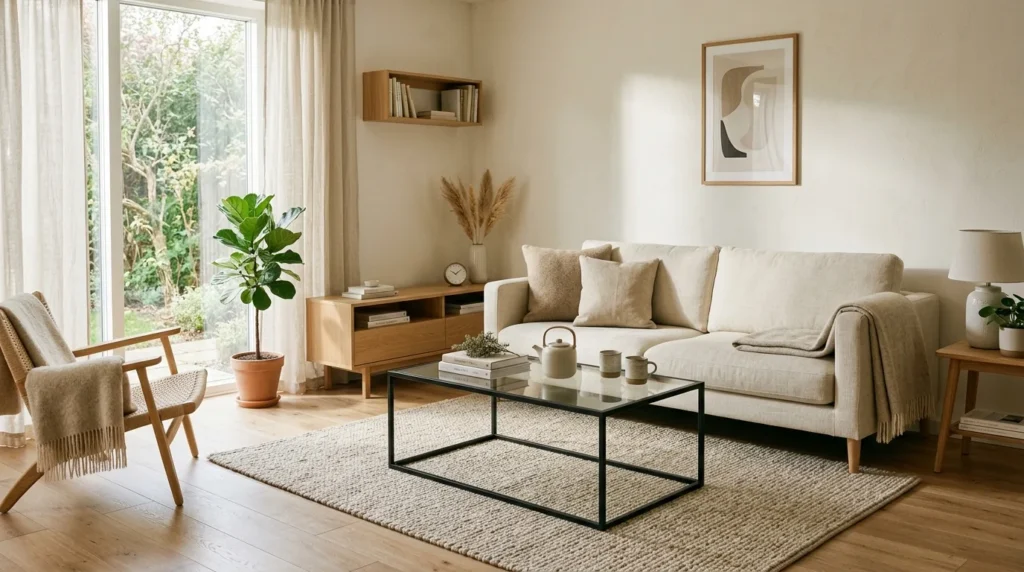
Try One Small Styling Project
One of my favorite low cost changes was creating a simple layered corner beside the sofa.
I started with a narrow secondhand side table, added a small lamp, and placed one medium size basket underneath. The first basket I bought was too tall, so it caught against the table and looked awkward. After returning it, I found a shorter one for around $18.
The final setup gave the corner a purpose without filling it with random accessories.
Try the same approach with a small table, one lamp, and one basket. Keep the area useful rather than adding decorative pieces simply to fill an empty corner.
This project also taught me something important: measure the height between furniture pieces before buying storage baskets. A few inches can decide whether the setup works.
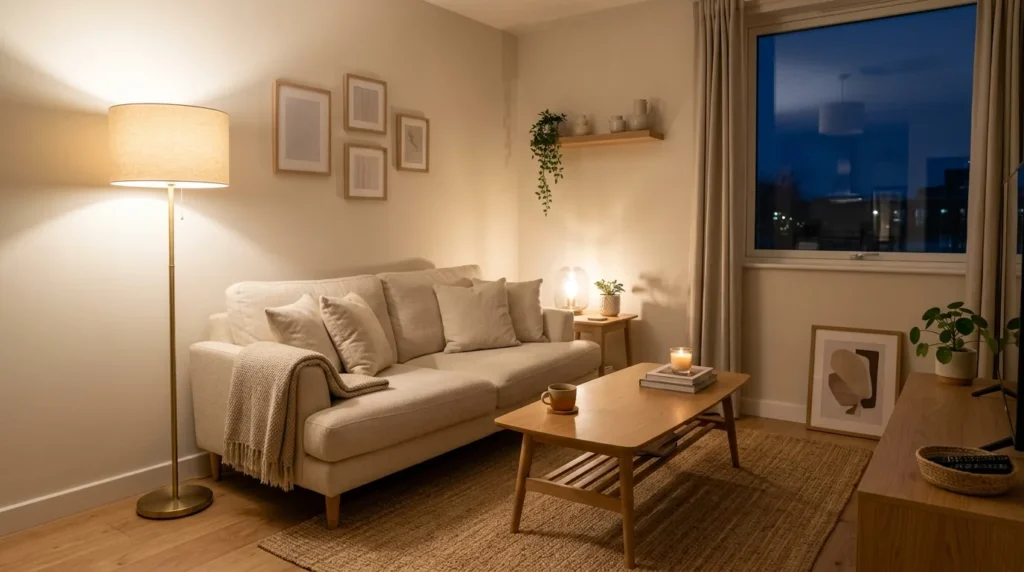
What I’d Do Differently
The first mistake I’d avoid is buying furniture before measuring the room. Online photos can make a sofa or coffee table look much smaller than it feels inside an actual living room.
The second mistake was trying to make the room look bigger by adding more mirrors and decorative objects. The result looked busier, not larger.
I’d also skip furniture that blocks the walking path, even if the piece looks perfect by itself. A beautiful chair isn’t helpful if everyone has to squeeze around it.
After several rearrangements, I’ve found that the best results usually come from removing one unnecessary item, improving the lighting, and giving the remaining furniture more room.
Make Your Living Room Feel Bigger Without Remodeling
Learning how to make a small living room look bigger doesn’t require a major renovation. Start with furniture scale, clear walking paths, visible floor, lighter window treatments, and layered lighting.
After living in a 1,050 square foot townhouse, I’ve learned that the room feels better when every piece has a reason to be there. That’s especially true when your living room also needs to handle everyday relaxing, working from home, pet hair, and occasional guests.
Before buying anything new, move what you already own. Take a photo from the doorway, check the walking paths, and remove one piece that feels unnecessary. Then make one change at a time. For more practical room layouts and budget friendly decorating ideas, keep exploring CompactDecorHub and try the ideas that fit your own home.