Some living rooms look beautiful in photos but never feel comfortable enough to spend an entire evening in. That was exactly the problem I faced after Ethan and I moved into our 1,050 square foot townhouse outside Denver. The furniture matched, the walls were freshly painted, and every decorative piece seemed to belong together, yet the room still felt cold and unfinished. Instead of becoming the heart of our home, it was simply a place we walked through on our way to the kitchen or upstairs.
Everything changed after I discovered the simple principles behind hygge living room ideas. Rather than chasing every decorating trend, I began focusing on warmth, natural textures, soft lighting, and furniture that supported everyday life. The goal wasn’t to make the room look expensive. I wanted it to feel peaceful after a long day, inviting during snowy Colorado evenings, and comfortable enough that family and friends would naturally want to stay a little longer.
The process wasn’t perfect. I bought a sofa that was too deep for our living room, installed floating shelves that weren’t level on the first attempt, and wasted money on decorative pieces that looked great online but overwhelmed our modest space. Those mistakes taught me that creating a hygge-inspired living room isn’t about filling every corner with décor. It’s about choosing fewer, better pieces that make your home feel calm, functional, and genuinely welcoming.
If you’re looking for hygge living room ideas that work in a small home, apartment, or townhouse, you’re in the right place. These ideas come from years of real-life trial and error, practical budgeting, and everyday living in a compact home. Whether you’re refreshing one corner or redesigning your entire living room, these tips will help you create a warm, timeless space that feels just as good as it looks.
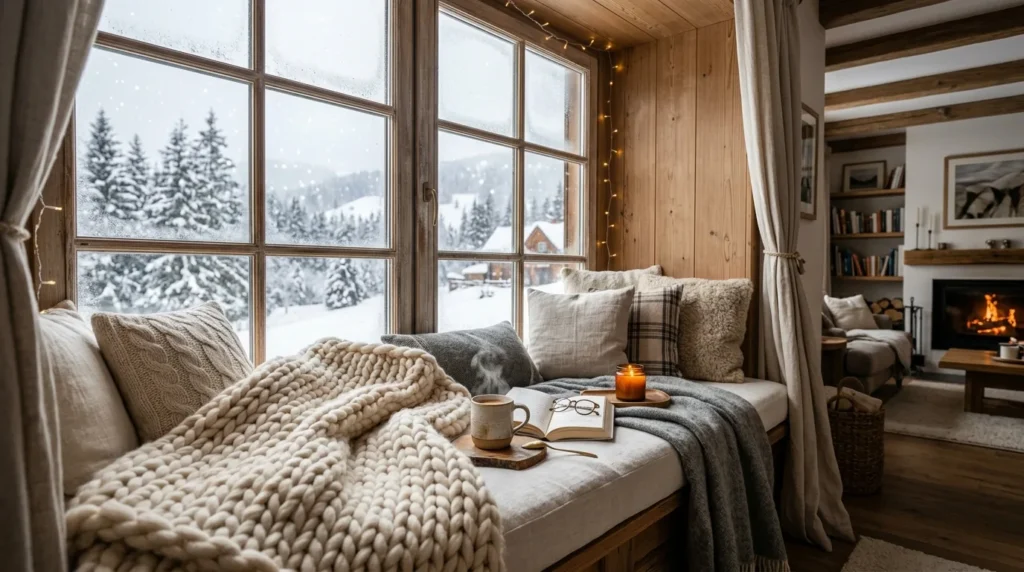
Over the next two years, I rearranged our living room more times than I can count. Some ideas worked immediately, while others became expensive reminders that social media doesn’t always understand real homes with limited square footage. I returned furniture that overwhelmed the room, repainted walls after choosing the wrong shade, and even made an extra Home Depot trip because I miscalculated floating shelf measurements by almost two inches. Those mistakes weren’t fun in the moment, but they taught me something far more valuable than another decorating trend. A hygge-inspired living room isn’t about buying luxury furniture or copying perfectly styled photos online. It’s about creating a space that feels calm after a long day, functions well for everyday life, and quietly encourages everyone to stay a little longer.
If you’re searching for hygge living room ideas that actually work in a smaller home, these are the changes that made the biggest difference in our townhouse. Every suggestion comes from real experience, practical budgeting, and plenty of trial and error instead of showroom perfection.
Start by Creating Warmth Instead of Filling Empty Space
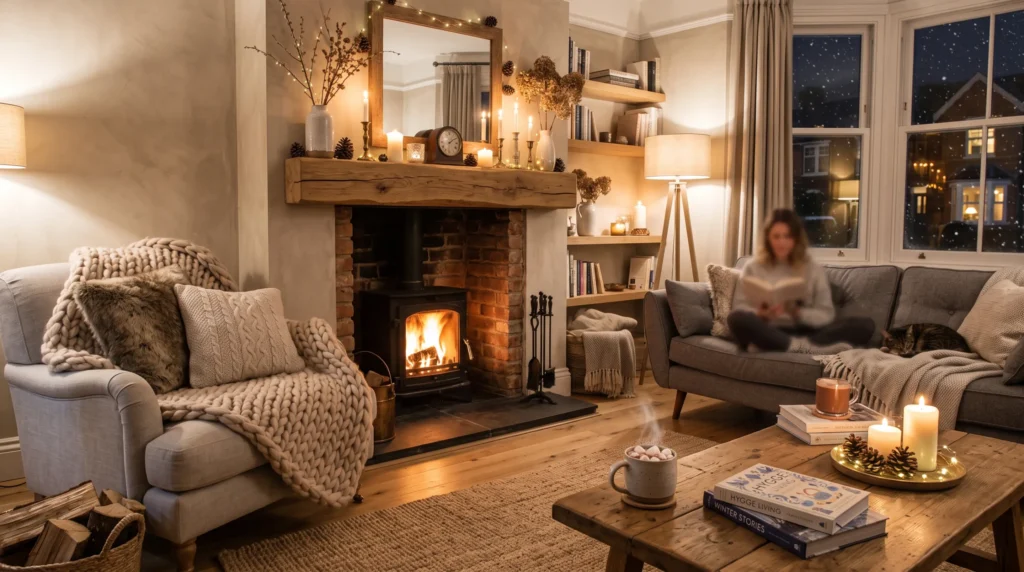
One mistake I made during the first year of decorating was assuming every empty corner needed something. Whenever I noticed blank wall space or an unused area beside the sofa, my first instinct was to buy another piece of furniture or another decorative accessory. Looking back, I wasn’t decorating thoughtfully I was decorating because I thought an unfinished room automatically needed more things. The result wasn’t a cozy living room. It was a crowded one. Our modest floor plan suddenly felt tighter, cleaning took longer, and nothing really stood out because every surface competed for attention.
Learning about hygge completely changed that mindset. Instead of asking what else I could add, I started asking what I could remove without sacrificing comfort. That simple question transformed the room more than any shopping trip ever had. The oversized side table disappeared, several unnecessary decorations found new homes in storage, and I replaced a bulky bookshelf with two floating shelves that kept the floor visible. Those small changes opened the room immediately. More importantly, they allowed the furniture we truly loved to become the focus instead of disappearing beneath layers of accessories.
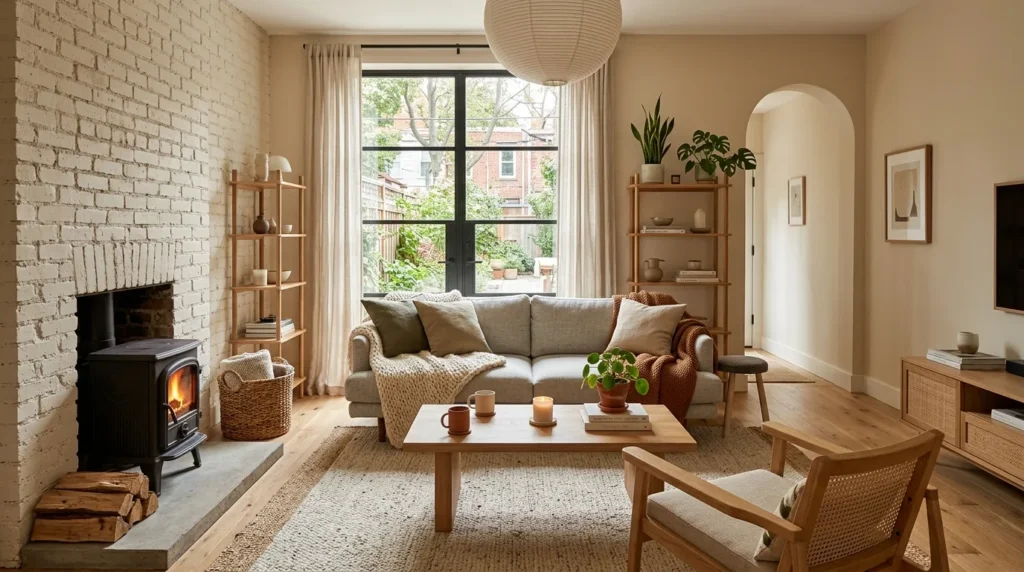
Texture also became much more important than quantity. Rather than buying another chair that would rarely be used, I invested in a soft wool throw for around $48, a pair of linen pillow covers from for less than $20, and a woven basket from Target to hold extra blankets. None of those purchases demanded attention on their own, but together they made the room feel warmer every evening without taking away valuable floor space. That’s one lesson I wish I had learned much earlier. Comfort comes from thoughtful layers, not from owning more furniture.
Colorado’s dry climate reinforced this lesson in an unexpected way. During winter, the air inside our townhouse becomes incredibly dry, and sunlight pours through the front windows for most of the afternoon. Heavy fabrics, glossy finishes, and bright white décor often looked harsh under that intense natural light. Soft linen, unfinished wood, woven cotton, and matte ceramics reflected light more gently and gave the room a relaxed appearance throughout the day. Even visitors who couldn’t explain why the room felt different often commented that it seemed peaceful the moment they walked inside.
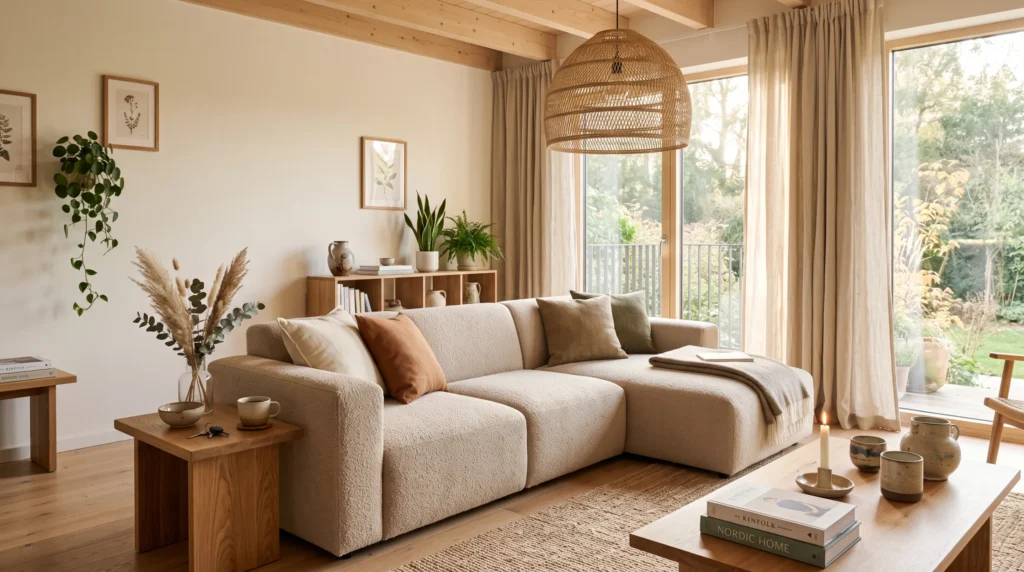
Budget also mattered because I wasn’t trying to recreate magazine worthy interiors with unlimited spending. Most of our favorite pieces came from affordable places like HomeGoods, Target, and our local Goodwill rather than luxury retailers. Whenever I admired a beautiful room online featuring a $1,400 designer chair, I reminded myself that the feeling of hygge wasn’t attached to the price tag. A carefully chosen $65 accent lamp paired with warm lighting could completely change the atmosphere of the room without stretching our monthly budget. That approach made decorating far less stressful because every purchase had a purpose instead of being an impulse.
Perhaps the biggest lesson was learning to appreciate breathing room. Empty space isn’t wasted space. It allows natural light to travel farther, makes cleaning easier, and helps every carefully chosen object feel intentional. After living in our townhouse for several years, I’ve realized that the calm feeling people notice when they visit isn’t created by expensive furniture. It’s created by knowing when to stop adding things. Sometimes the most inviting room isn’t the one with the most decorations. It’s the one that gives your eyes a chance to rest while still feeling warm, welcoming, and lived in.
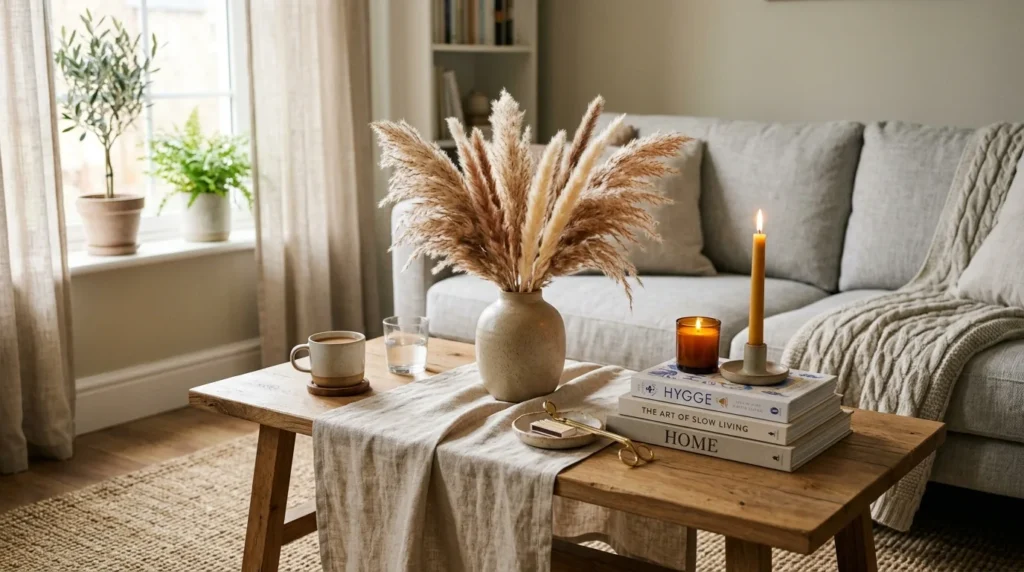
Choose Furniture That Encourages Everyday Living Instead of Just Looking Beautiful
One of the biggest misconceptions about hygge living room ideas is that you need an entirely new furniture set to create the look. I believed that for a while, and it became one of the most expensive decorating lessons I’ve learned. During our first year in the townhouse, I ordered a deep modern sofa after seeing dozens of glowing reviews online. It looked beautiful in every product photo, and I convinced myself it would make the room feel luxurious. Unfortunately, I focused on appearance instead of measurements. Once it arrived, I realized it extended nearly four inches farther into the room than I expected. That small difference completely changed how the living room functioned. Walking between the sofa and the kitchen became awkward, and the space suddenly felt much smaller than its actual size. Returning it wasn’t easy, but living with it would’ve been even more frustrating.
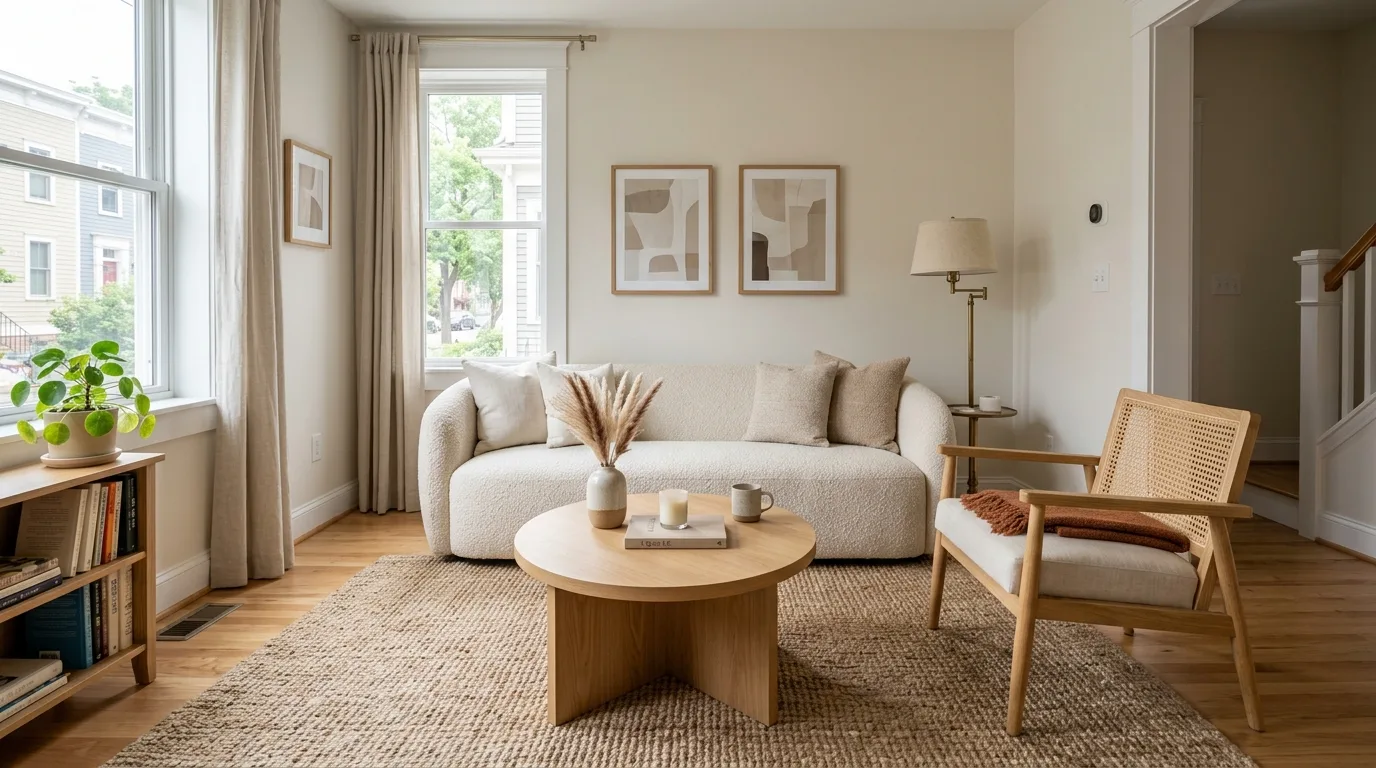
That experience completely changed the way I shop for furniture. Today, I never look at style first. I measure every wall, every walkway, and even the distance between furniture before opening a shopping website. Our living room isn’t large enough to forgive sizing mistakes, so every inch matters. A sofa with slimmer arms creates noticeably more seating without increasing the footprint. Choosing a round coffee table instead of a square one makes it easier to move around, especially when guests visit. Even replacing a solid TV console with one raised on legs made the room appear lighter because you could see more of the floor underneath. These aren’t dramatic changes, yet together they completely altered how spacious the room feels.
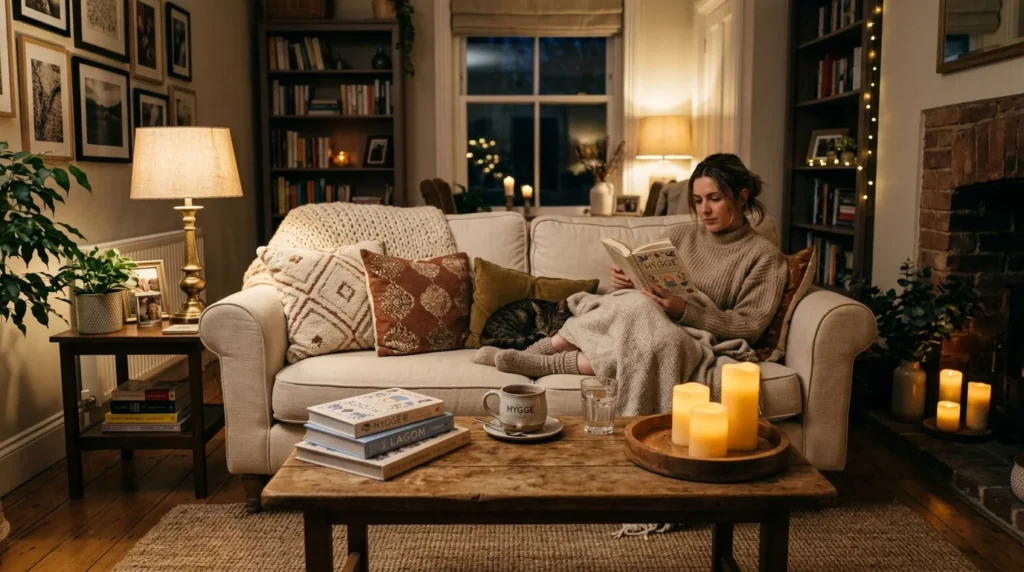
Comfort also became more important than matching furniture. Early on, I worried about everything coordinating perfectly. The coffee table had to match the television console, the side tables had to match each other, and every finish needed to be identical. Looking back, that made the room feel flat and predictable. Hygge has a much more relaxed approach. Our oak coffee table doesn’t perfectly match the walnut shelves, and the linen accent chair has a slightly different tone than the sofa. Instead of looking mismatched, those natural variations give the room character. They make it feel collected over time rather than purchased in a single afternoon.
I also stopped buying furniture simply because it was trending online. Curved silhouettes, oversized boucle chairs, and sculptural side tables may photograph beautifully, but not every trend works inside a modest townhouse. Before purchasing anything now, I ask one simple question: Will this improve the way we actually live? If the answer is no, I keep looking. That mindset has saved me far more money than any seasonal sale.
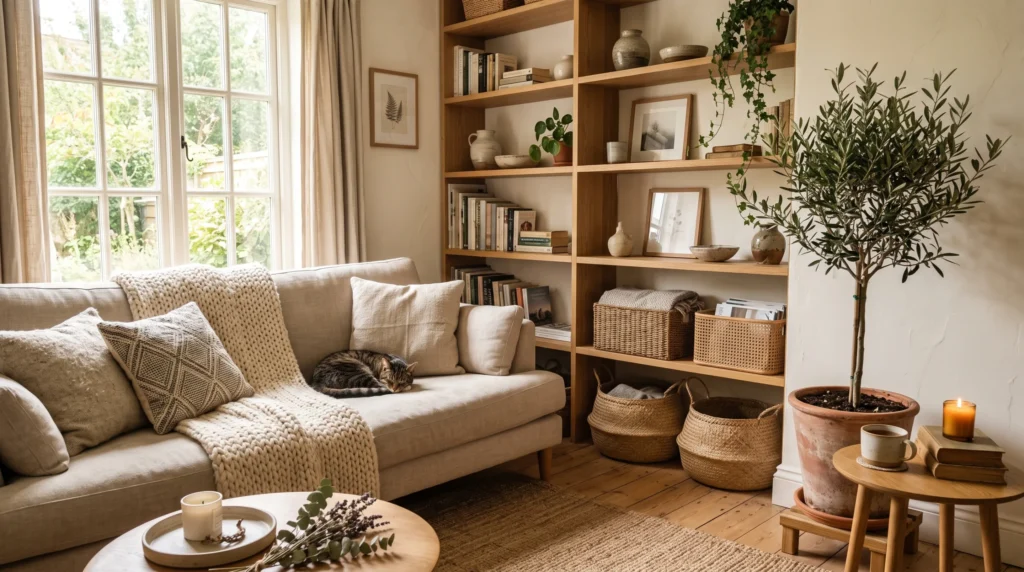
A practical example sits beside our sofa every day. I almost purchased an expensive marble side table for around $320 because it looked incredible in photos. Instead, I found a simple ash wood table at Target for under $90. It holds books, coffee mugs, candles, and occasionally Ethan’s laptop when he works from the living room. It performs the same job, complements the rest of the room beautifully, and left room in our budget for better lighting. Looking back, that was a much smarter decision.
If your budget allows for one investment piece, I’d make it the sofa because it’s where you’ll spend most of your time. Save money on accessories, side tables, and decorative objects instead.Article, Target, and HomeGoods all offer attractive options that blend well together without making the room feel like every item came from the same collection. Hygge isn’t about perfection. It’s about creating a room that quietly supports everyday life.
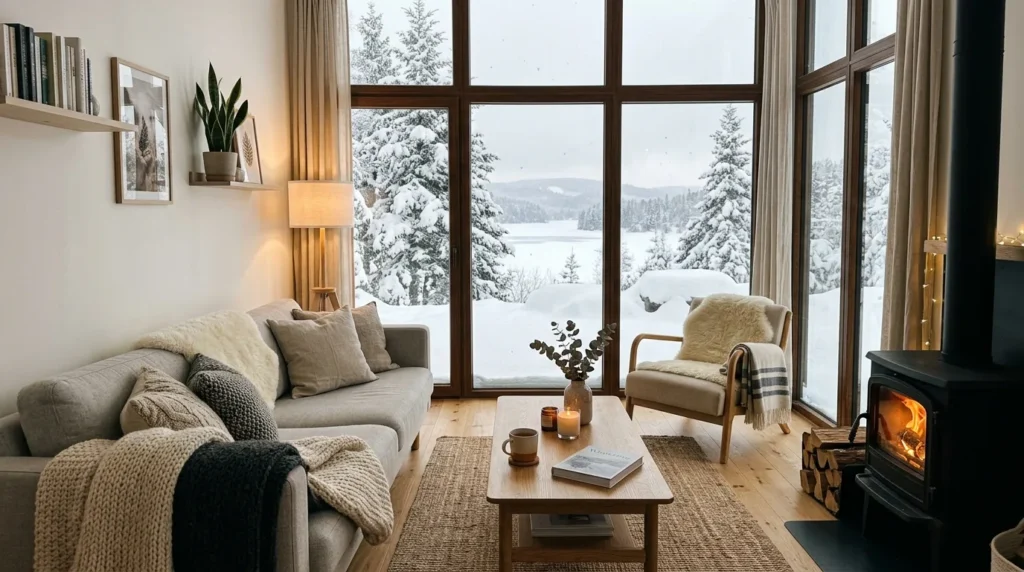
Let Lighting Create the Mood Instead of Depending on Decorations
If someone asked me which decorating change had the biggest impact on our living room, my answer wouldn’t be furniture, paint, or artwork. It would be lighting. Nothing changed the atmosphere of our townhouse more quickly than replacing harsh overhead lighting with several smaller sources of warm light. Before making that change, our builder-installed ceiling fixture did all the work. It used cool white bulbs that illuminated every corner equally, but they also made the room feel more like an office than a place where we wanted to unwind after dinner.
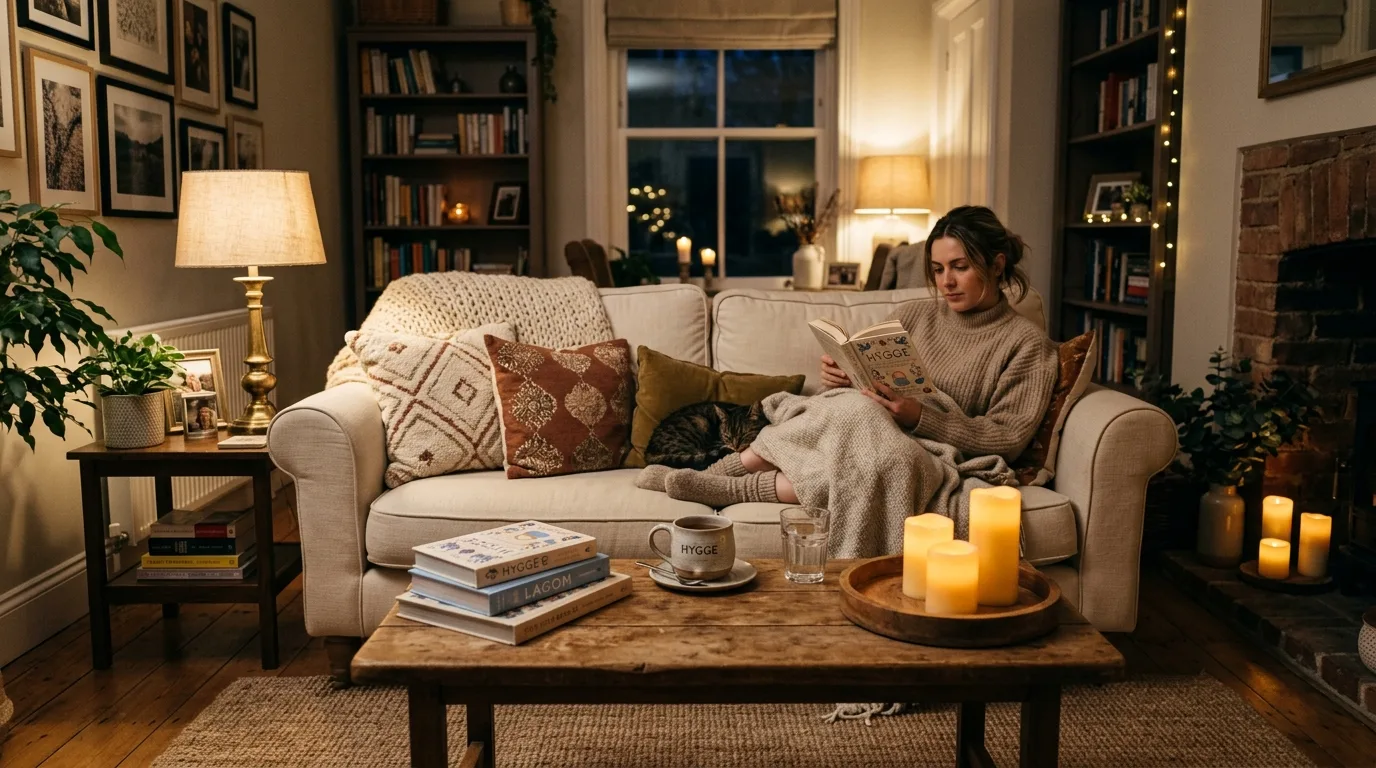
One Saturday afternoon, I replaced every bulb with warm 2700K LED bulbs that cost less than $30 altogether. That evening, I turned off the overhead light, switched on a ceramic table lamp beside the sofa, added a floor lamp near the reading chair, and lit a few battery-operated candles across the TV console. The difference surprised both Ethan and me. The room instantly felt softer, warmer, and noticeably more inviting without moving a single piece of furniture. It reminded me that atmosphere often has very little to do with square footage and much more to do with how light moves through a room.
Living outside Denver taught me another valuable lesson about lighting. Colorado receives an incredible amount of sunshine throughout the year, and that bright natural light changes dramatically from morning to evening. During the day, sunlight fills our living room and highlights every texture, from linen curtains to oak shelving. Once the sun sets, however, relying on one bright ceiling light creates an abrupt shift that feels uncomfortable. Layered lighting solves that problem by allowing the room to transition naturally from daytime brightness to evening warmth.
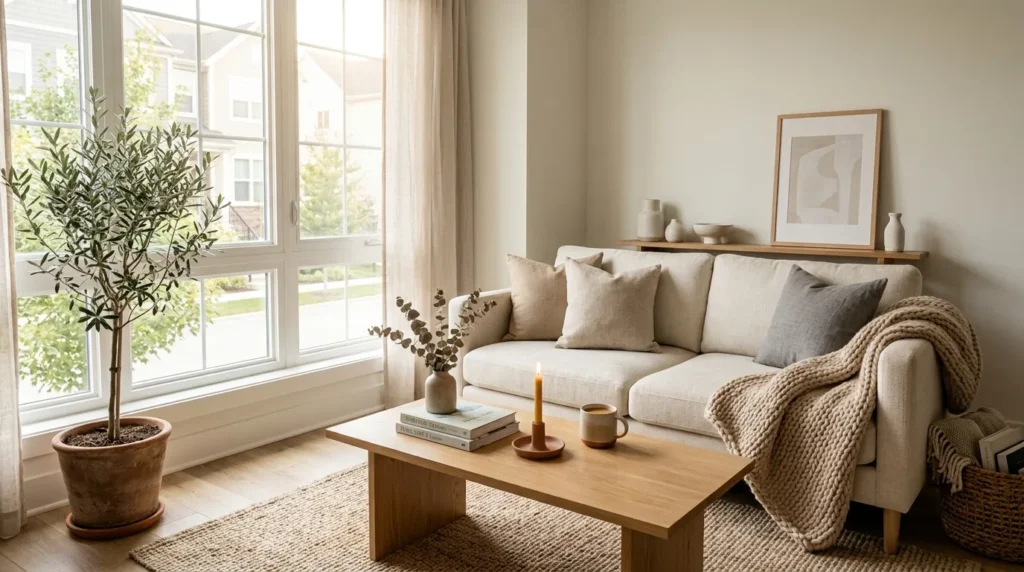
I also became much more intentional about where each light source sits. A table lamp beside the sofa creates a comfortable reading corner without flooding the entire room with light. A small lamp near the television reduces eye strain during movie nights, while a warm accent light inside a bookshelf adds subtle depth without drawing attention to itself. These individual pockets of light make the room feel larger because your eyes naturally move from one softly illuminated area to another instead of focusing on one bright central fixture.
Another mistake I learned from involved candles. I genuinely love the warm glow of real candles, but our rescue cat, Miso, has a habit of sprinting through the house at full speed every evening. After watching her nearly knock a candle off the coffee table one night, I switched almost entirely to high quality flameless candles. They provide the same comforting atmosphere with much less worry, especially if you have children or curious pets. Safety always comes before style, and hygge should never create unnecessary risks.
Good lighting doesn’t require expensive designer fixtures either. One of my favorite lamps came from HomeGoods for around $55, while another cost about $42 at Target. Their value doesn’t come from the price tag. It comes from how they work together to create a relaxed atmosphere that makes people naturally settle into the sofa instead of reaching for their coats after a quick visit.
By the time I finished adjusting our lighting, I realized something important. Decorating wasn’t about adding more decorations anymore. It was about creating a feeling. That’s the heart of hygge, and it’s the reason our living room finally became the place where we spend most evenings instead of disappearing into separate rooms after dinner.
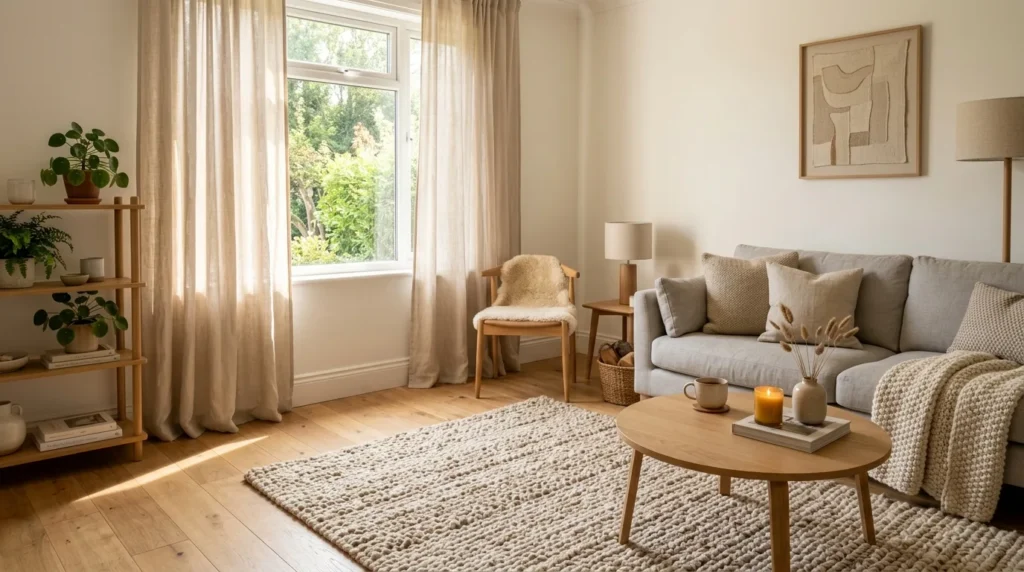
Bring Nature Indoors to Make the Room Feel Calm All Year
One of the easiest ways I introduced hygge into our living room had nothing to do with furniture or expensive décor. It started with bringing natural materials into the space. Before that, I had decorated with shiny metal accents, glossy picture frames, and a few trendy accessories that looked great under store lighting but felt cold once they were inside our townhouse. They reflected too much light, collected fingerprints, and never created the relaxed atmosphere I wanted. The room looked finished, yet it never felt comfortable.
That changed after I started replacing those pieces little by little with natural textures. A woven basket beside the sofa became storage for extra blankets. An unfinished oak tray replaced a mirrored one on the coffee table. Ceramic vases with soft matte finishes took the place of shiny metallic décor. None of those changes were dramatic on their own, but together they softened the room and made it feel more connected to the outdoors.
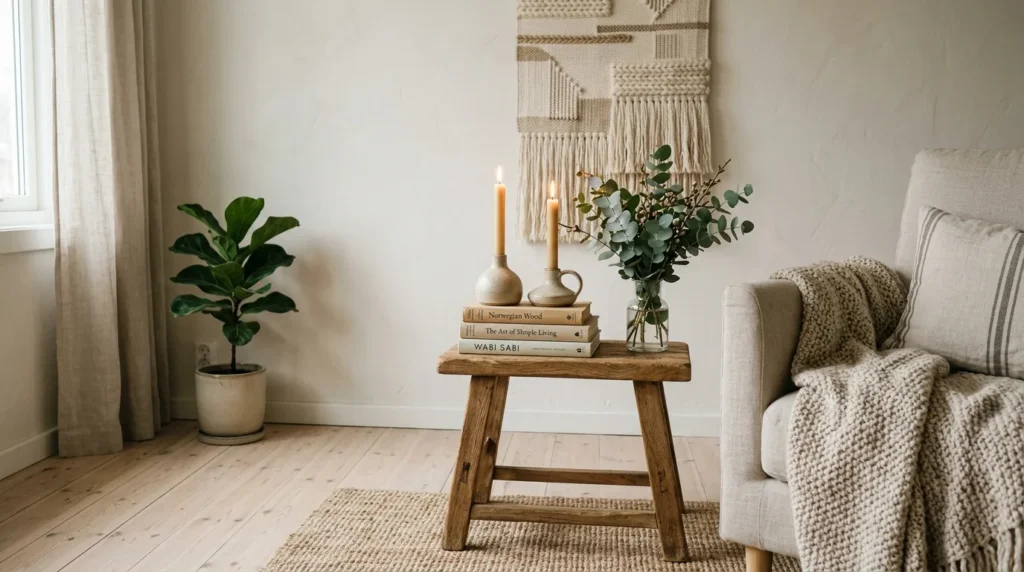
Plants played a surprisingly important role as well. I used to avoid houseplants because I assumed they required too much attention, especially in Colorado’s dry climate. After a few failed attempts, I learned that choosing the right varieties mattered more than watering them constantly. Snake plants, ZZ plants, and pothos adapted much better to our indoor conditions than the delicate plants I had originally purchased. They added life to empty corners without demanding hours of maintenance every week.
Of course, I still made mistakes. One of my favorite plants sat directly beside our south-facing window for nearly a month before I realized the intense afternoon sun was scorching its leaves. Another plant slowly declined because I underestimated how quickly the dry indoor air affected the soil during winter. Those small failures taught me to observe the room instead of blindly following online advice. Every home has different lighting, humidity, and temperature conditions. Decorating successfully often means paying attention to how your own space behaves throughout the seasons rather than copying someone else’s setup.
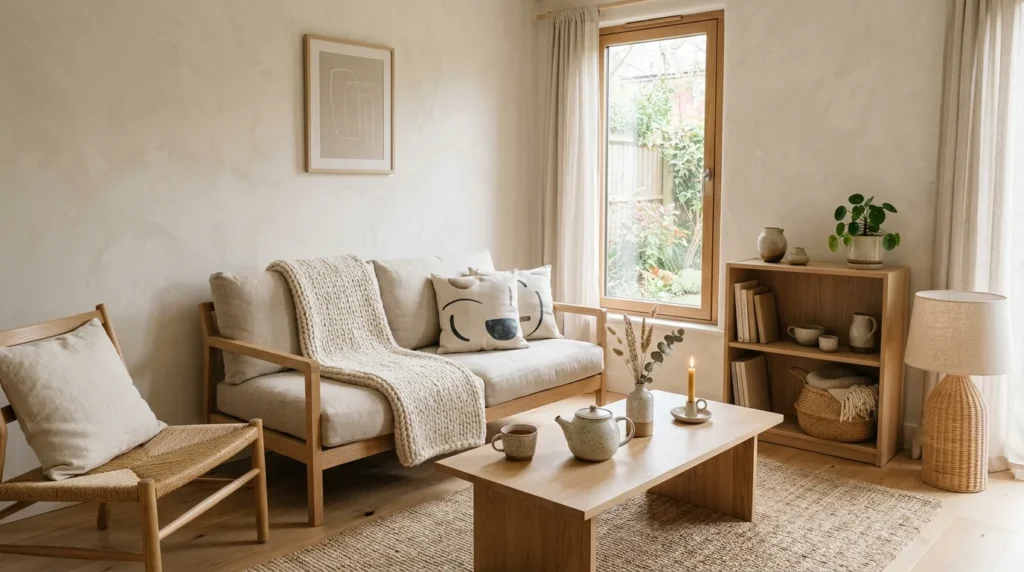
I also became much more selective about decorative accessories. Earlier, every shelf held candles, books, sculptures, framed photos, and seasonal decorations all at once. The shelves looked busy, and dusting them became a chore I constantly postponed. Today, each shelf holds only a few carefully chosen objects. A stack of books, a ceramic vase, and a small trailing plant are often enough. The negative space around those pieces allows each one to be appreciated instead of disappearing into visual clutter.
Another habit that completely changed the atmosphere of the room was rotating décor instead of constantly buying new items. During autumn, I might add darker linen pillow covers and a chunky knit throw. In spring, those heavier textures move into storage while lighter cotton fabrics return. The room feels refreshed without requiring another shopping trip, and our storage closet doesn’t overflow with decorations that only get used once.
Looking back, nature became the quiet foundation of our hygge living room. It wasn’t about filling every corner with greenery or expensive handmade décor. It was about choosing materials that aged gracefully, reflected light softly, and made the room feel lived in rather than staged for photographs.
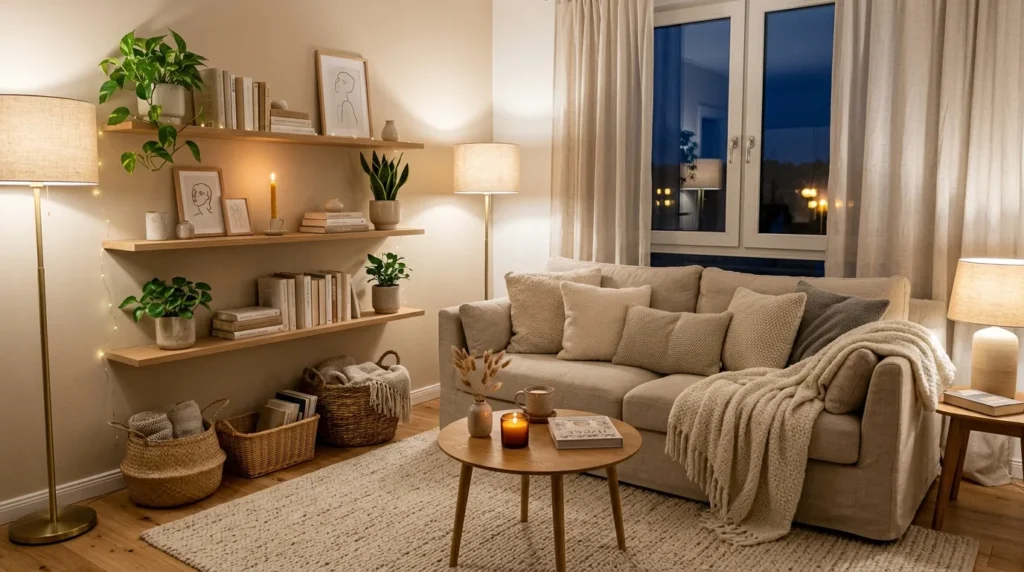
My Biggest Decorating Mistakes and What They Taught Me
If I could go back to the day we first moved into our townhouse, I wouldn’t tell myself to buy different furniture or paint the walls another color. I’d simply remind myself to slow down. Most of the decorating mistakes I made happened because I wanted immediate results instead of allowing the room to develop naturally over time.
The biggest mistake was believing that every trend would automatically work inside a modest home. Social media made oversized furniture, bold accent walls, and heavily decorated shelves look effortless, but those ideas often relied on rooms much larger than ours. Trying to recreate them only made our living room feel crowded. Once I accepted that our home had different needs, decorating became far more enjoyable.
I also underestimated the importance of measuring. One floating shelf project turned into an entire afternoon of patching drywall because I rushed through the installation. I measured once, cut once, and realized the shelves weren’t level after drilling the final anchor. That mistake meant another trip to Home Depot, fresh wall anchors, and repainting several small areas. Since then, I measure everything twice, mark the wall carefully, and never start drilling when I’m in a hurry.
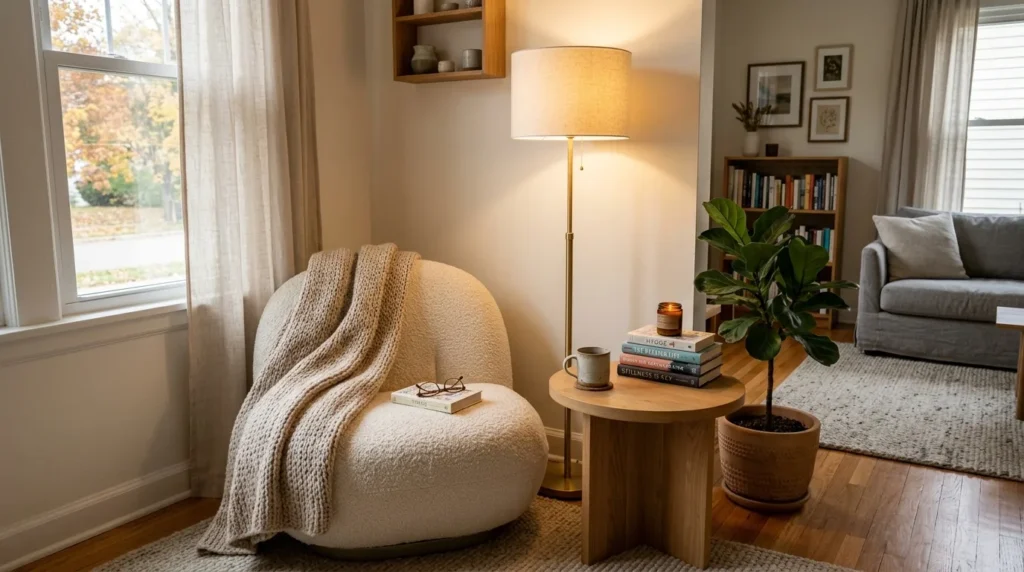
Another lesson involved spending. During my first year, I bought decorative accessories simply because they looked attractive in stores. Months later, many of them sat inside storage bins because they didn’t fit the room. Today, I wait at least a week before buying anything non essential. If I still believe it fills a genuine need after several days, then I’ll purchase it. More often than not, the urge disappears, and my budget stays intact.
Perhaps the most valuable lesson, though, was realizing that a hygge living room doesn’t happen overnight. Our favorite room today exists because of dozens of small decisions made over several years. Each improvement built upon the previous one until the room finally reflected the way we actually live instead of the way I thought it should look.
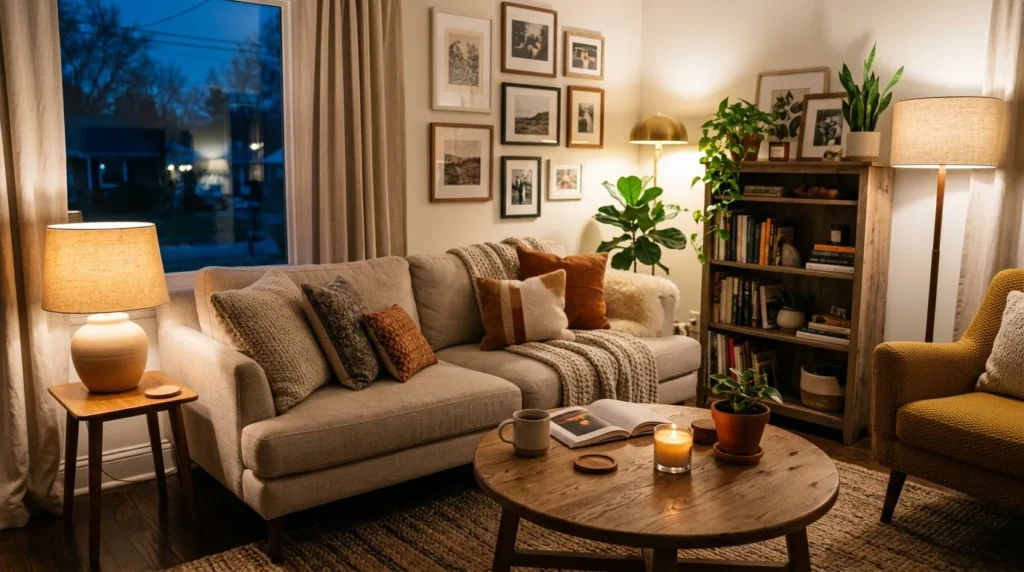
A Living Room That Finally Feels Like Home
After living in this townhouse for several years, I’ve learned that the most memorable rooms aren’t necessarily the most expensive or the most perfectly decorated. They’re the rooms where people naturally slow down, stay a little longer, and feel comfortable enough to put their phones away for a while. That’s exactly what hygge has brought into our home. Instead of constantly searching for the next decorating trend, I now focus on thoughtful lighting, natural materials, comfortable furniture, and meaningful pieces that improve everyday life. If you’re planning to refresh your own living room this year, don’t feel pressured to change everything at once. Start with one corner, one lamp, or one soft throw blanket, and let the room evolve naturally. Those small changes often create the biggest difference over time. If you’re looking for more practical decorating ideas for modest homes, explore the rest of CompactDecorHub, where I share everything I’ve learned from making a 1,050 square foot townhouse feel brighter, warmer, and far more functional without overspending.