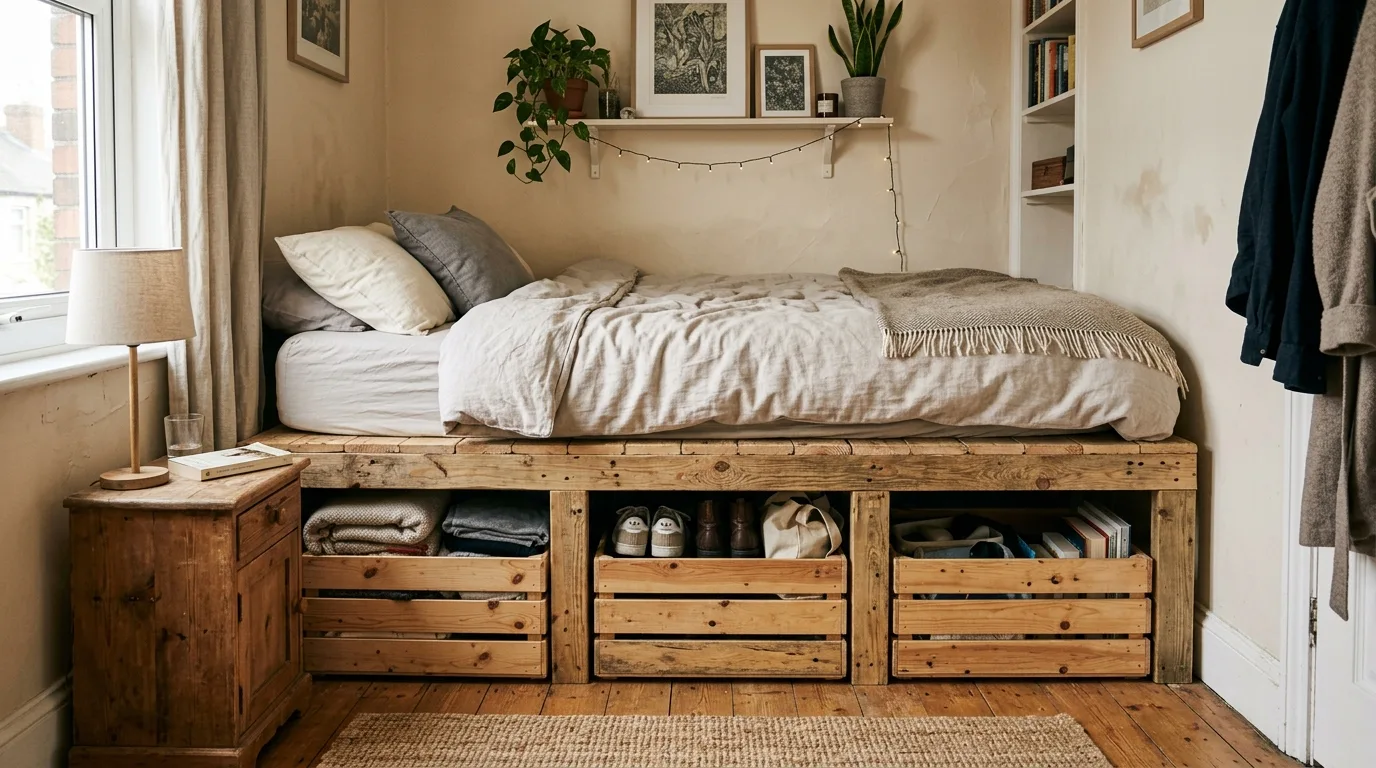
The floor under our bed used to be the most wasted space in our 1,050 square foot townhouse. Boxes sat half hidden under there, a spare blanket got shoved into a corner, and Miso somehow found every loose sock I thought I’d lost. After living here for three years, I finally stopped treating that space as a dumping zone and started using it as actual storage.
That change made a bigger difference than I expected. I moved seasonal bedding, winter accessories, extra office supplies, and a few rarely used items out of closets and drawers. The bedroom looked calmer without buying another bulky cabinet. If you’re looking for under bed storage ideas for small rooms, the goal isn’t to fill every inch. It’s to make the space underneath your bed easy to use, easy to label, and easy to keep clean.
Start by Measuring the Space Under Your Bed
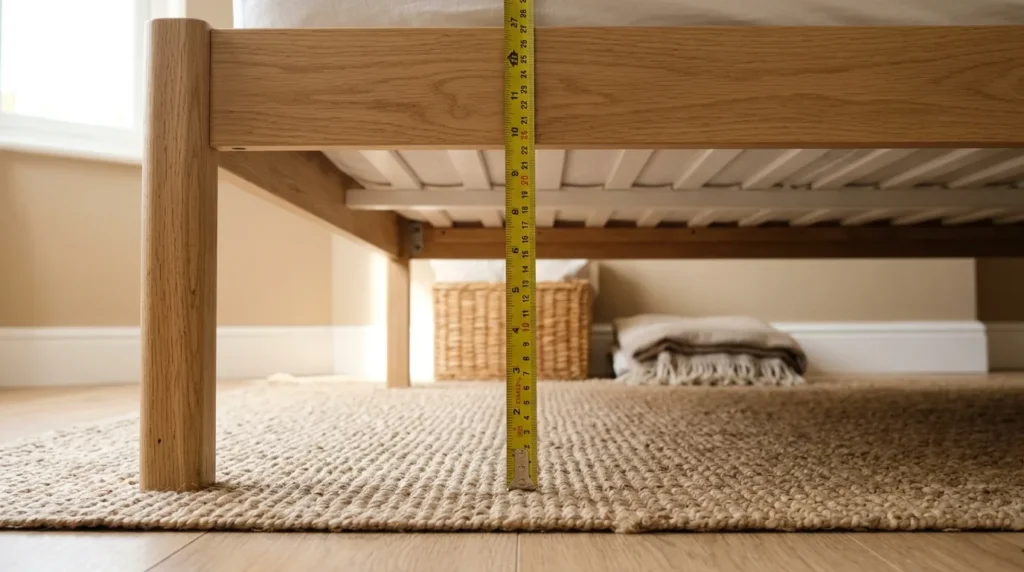
Before buying a single bin, measure the height from the floor to the lowest point of the bed frame. Then measure the width and depth of the usable area. Bed frames can have center supports, legs, or crossbars that make a large container impossible to slide all the way through.
Our first attempt taught me this the annoying way. I ordered a set of storage boxes that looked shallow enough online. They fit under the foot of the bed but caught on the center support halfway in. Returning them took more effort than the purchase was worth.
Now I measure three things:
- Clear height from floor to frame
- Usable width between legs or supports
- Maximum depth before the container becomes difficult to pull out
Leave a little clearance instead of buying a container that fits with almost no room to spare. A tight fit can still become frustrating if you have to lift the mattress every time you need it.
For a budget option, a basic fabric zippered bag from Target can work well when you don’t need rigid sides. Expect to spend around $10 25 for simple soft storage, while sturdier rolling bins may run $30 60.
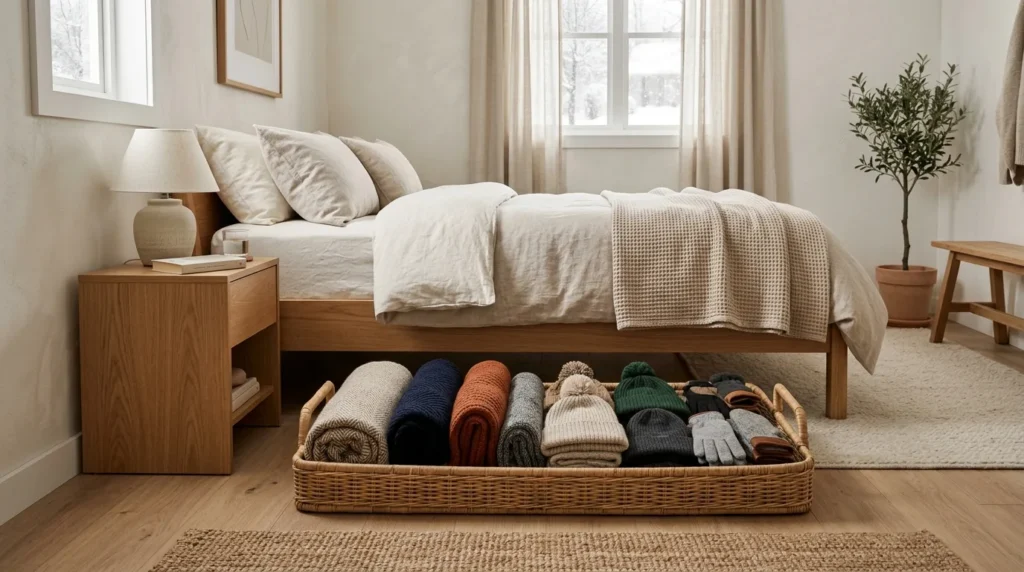
Choose Containers You Can Actually Reach
The best under bed storage ideas for small rooms should solve a daily problem, not create another one. If you have to move three boxes before reaching the item you need, the system won’t last.
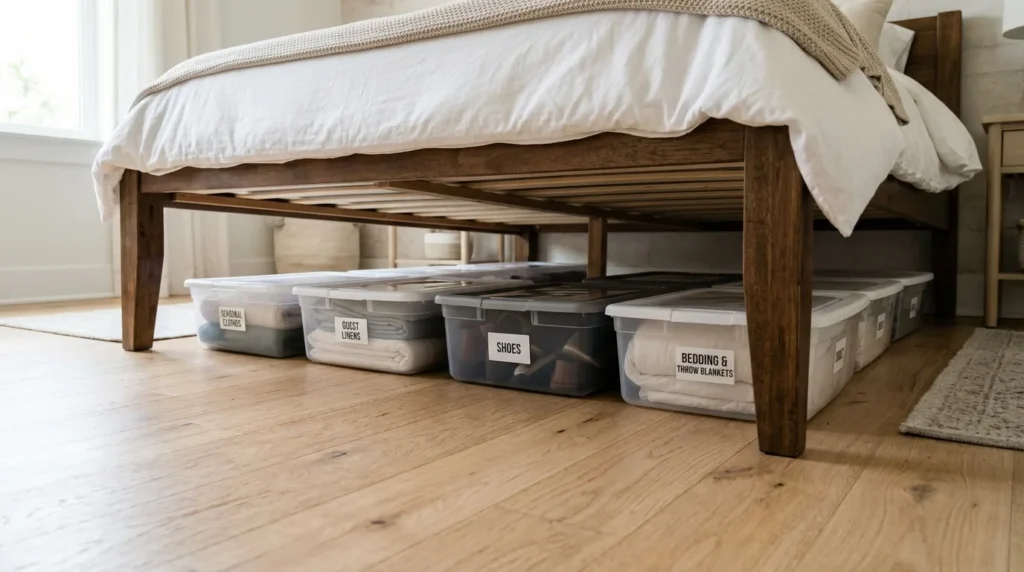
I prefer shallow containers with handles or wheels. Clear sides also help when the box holds items I don’t use often. Fabric bags work nicely for soft goods such as spare sheets, quilts, and sweaters. Hard plastic bins make more sense for items that need extra protection from dust.
Match the Container to the Item
Think about what belongs under the bed before choosing the container.
- Bedding: Use breathable fabric bags or clean, lidded bins.
- Seasonal clothing: Choose zippered bags or shallow containers with labels.
- Shoes: Use dedicated shoe boxes or a low shoe organizer.
- Documents and keepsakes: Use sturdy containers and keep important papers somewhere more secure and climate-stable.
- Holiday decor: Use stackable bins that you can label by season.
For my bedroom, two shallow containers work better than one oversized box. I can pull out one side without disturbing the other. A set of four containers might cost $40 80, but you don’t need to buy four at once.
If a premium rolling container isn’t in your budget, Target often have simpler storage options that do the same basic job. Measure first, then compare dimensions instead of shopping by appearance.
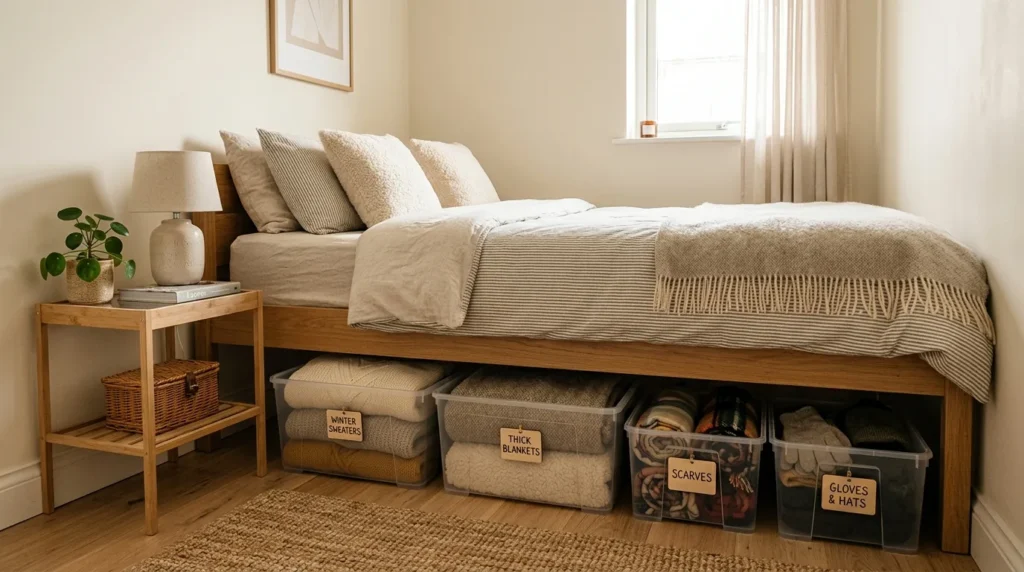
Use Under Bed Storage for Seasonal Rotation
Seasonal items are some of the easiest things to move under the bed because you don’t need them every week.
In the Denver area, winter gear takes up more room than I want it to. Thick sweaters, heavier bedding, and cold-weather accessories can crowd bedroom closets for months. During warmer weather, I move those items under the bed and bring them back when temperatures drop.
The trick is to rotate, not forget. I keep one container for winter bedding and another for seasonal clothing. Each container gets a large label on the end that faces the foot of the bed.
A simple rotation can look like this:
- Spring: Store heavy blankets and cold weather layers.
- Summer: Store heavier bedding and bulky winter accessories.
- Fall: Bring winter items forward and move lighter pieces underneath.
- Winter: Keep frequently used cold-weather items in the closet and reserve under-bed space for extras.
Don’t pack items directly against a dusty floor. Even a clean bedroom collects hair and dust underneath furniture. Our dry Colorado air also creates plenty of static, so dust seems to cling to everything.
A $5 10 pack of labels can save a surprising amount of frustration. If you already own fabric bags, reuse them instead of replacing everything with matching containers.
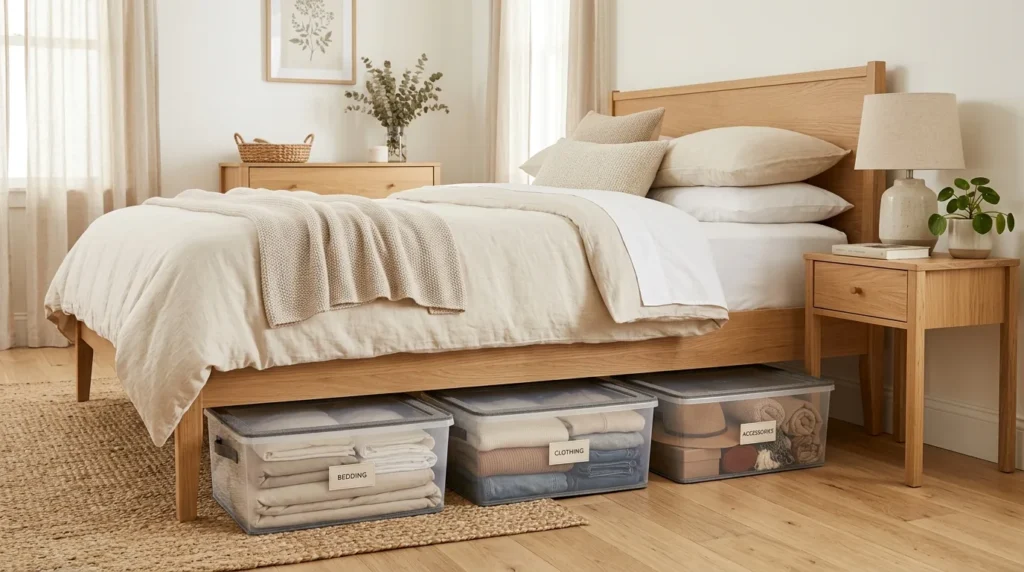
Add a Low Profile Rolling System
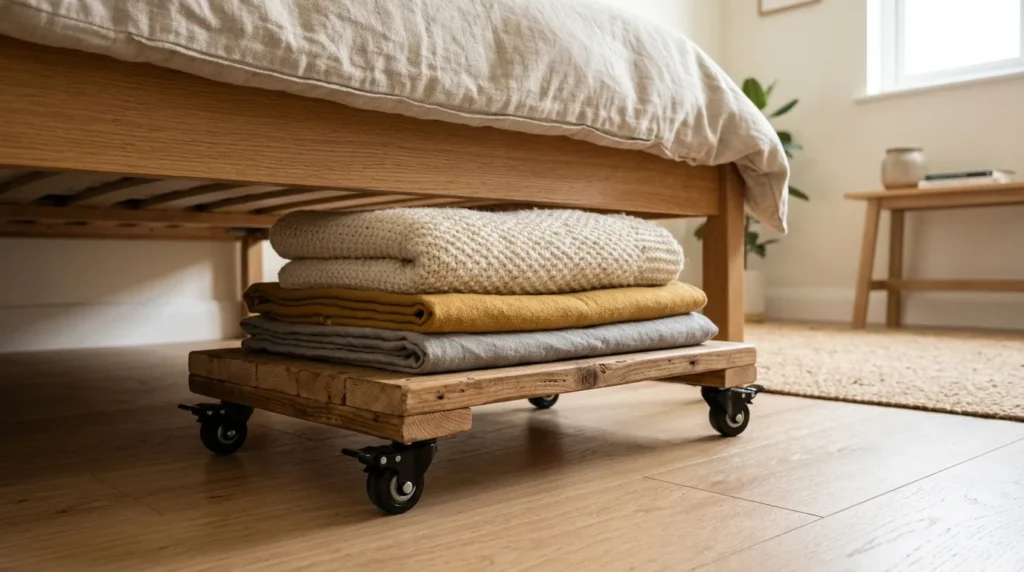
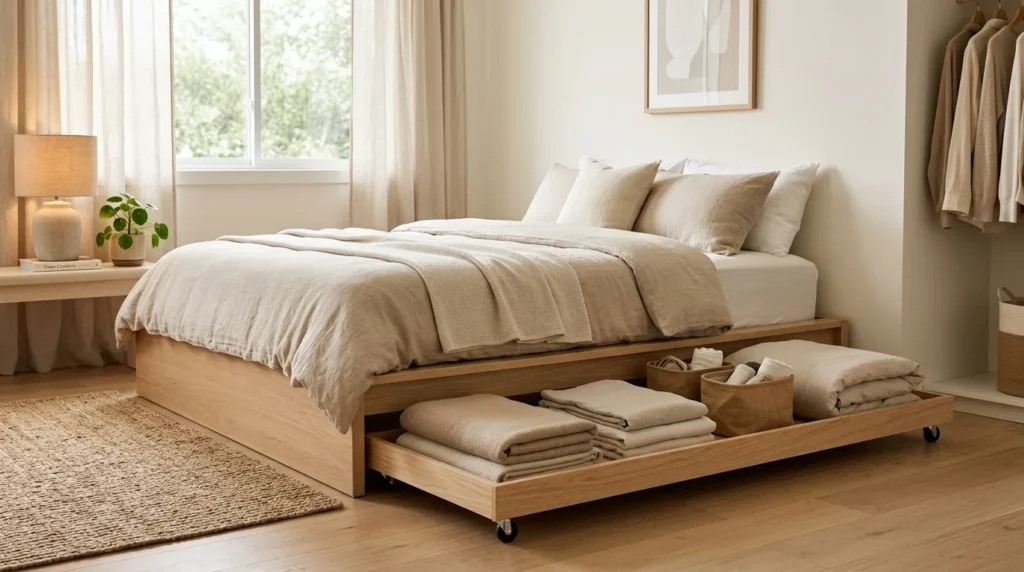
Rolling storage can make a deep space much easier to use. A low platform with casters lets you pull a group of items toward you instead of reaching underneath the bed.
This works especially well for bedding, shoes, craft supplies, or office extras. It isn’t ideal for anything heavy enough to make the platform difficult to move.
I made a simple version from a thin wood board, four small furniture casters, and a few screws. The first board I bought was too long for the usable area under the bed. That meant another trip to Home Depot and a shorter cut. The second version worked.
The project cost roughly $35. The lesson was simple: measure the inside space, not the outside width of the bed.
If you’re not comfortable drilling or assembling a rolling base, don’t force a DIY project. A ready made shallow rolling bin around $30 50 may be the better choice.
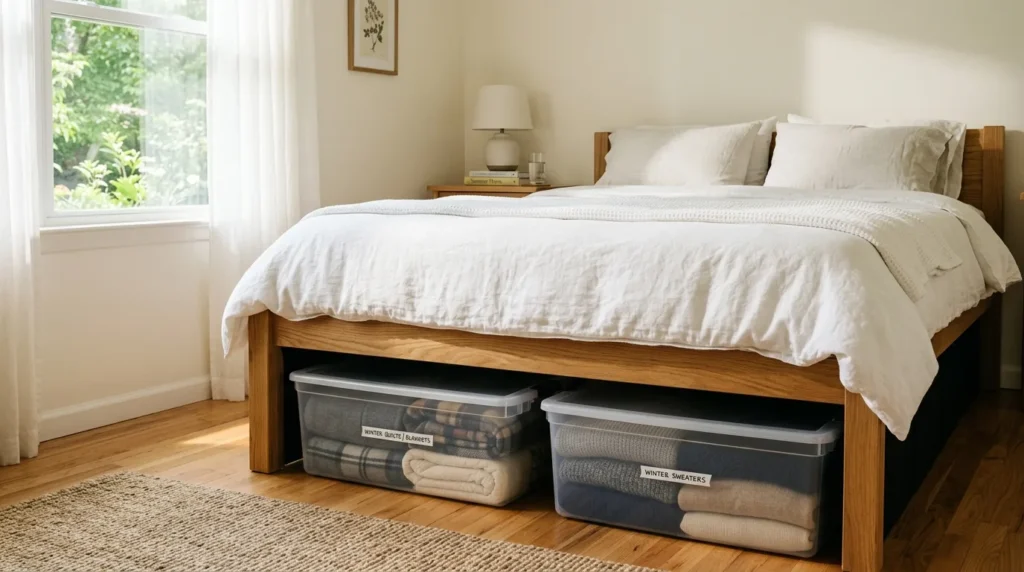
Keep Shoes and Accessories Contained
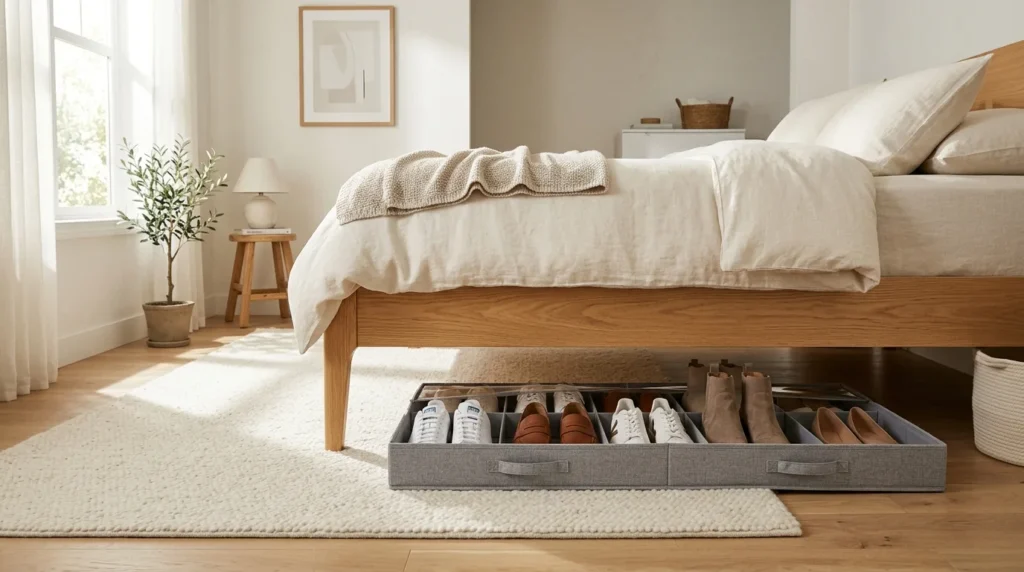
Shoes are easy to store under a bed, but loose pairs can quickly turn the area into a messy pile. A low shoe organizer keeps pairs together and prevents smaller items from disappearing behind the bed.
For shoes you wear often, I prefer a container with an open front or a simple pull out design. For special-occasion shoes, closed storage makes more sense.
The same approach works for accessories. Small baskets can hold scarves, belts, gloves, or bags. Too many tiny containers, though, make the system harder to maintain.
One of my better purchases was a shallow basket that cost about $18. It holds winter accessories in one place and slides out without much effort. A similar basket from a discount store can work just as well.
One safety point matters here: don’t use under-bed storage to block heating vents, electrical outlets, or cords. If a heater or electrical connection sits close to the bed, leave the required clearance and follow the manufacturer’s instructions. When in doubt about an electrical setup, consult a licensed electrician.
Make the System Easy to Clean
Storage under a bed doesn’t need to become a permanent dust trap. The easiest way to prevent that is to keep containers raised slightly or use fully enclosed bins that you can remove for cleaning.
Once every month or two, I pull the containers out and vacuum the floor. It takes only a few minutes when the bins have handles and nothing is stacked in front of them.
This also helps with pet hair. Miso is very good at sending fur into places I didn’t know existed. A quick cleaning routine keeps that hidden area from becoming a forgotten corner.
Don’t overload containers, either. A bin that weighs 40 pounds may fit underneath the bed, but you probably won’t enjoy pulling it out. Keep heavier items in smaller containers so you can move them without straining.
For a low-cost setup, use existing boxes and add labels before buying anything new. Sometimes the best upgrade is making what you already own easier to find.
Use the Right Storage for a Bedroom You Want to Keep Calm
The bedroom can feel crowded when every surface holds something. Under bed storage helps keep useful items out of sight, but it shouldn’t become a place for everything you don’t know where to put.
In our bedroom, I keep three rules. Everyday items stay within easy reach. Seasonal items go under the bed. Things we haven’t used in a year get questioned before they earn storage space.
A storage container can hide clutter, but it can’t make clutter useful.
For a warmer, modern look, I like neutral fabric containers with simple labels. They work with our Scandi Japandi style without adding visual noise. If the West Elm version of a storage basket isn’t in the budget, a $15 25 Target basket can give you the same basic function.
What I’d Do Differently
My biggest mistake was buying storage before measuring. The wrong dimensions turned a cheap purchase into a return.
The second mistake was choosing one huge container. Once it was full, moving it became a chore. Smaller containers are easier to lift, label, and rotate.
I’d also skip decorative boxes that look pretty but waste usable height. Under a bed, function matters more than a perfect label on the outside.
After changing the system, the bedroom stayed easier to maintain because every container had a job. That’s the part I wish I’d focused on from the beginning.
A Simple Under Bed Setup for 2026
You don’t need an expensive organizing system. Start with the bed you already own and build around its dimensions.
A practical setup might include:
- Two shallow lidded bins for seasonal clothing.
- One fabric bag for extra bedding.
- One low basket for shoes or accessories.
- Large labels on the sides facing the foot of the bed.
That could cost $30 to $100, depending on what you already own. Start with one category instead of reorganizing the entire bedroom in one afternoon.
For renters, this approach avoids drilling or permanent furniture. It also stays flexible if you replace the bed later.
Give Your Bedroom’s Hidden Space a Job
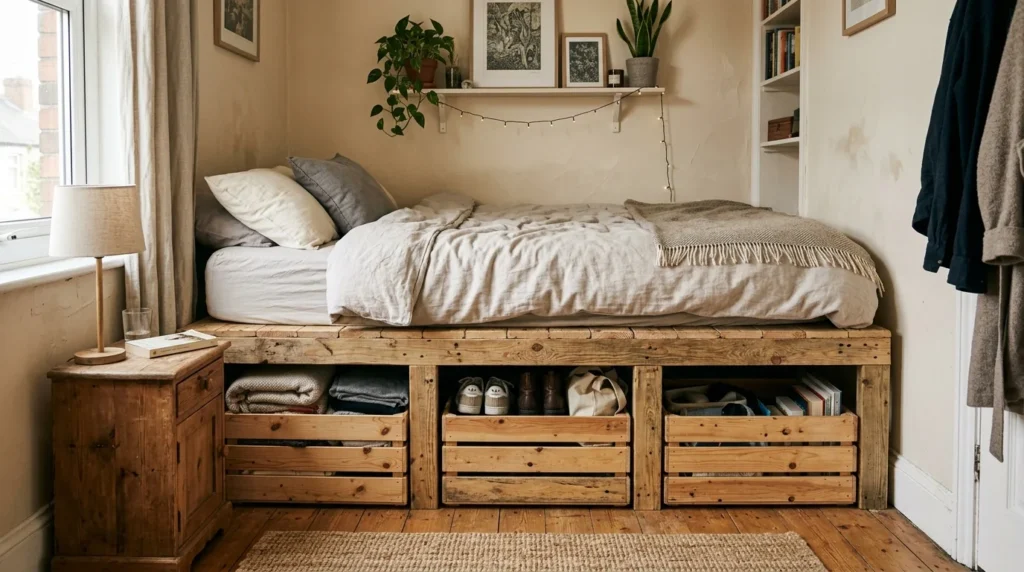
The most useful under bed storage ideas for small rooms don’t depend on having a perfect bedroom or a large budget. They depend on matching the container to the space and the item to the container.
After a few failed attempts, I finally stopped trying to maximize every inch under our bed. A few shallow bins, clear labels, and a simple cleaning routine gave that forgotten area a real purpose. If your bedroom feels crowded, measure under the bed before buying another cabinet. You may already have useful storage space waiting there.
If you try one of these ideas, start small and see what actually makes your routine easier. For more practical room-by-room storage and decorating ideas, keep exploring CompactDecorHub and share which setup worked best for your bedroom.