The staircase in our townhouse used to be one of those areas I walked past without thinking twice. It had builder grade finishes, a narrow visual footprint, and absolutely no personality. After living in our 1,050 square foot home for a few years, I started noticing how much unused decorating potential that vertical space offered. The trick was finding plants that added life without making the stairs harder to use.
That experience sent me down a rabbit hole of stair plants, planters, lighting, and safer ways to bring greenery around a staircase. I tried a few ideas that looked better online than they did in our house. One plant ended up blocking part of the walkway, and another placement made Miso far too interested in the leaves.
Today, I prefer a simpler approach. A few well placed plants can soften a staircase, bring natural texture into a neutral home, and make an awkward wall feel intentional. The best part is that you don’t need a jungle or a huge budget to get the effect. These are the stair plant ideas I’d actually consider for a modern townhouse in 2026.
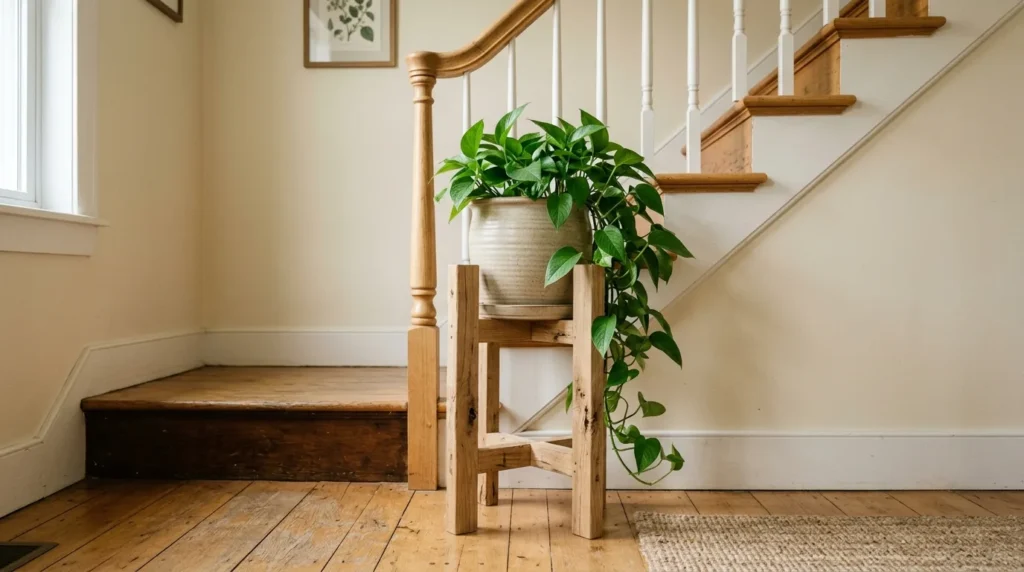
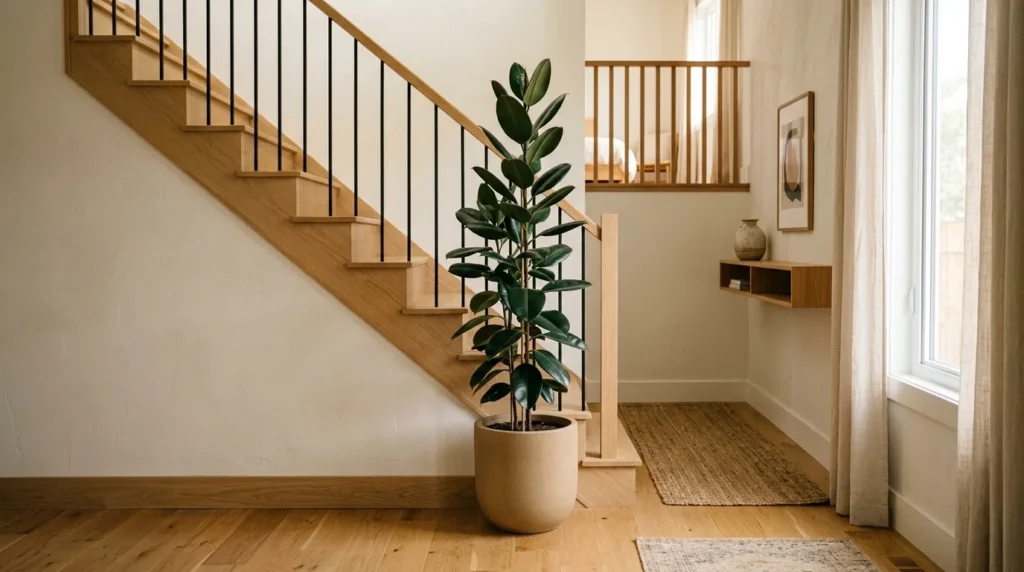
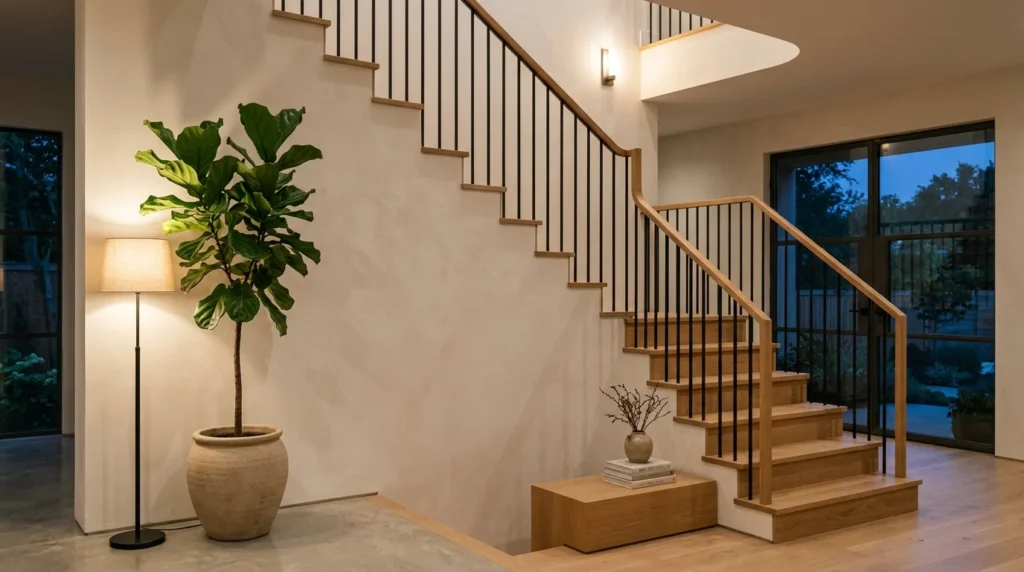
1. Start With One Tall Stair Plant
A single tall plant can make a staircase plant feel finished without filling every step with greenery. This worked especially well for me because our staircase already has enough visual movement from the railing and changing ceiling height.
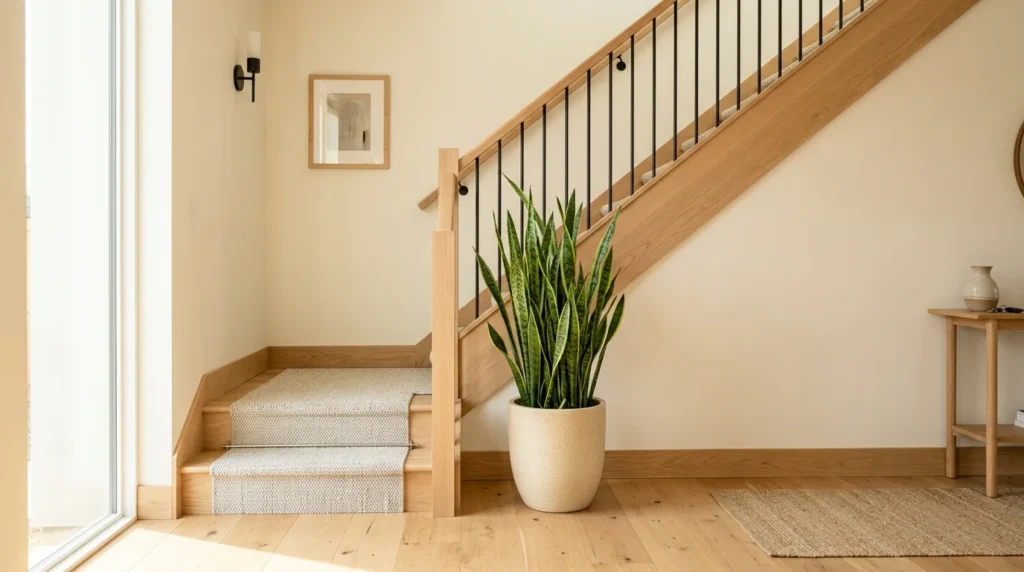
Instead of putting a plant directly on a stair tread, look for a safe floor level spot beside the staircase. A slim planter with a tall indoor plant can draw the eye upward while keeping the walking path clear.
Snake plants, rubber plants, and certain upright dracaena varieties can work well in this type of arrangement. The exact plant matters less than its shape. Look for something that grows upward rather than spreading aggressively into the walkway.
Our townhouse gets strong Colorado sunlight, especially during parts of the day when the windows brighten the room quickly. That made plant placement more important than I expected. A plant that looks happy in a bright nursery may struggle in a darker stairwell, so I check the light before buying anything.
For a budget-friendly option, I wouldn’t spend $150 on a designer planter right away. A $20 $35 plant from a local nursery or Home Depot garden center can look great in a simple Target planter.
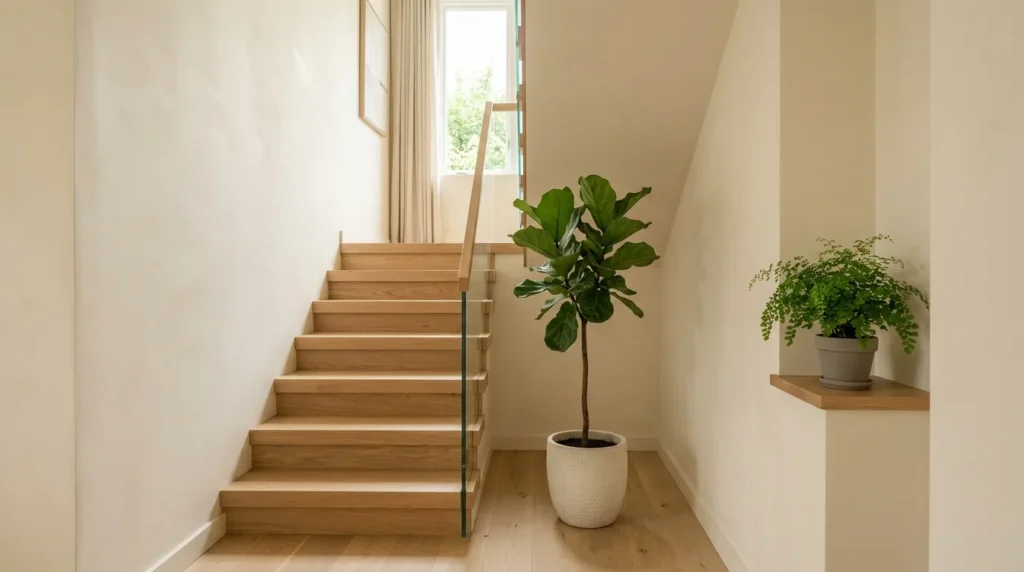
2. Use Small Plants on a Wide Stair Landing
A landing gives you more freedom than the actual staircase. If your layout includes a wider landing, that area can handle a small collection of plants without interfering with foot traffic.
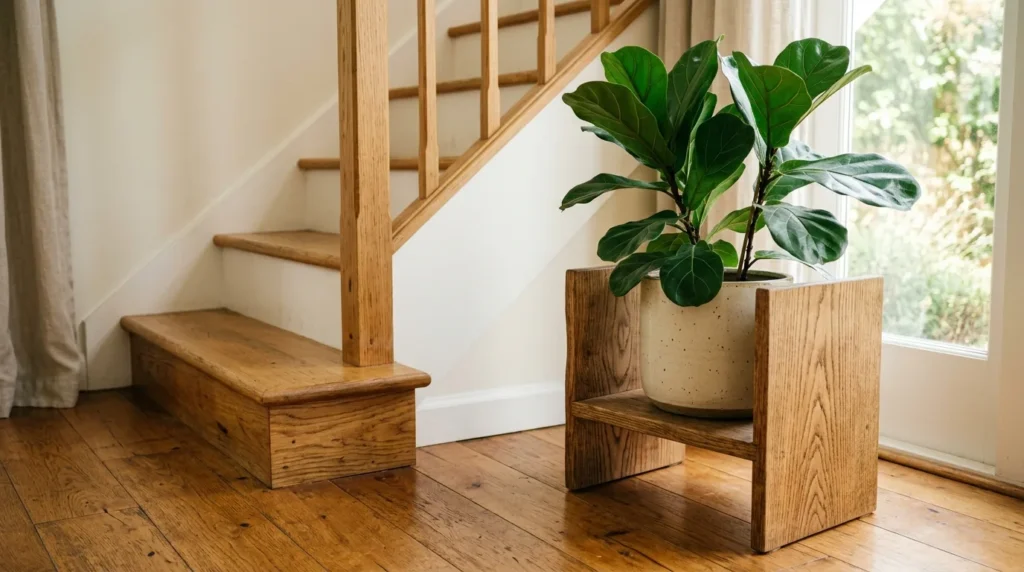
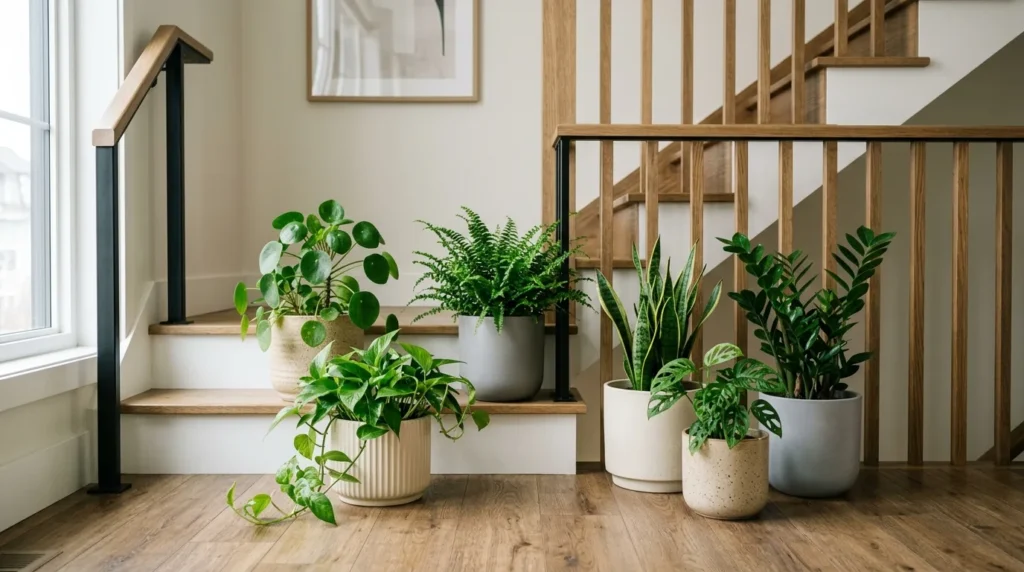
This was one of the first arrangements I tried because I wanted greenery but didn’t want to risk placing anything on the steps. A small plant stand, one medium pot, and a trailing plant created enough variation without making the area feel crowded.
The biggest mistake came from choosing pots that were all roughly the same height. Everything looked flat. Moving one plant onto a low wooden stand changed the arrangement immediately.
A useful mix can include:
- One plant with upright leaves
- One smaller plant with rounded or textured foliage
- One trailing plant placed where its vines won’t reach the stairs
Keep enough clearance around the landing for comfortable movement. A decorative pot shouldn’t become something you have to step around every morning.
If you like the look of expensive ceramic planters, check HomeGoods or Target first. I’ve found that a $15 $30 planter can give a similar visual effect without making the plant itself the expensive part of the project.
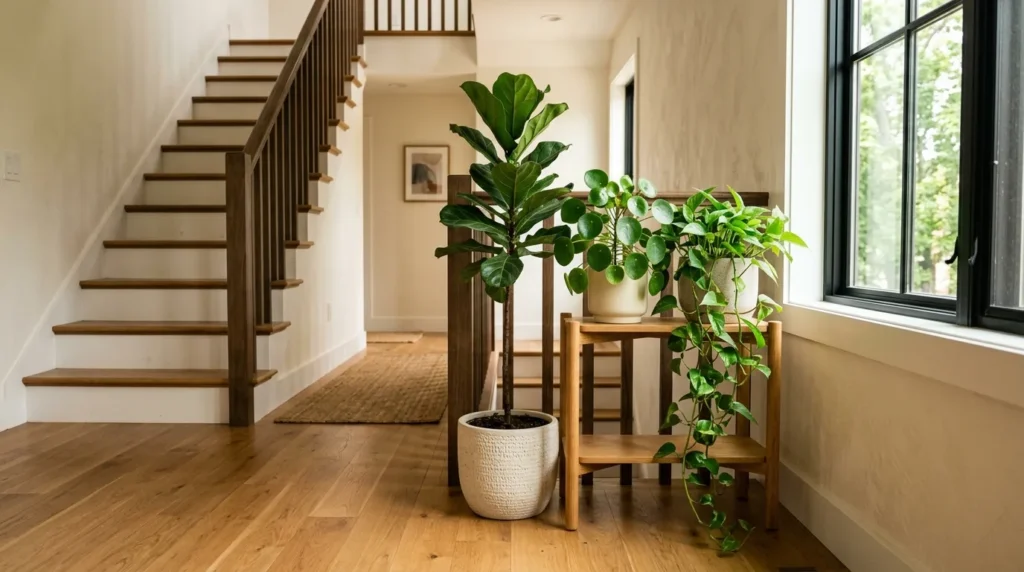
3. Bring Plants Beside the Staircase Wall
Sometimes the best place for greenery isn’t on the staircase at all. A narrow area beside the wall can hold a floor plant while leaving every stair completely open.
This approach fits especially well with modern minimalist interiors because it keeps the staircase visually clean. Instead of several tiny pots competing for attention, one plant creates a stronger focal point.
For a neutral home like ours, I like plants with medium or deep green leaves against warm white, beige, or soft gray walls. Natural wood nearby helps tie the plant into the rest of the room.
One of my earlier attempts taught me an important lesson here. I bought a planter that looked slim from the front but had a surprisingly wide base. Once it arrived, it ate up more floor space than expected and made the staircase feel tighter.
Measure the floor area before ordering. Even five extra inches can matter beside a staircase.
If a large planter isn’t in the budget, use a $10 $25 plant pot with a simple wooden plant stand. Target both offer affordable pieces that can give a basic nursery pot a more finished appearance.
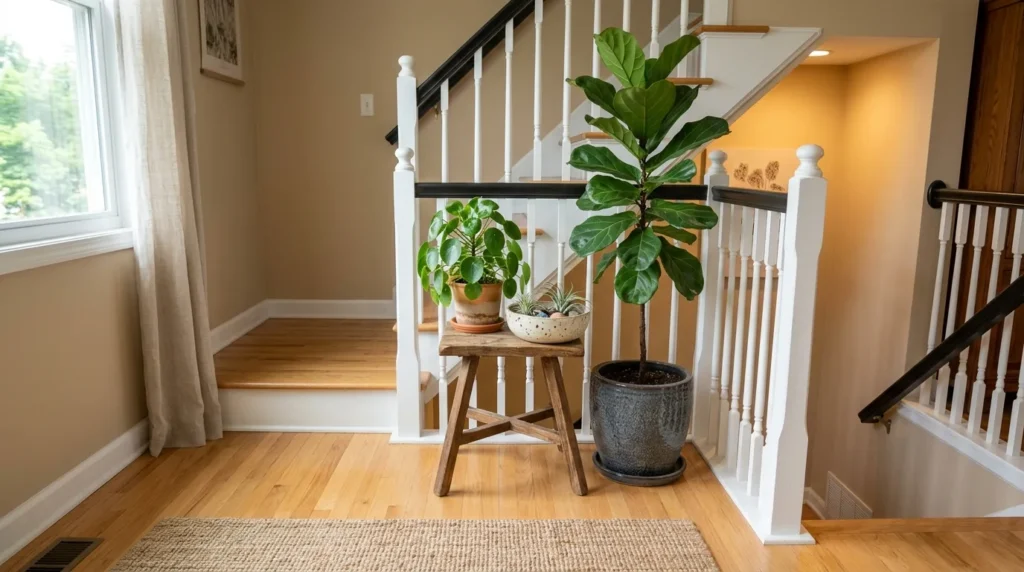
4. Try Trailing Plants Near the Top of the Stairs
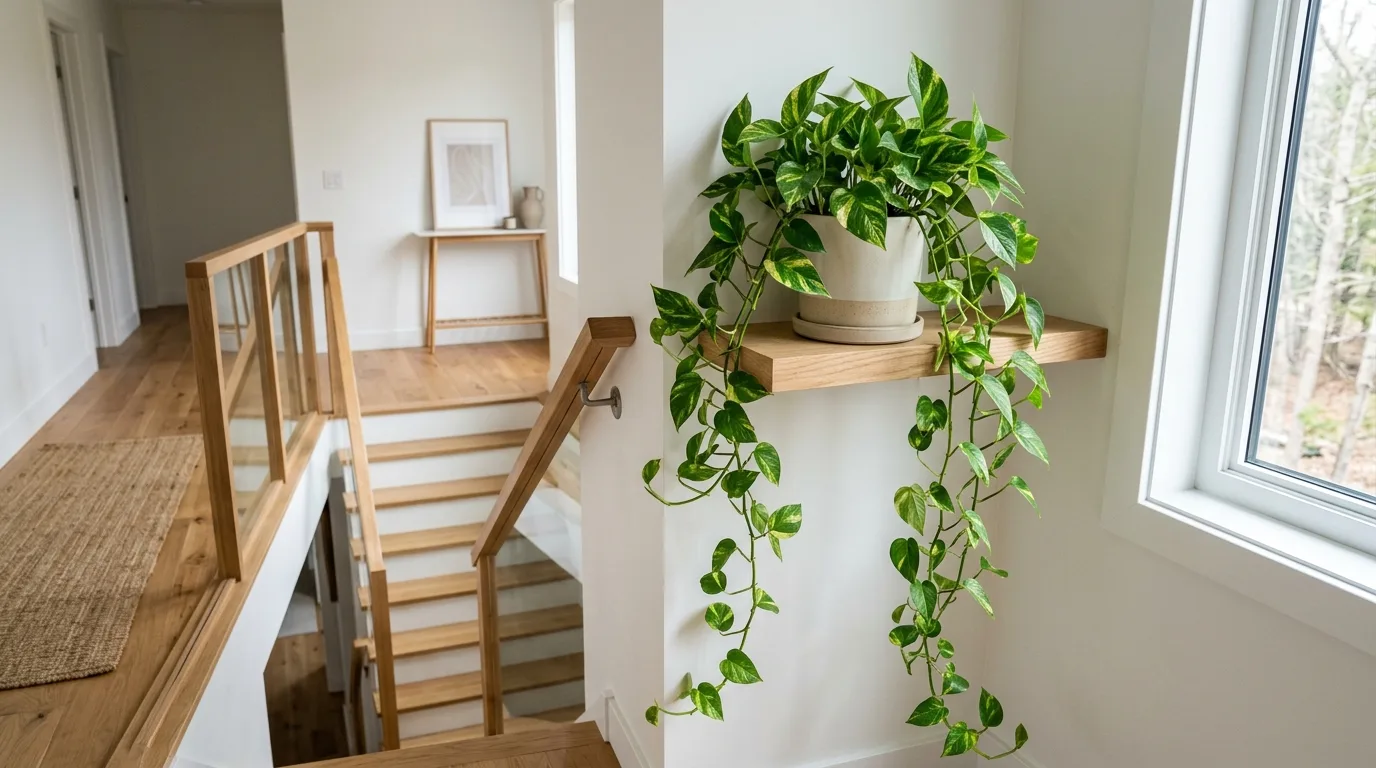
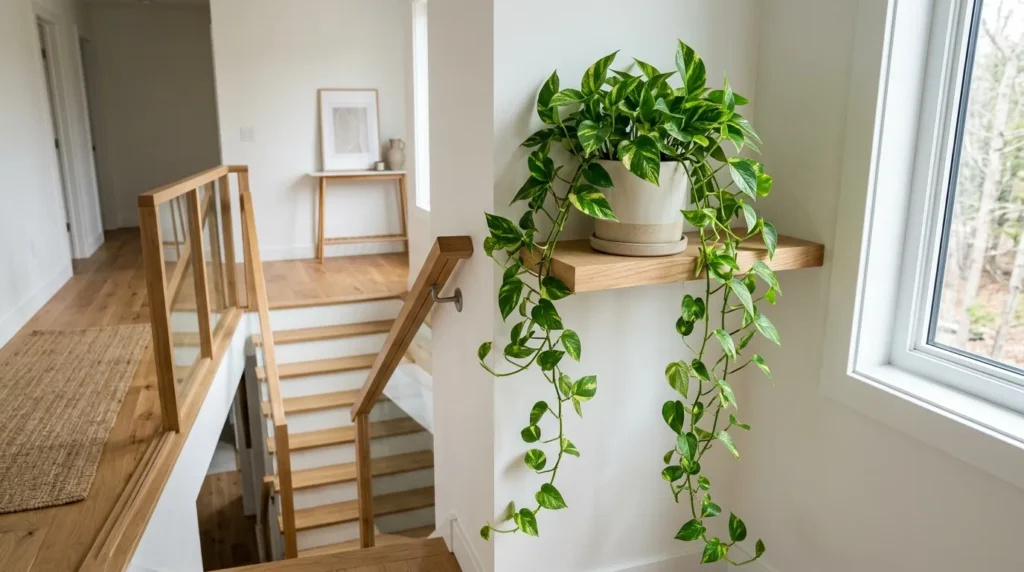
Trailing plants can add movement to a staircase plant, especially when you have a shelf, console, or secure ledge near the upper part of the wall.
Pothos and heartleaf philodendrons are popular choices because their vines create a relaxed shape. Still, I wouldn’t place a trailing plant where the stems can fall across the handrail or stairs.
Safety comes first here. Stairs already require clear footing, and dangling foliage can become a distraction or snag point. I prefer keeping the plant several inches away from the edge and trimming the vines before they reach the walking area.
The visual payoff can be worth it. A trailing plant softens straight railings and hard architectural lines without requiring a large piece of furniture.
For a lower-cost setup, a $12 $25 hanging planter can replace a more expensive wall planter. If you rent and can’t drill into the wall, choose a freestanding shelf instead of relying on adhesive hardware for a heavy pot.
And remember that a wet planter weighs more than a dry one. Follow the manufacturer’s weight limits for any mounting system, especially above stairs.
5. Pair Stair Plants With Warm Lighting
Plants look completely different under warm evening lighting. I noticed this after switching one of our nearby bulbs from a cooler white to a warmer 2700K bulb.
During the afternoon, the greenery looked crisp and bright. At night, the warmer light gave the leaves a softer appearance and made the staircase feel less stark.
You don’t need special plant lights for every arrangement. If your plants receive enough natural light during the day, a nearby warm lamp can handle the decorative side after sunset.
A slim floor lamp beside a plant can also create height without adding another large piece of furniture. Just keep electrical cords away from the stairs and walking path. Don’t run extension cords where someone could catch a foot on them.
For a budget friendly setup, a $20 $40 Target lamp can work just as well visually as a much more expensive fixture. Choose a simple shape that supports the plant instead of competing with it.
6. Match Planters to Your Staircase Materials
The plant gets attention first, but the planter controls much of the overall look. In a staircase area with wood railings, I prefer planters with warm neutral finishes, matte white surfaces, or natural textures.
Too many decorative finishes can make a narrow staircase feel busy. That’s especially noticeable in a townhouse where the staircase often connects multiple living areas.
Our home already has warm wood tones, so adding another strong wood finish would’ve been too much. A simple cream planter worked better.
Try repeating one material rather than buying a matching set. For example, one woven basket planter and two plain ceramic pots can feel connected without looking like a showroom display.
Budget doesn’t need to limit the idea. A $14 basket style cover from Target can hide an ordinary plastic nursery pot. Facebook Marketplace can also be useful for secondhand plant stands, especially if you’re willing to sand or repaint a piece.
7. Create a Mini Green Corner at the Landing
If your staircase has a larger landing, you can create a small green corner instead of scattering plants around the entire staircase.
This became my favorite approach because it gave me the plant-filled feeling I wanted without turning every step into a decorating project.
Start with one taller plant. Add a shorter plant beside it, then introduce a small object such as a wooden bowl, framed print, or simple lamp. Keep the number of pieces limited.
The arrangement should still leave the landing easy to use. I learned this after placing a decorative basket too close to the corner. It looked fine from the doorway, but walking past it every day became annoying.
That’s the kind of mistake photos don’t show.
If the West Elm version of a plant stand costs more than you’d like to spend, look for a basic stool or simple wooden stand around $20 $50. The plant will provide most of the visual interest anyway.
8. Use a Simple DIY Plant Stand
One of my favorite staircase updates didn’t start with a new plant. It started with a cheap wooden stool.
The plan sounded easy: sand the stool, apply a light wood finish, and use it as a plant stand beside the staircase. The first problem showed up during sanding. One edge looked rougher than I expected, so I had to make another Home Depot trip for finer sandpaper.
Then I applied too much finish to one section. It dried unevenly in our dry Colorado air, which meant another sanding session.
The finished stand wasn’t perfect, and that’s exactly why I kept it.
A basic version of this project can cost around $25 $50 depending on the stool and supplies. You can also skip the finish entirely and leave the wood natural if it fits your room.
The important part is stability. A plant stand beside stairs should sit firmly on the floor and shouldn’t wobble when touched. Keep heavier pots low, and don’t place tall unstable objects where they could fall into the stair path.
For homes with pets, choose plants carefully. Miso has made me much more cautious about bringing unfamiliar greenery indoors. If you have a cat or dog, check plant safety with a veterinarian or a reliable animal health resource before bringing a new species home.
9. Keep the Staircase Greenery Minimal
After experimenting with different stair plants, I eventually removed several of them.
That might sound backward, but the staircase looked better.
Three plants were enough. Five felt busy. Eight looked like I was trying to build a greenhouse beside the stairs.
Minimal greenery works particularly well with the warm Scandi and Japandi style I already use throughout our townhouse. The plants add softness while the neutral pots keep the overall arrangement calm.
Maintenance matters, too. A staircase isn’t the easiest place to water plants. Carrying a full watering can up and down stairs gets old quickly, and spilled water can create a slipping hazard.
Now I check soil moisture before watering rather than following a rigid schedule. I also use saucers or trays under pots where appropriate and wipe up spills immediately.
If you’re new to indoor plants, start with one inexpensive plant around $15 $30. Give it time. Watch how it responds to the light, temperature, and humidity in your home before buying more.
What I’d Do Differently
Looking back, my biggest mistake was shopping for plants before measuring the staircase area. I found beautiful pots first and tried to make them fit afterward. That approach cost me time and one return.
The second mistake was treating every part of the staircase as decorating space. Steps, handrails, and walking paths need to stay functional. No plant is worth making the stairs plant harder or less safe to use.
I’d also pay more attention to Colorado’s dry indoor air from the beginning. Some plants need more humidity than a naturally dry home can provide. If a plant repeatedly struggles despite appropriate light and watering, check its care requirements rather than simply watering more.
For wall-mounted or tall planters, use hardware rated for the actual load and follow installation instructions. If you’re unsure about anchoring a heavy object near a staircase, consult a licensed professional.
My current rule is simple: one strong plant is better than several awkward ones.
Ready to give your staircase a fresh update? Start with one simple plant, choose a safe spot, and build from there. For more practical small space decorating ideas, visit CompactDecorHub and find your next project.