A gallery wall can make an ordinary room feel personal, collected, and full of character. You do not need expensive antiques or perfectly matched frames to create that look. With the right combination of artwork, photographs, mirrors, and decorative pieces, you can build a wall that feels collected over time.
The best vintage-inspired gallery wall ideas balance old-fashioned charm with the way modern homes actually function. Instead of filling every inch with decorations, focus on pieces that tell a story. Mix different frame finishes, vary artwork sizes, and leave enough breathing room between each piece.
I especially love this approach because it works in almost any room. A hallway can hold family photographs, while a bedroom can feature soft botanical prints. A dining room can showcase vintage food illustrations, and a home office can use old maps or architectural sketches.
If you have been saving beautiful frames, prints, or thrifted artwork without knowing where to use them, this guide can help. Here are practical gallery wall ideas for different rooms throughout your home.
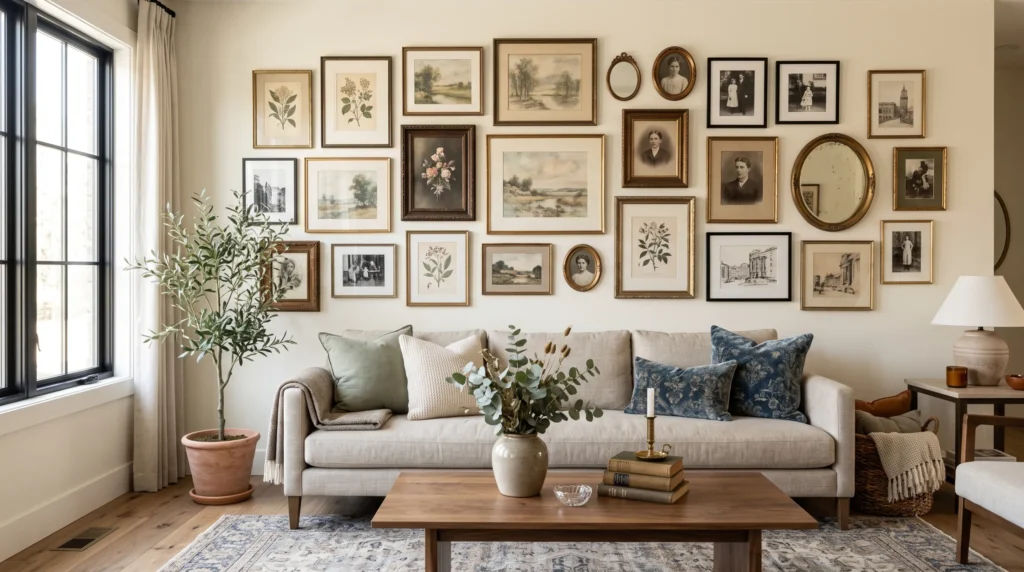
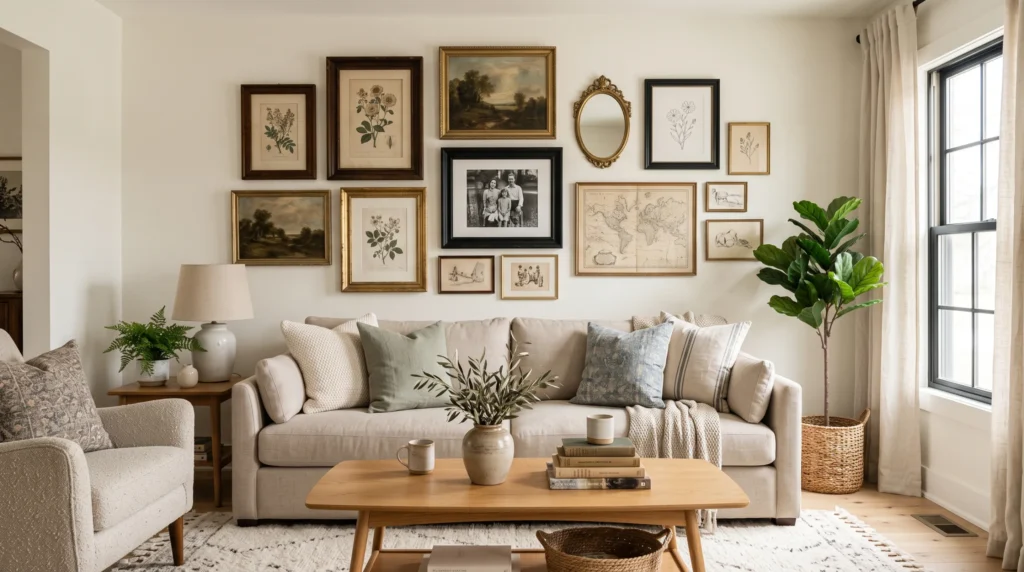
1. Create a Vintage Gallery Wall in the Living Room
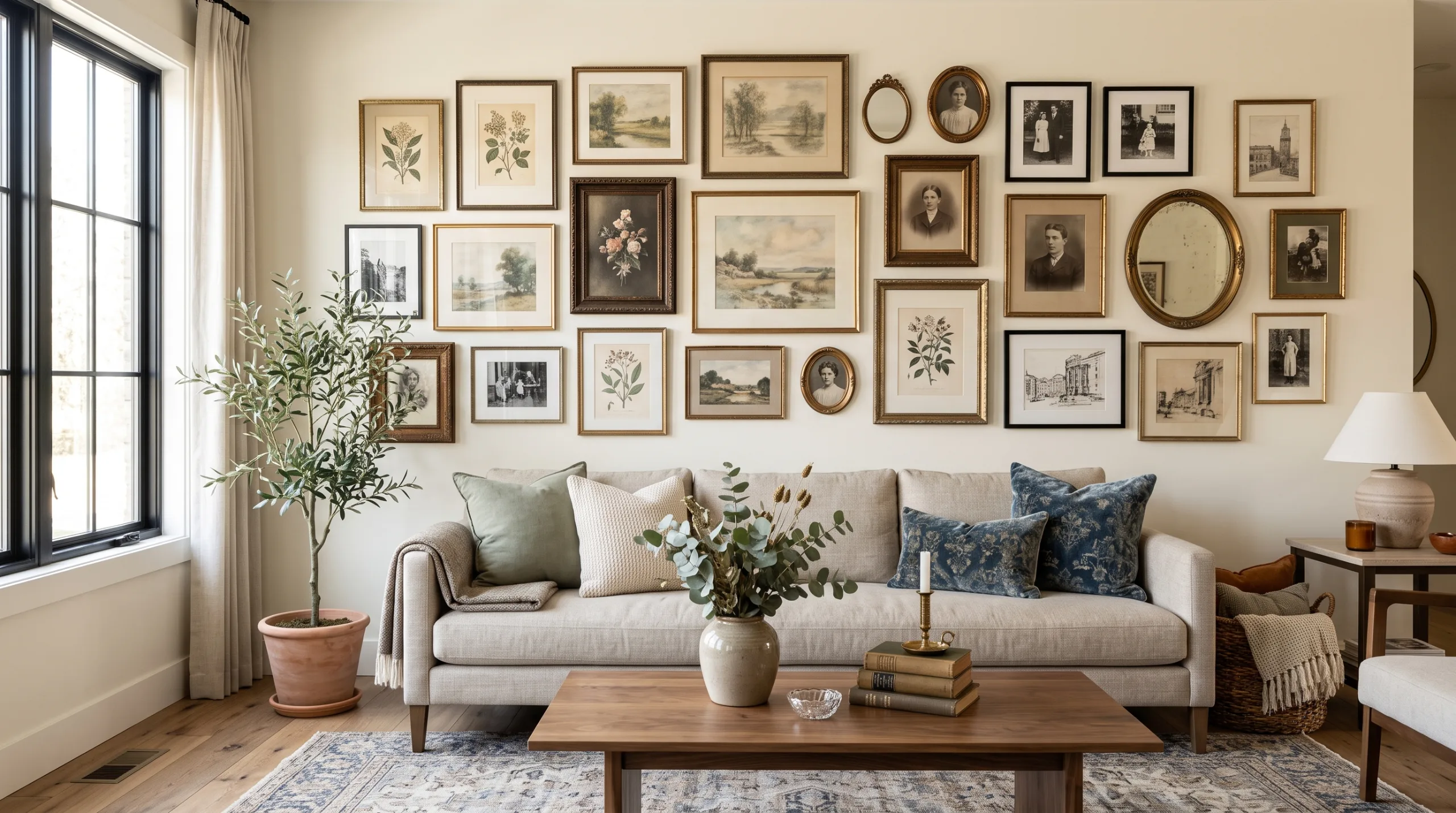
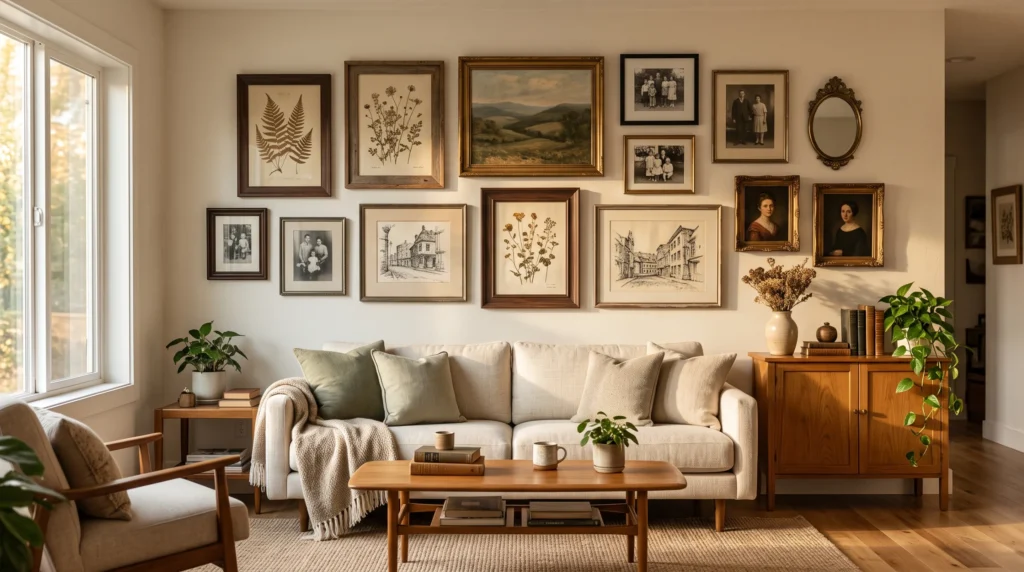
The living room usually offers the largest wall surface, making it a natural place for a gallery arrangement. A vintage-inspired display can bring warmth to a modern sofa or plain painted wall.
Start with one larger piece as your anchor. This could be an antique-style landscape, botanical print, old family photograph, or decorative mirror. Then place smaller pieces around it without creating a perfectly symmetrical pattern.
Try mixing wood, brass, black, and distressed frames. The different finishes can make the arrangement feel collected instead of purchased as one matching set.
For a relaxed look, keep your artwork within a similar color family. Cream, brown, muted green, faded blue, and warm beige work beautifully together. These shades also pair well with neutral furniture and natural wood.
Do not worry if every frame looks slightly different. Small imperfections often give a vintage display more personality.
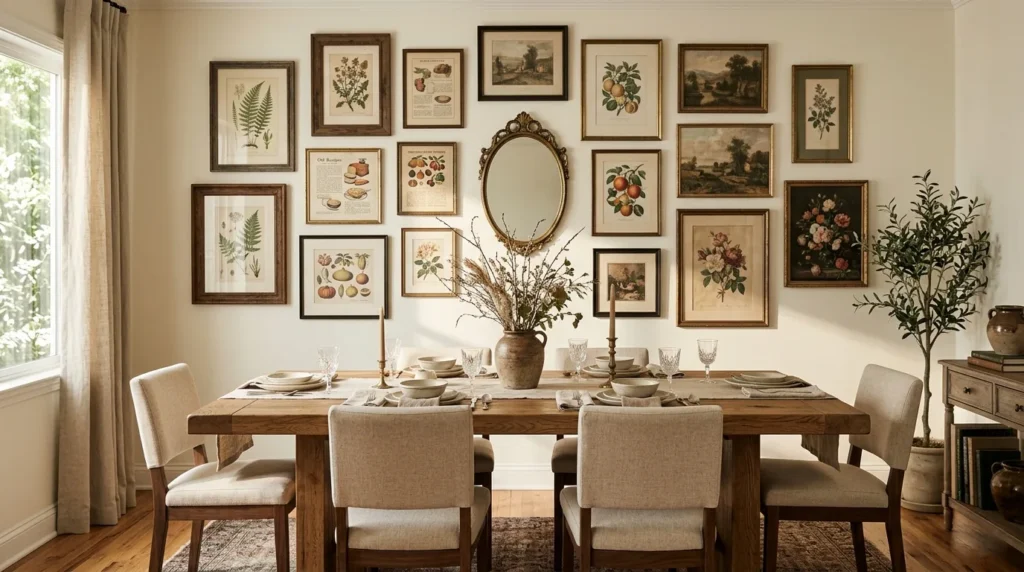
2. Style a Vintage Gallery Wall Above the Dining Table
The dining room gives you an opportunity to create something more interesting than traditional wall art. Food illustrations, botanical prints, old kitchen advertisements, and European-inspired sketches can work beautifully here.
Hang the gallery wall several inches above the furniture rather than placing it too high. You want the artwork to connect visually with the dining table and chairs.
Consider using three larger prints surrounded by smaller decorative pieces. A small mirror can break up the artwork and reflect light across the room.
For a stronger vintage feeling, look for frames with carved details or slightly worn finishes. You can also add an old-fashioned clock or small decorative plate if the wall can support it safely.
The key is to avoid making the arrangement feel like a restaurant display. Choose artwork that connects with your home’s colors and your personal taste.
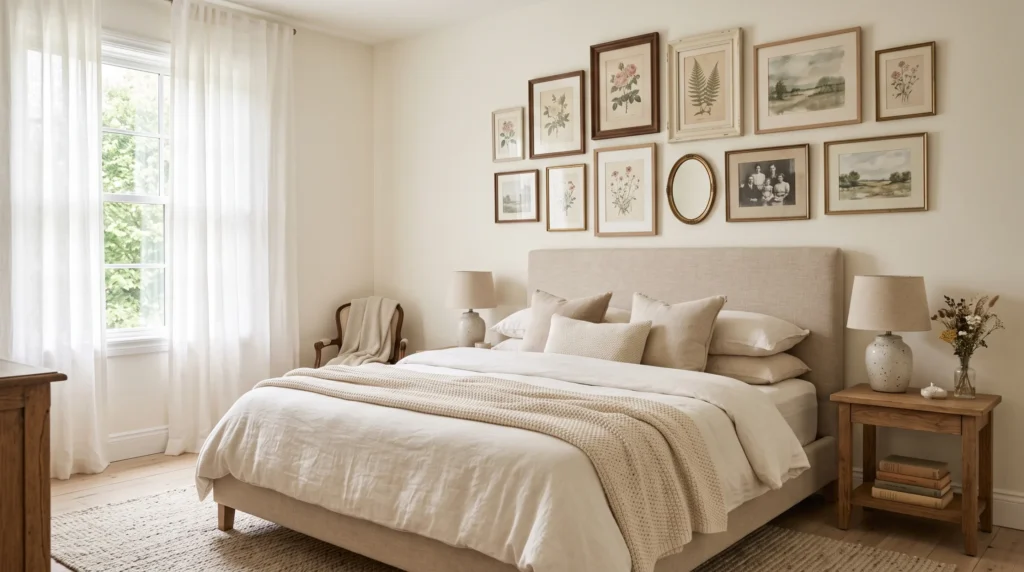
3. Turn a Bedroom Wall Into a Soft Art Collection
Bedrooms benefit from softer gallery arrangements. Instead of bold artwork, choose faded florals, landscapes, portraits, handwritten-style prints, or delicate botanical drawings.
Place the largest piece near the center of the arrangement. Surround it with smaller artwork that shares similar tones.
Gold, cream, walnut, and painted wood frames can create a warm combination. If your bedroom already has patterned bedding, keep the gallery wall quieter.
You can also create a horizontal arrangement above the headboard. This works especially well when the bed sits against a wide wall.
Keep the artwork balanced rather than perfectly identical. A slightly uneven arrangement can make the display feel like a collection gathered over several years.
4. Add Character to a Home Office
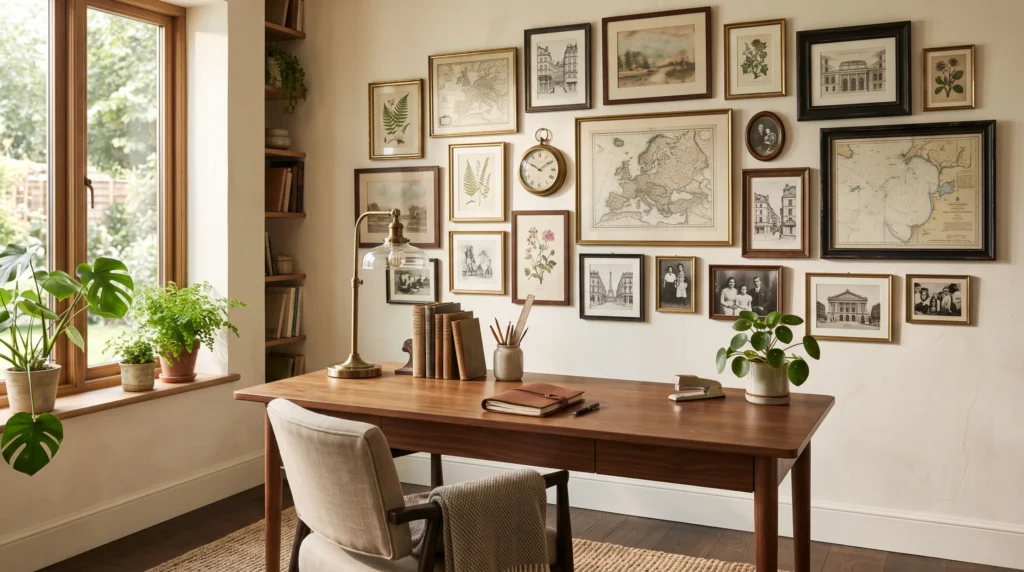
A home office does not have to look overly formal. A vintage gallery wall can make your workspace feel more interesting without taking up valuable floor space.
Try using old maps, architectural drawings, botanical illustrations, book pages, or black-and-white photographs. These pieces can create visual interest while maintaining a focused atmosphere.
Arrange your artwork around the desk rather than directly behind your computer monitor. This helps the wall look intentional without creating too much visual distraction.
If you regularly attend video meetings, pay attention to what appears behind your chair. A carefully arranged gallery wall can also create a more polished background.
Use a limited color palette if your office contains shelves, books, and storage bins. Too many competing colors can make the workspace feel cluttered.
5. Make the Entryway Feel Collected
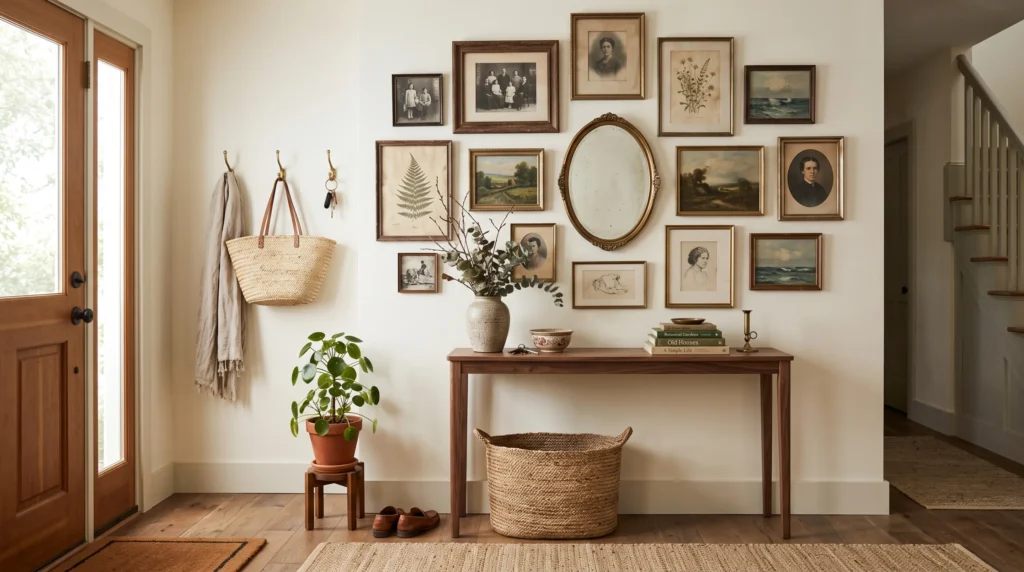
The entryway often receives less decorating attention than the living room. Yet it can make a strong first impression with a simple gallery arrangement.
Create a narrow vertical gallery wall beside the entry door or above a small console. Mix family photographs with vintage artwork for a display that feels personal.
A small mirror can also serve a practical purpose. It gives you a quick place to check your appearance before leaving while adding another shape to the arrangement.
Choose frames that work with your entry furniture. Dark wood works well with traditional pieces, while aged brass can add warmth to neutral furniture.
Keep the bottom of the arrangement high enough to avoid bumping it with bags, coats, or other everyday items.
6. Use Vintage Prints in the Kitchen
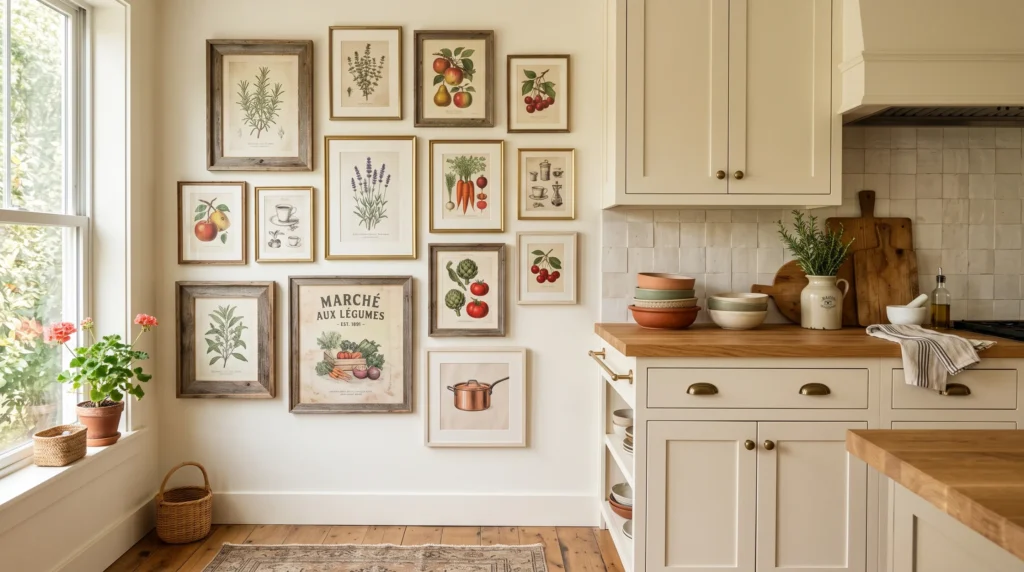
The kitchen is one of the most overlooked places for a gallery wall. Vintage-inspired food illustrations can make a blank wall feel much more welcoming.
Look for artwork featuring fruits, vegetables, herbs, coffee, bread, cooking utensils, or old market scenes. You can combine several small prints instead of using one large piece.
A collection of four to six related prints can work especially well above a breakfast nook. If you have an empty wall beside your cabinets, create a smaller vertical arrangement there.
Choose frames that can handle the kitchen’s everyday environment. Keep paper artwork away from areas exposed to direct steam, splashes, or heavy grease.
This approach works particularly well when your kitchen already includes wood cutting boards, ceramic dishes, or other warm materials.
7. Give the Hallway a Vintage Story
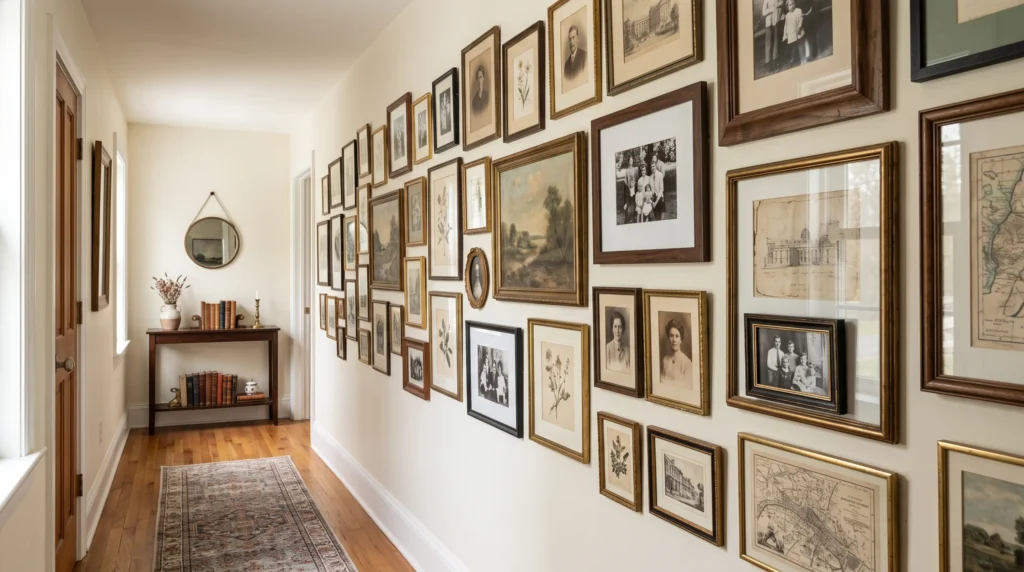
Long hallways can feel empty because they often lack furniture and decorative layers. A gallery wall can turn that unused surface into a visual journey through your home.
Instead of using identical frames, repeat one element throughout the arrangement. You might choose similar frame colors, matching matting, or artwork with the same muted palette.
Family photographs work especially well here. Add a few landscapes or botanical prints between photographs to prevent the wall from looking too uniform.
Keep the spacing consistent even when the artwork sizes change. This small detail helps the arrangement look intentional.
Before hanging anything, place the pieces on the floor. Move them around until the overall shape feels balanced.
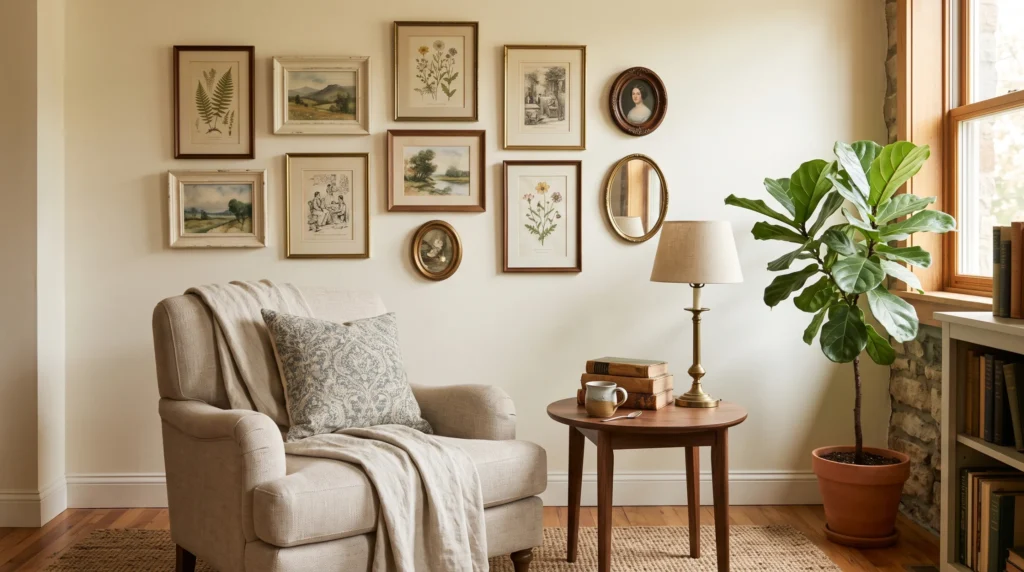
8. Create a Cozy Reading Corner
A reading corner gives you a chance to experiment with a smaller gallery wall. You do not need an entire wall to create a vintage-inspired display.
Hang three to five pieces above a reading chair. Consider using old book illustrations, small landscapes, botanical prints, or literary artwork.
Add one decorative mirror if the corner feels dark. The reflective surface can make the area feel brighter while adding another vintage-style detail.
Choose artwork that complements the chair, side table, and lamp. The goal should feel relaxed rather than perfectly coordinated.
This is also an excellent place to display artwork that feels too personal or unusual for larger rooms.
9. Bring Vintage Charm to a Stairway
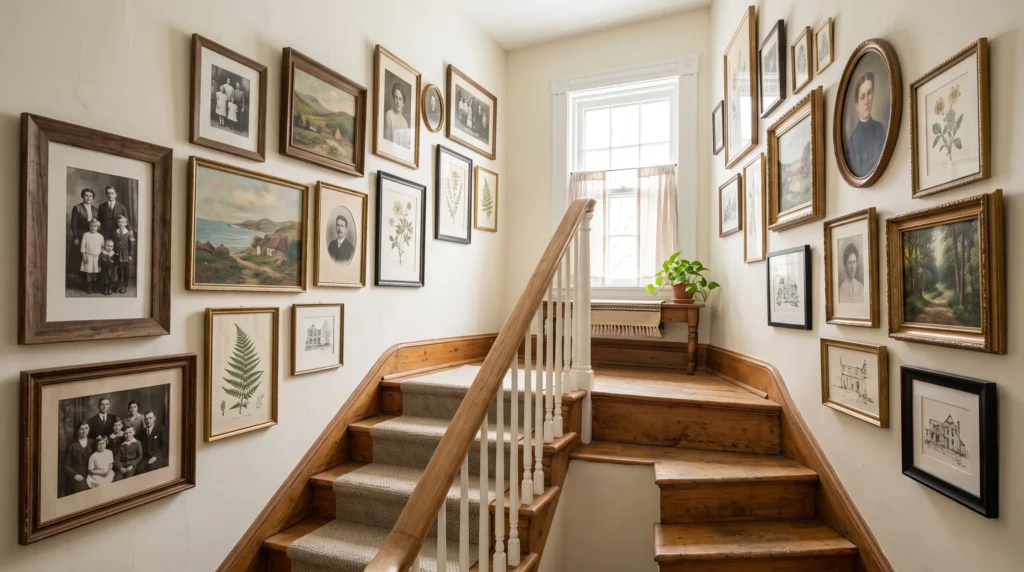
A stairway can become one of the most interesting gallery locations in your home. The changing wall height naturally creates opportunities for different frame sizes.
Follow the angle of the stairs rather than forcing the artwork into a straight horizontal line. Begin with your largest pieces near the middle and gradually adjust the smaller frames.
Use painter’s tape to mark the arrangement before making holes. This step can save considerable frustration when you are working around stairs.
Black-and-white photographs look especially effective in stairway arrangements. You can soften them with botanical prints or warm-toned landscapes.
Always consider safe walking clearance before hanging anything. Secure heavier frames properly, especially in high-traffic areas.
10. Design a Vintage Gallery Wall in the Bathroom
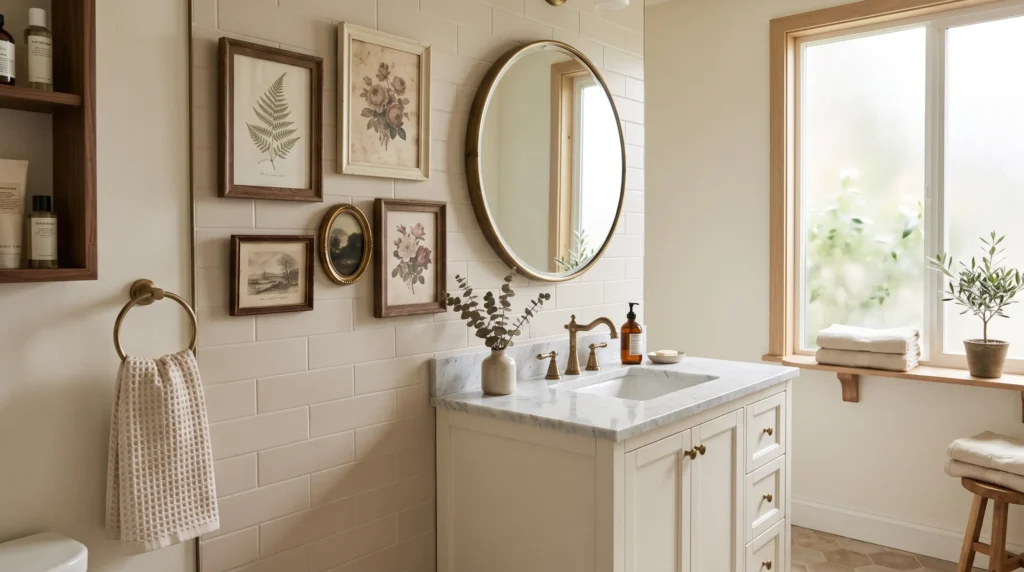
Bathrooms can support artwork too, provided you choose the location carefully. Keep framed pieces away from direct water exposure and areas with excessive moisture.
Vintage botanical prints, small landscapes, floral illustrations, and antique-style portraits can work well.
A narrow wall beside the vanity often provides enough room for two or three pieces. You can also place a small framed print above a towel rack.
Use artwork with colors that complement your towels, vanity, and hardware. Soft green, beige, cream, and muted blue can create a relaxed combination.
Avoid overcrowding the bathroom. A few carefully chosen pieces usually look better than a wall packed with tiny frames.
11. Try a Collected Gallery Wall With Mirrors
Not every item on a gallery wall needs to be artwork. Small mirrors can add shape, light, and dimension to the arrangement.
Place one decorative mirror slightly off-center and surround it with photographs or prints. This creates a more collected appearance than using artwork alone.
Round mirrors work nicely beside rectangular frames because the different shapes create contrast. Small oval mirrors can also support a traditional vintage feeling.
Keep the mirror secure and choose its location carefully. Avoid placing fragile pieces where they could easily get knocked by furniture or daily activity.
12. Mix Family Photos With Vintage Artwork
One of the easiest ways to make a gallery wall feel meaningful is by mixing personal photographs with decorative artwork.
Choose several favorite photographs and print them in black and white or softly muted tones. Then add botanical prints, landscapes, sketches, or other vintage-style pieces.
The photographs give the arrangement a personal story, while the artwork creates visual balance.
You do not need professional photography for this idea. Everyday family moments can look beautiful when you print them thoughtfully and place them inside attractive frames.
This approach also gives older photographs a new purpose instead of leaving them stored inside boxes.
13. Build a Gallery Wall Around One Statement Piece
If you own one special artwork, let it become the center of the entire arrangement. A large painting, antique-style portrait, or oversized botanical print can anchor everything around it.
Place smaller pieces around the statement artwork without competing with its size.
Use frames that support the main piece rather than distracting from it. Simple wood or thin metal frames often work well when the central artwork already has plenty of detail.
This method works particularly well in living rooms, dining rooms, and bedrooms.
14. Keep a Small Wall More Minimal
A vintage gallery wall does not need to cover an entire surface. Smaller arrangements can create just as much impact when you give each piece enough space.
Choose three or four meaningful pieces and arrange them in a simple grid. Use different artwork subjects while keeping the frames similar.
This approach works well in apartments, narrow hallways, bathrooms, and small bedrooms.
It also gives you more flexibility if you enjoy changing artwork throughout the year.
15. Make Your Gallery Wall Feel Naturally Collected
The most convincing vintage displays rarely look perfect. They usually contain different frames, artwork sizes, textures, and small imperfections.
Start with pieces you genuinely like instead of buying everything at once. Thrift stores, flea markets, family collections, and online marketplaces can all provide interesting options.
Before hanging the final arrangement, test everything on the floor. Take a photograph from above and study the overall balance.
You may notice that one frame feels too heavy or two similar prints sit too close together. Moving those pieces before installation can make the final result much stronger.
Also remember that a gallery wall can evolve. Add new photographs, replace artwork, or move frames when your room changes.
What I Learned From Creating Gallery Walls
One mistake people often make involves buying frames before choosing the artwork. I made this mistake myself, and the collection quickly felt disconnected.
A better approach starts with the artwork. Choose your favorite pieces first, then decide which frames bring them together.
Another common problem involves hanging everything too high. Gallery walls should relate to nearby furniture and the people using the room.
I also recommend avoiding perfect symmetry unless you specifically want a formal look. Slight variation usually creates a more relaxed vintage feeling.
Most importantly, do not rush the hanging process. A few minutes spent arranging everything on the floor can prevent a wall full of unnecessary holes.
Final Thoughts
The best vintage-inspired gallery wall ideas do more than fill an empty wall. They bring personality, memories, texture, and visual interest into everyday rooms.
You can create a large collection in the living room or keep things simple with three prints in a hallway. The right arrangement depends on your room, furniture, available wall space, and personal style.
Start with artwork you genuinely love. Mix old-looking pieces with personal photographs, experiment with different frame shapes, and allow the arrangement to feel collected rather than manufactured.
Whether you are refreshing one room or planning a complete home update, thoughtful wall decor can make the process much more enjoyable. For more practical inspiration, creative home ideas, and useful content, explore compact decor hub and discover more ideas designed to make everyday living easier and more enjoyable.