A well designed study table can completely change the way you work, learn, and stay focused every day. In modern homes, a study table is no longer just a piece of furniture. It has become a personal productivity zone where creativity, concentration, and comfort come together. Whether you are a student preparing for exams, a professional working from home, or someone who loves organized spaces, the right study table can improve both your efficiency and your room’s overall style.
Today, study tables come in many beautiful designs, from minimalist wooden setups to luxury modern workstations. In this guide, you will discover the best study table ideas, smart organization tips, and stylish inspiration to create a productive space that feels comfortable and motivating.
Ethan and I both work from home. For eight months after we moved into this townhouse, we shared a 42 inch dining table that was never meant to be an office. One of us always had a cable in the wrong spot. The other was always on a call at the wrong moment. Miso knocked someone’s water glass over at least once a week.
The Desk That Arrived and Immediately Blocked the Door
The first desk was a 55 inch writing desk from Wayfair. Light oak finish, center drawer, open shelves on the right side. Around $215. It looked clean in the photos and the wood tone was exactly what I wanted.
What I didn’t check: the door to that room swings inward and opens to the right. Once assembled, the desk sat directly in the swing arc. We could squeeze through, but it felt like parallel parking inside our own office. Ethan hit his shin on the corner twice in four days. We returned it before the week was out.
The fix is embarrassingly simple. Before ordering any desk, tape its exact footprint on the floor with painter’s tape. Then open every door in the room. Check every vent. See what conflicts. A tape roll costs under $5 at Home Depot. This one step would have saved me $215, a return label, and a week of frustration.

Budget Note on That First Desk
If you’re looking at writing desks in the $200 250 range, Article and Amazon both carry comparable options. The quality difference between a $215 Wayfair piece and a $249 Article desk is noticeable in the drawer slide and finish but both are perfectly functional for light home office use.
The Floating Shelf Experiment That Looked Great and Felt Wrong
After the door situation, I went minimal. A wall mounted floating desk with a fold down panel. No floor footprint, folds flat when guests come, room doubles as a spare bedroom. Smart idea.
Installation is where it fell apart. Ethan and I drilled three bracket points. Two hit studs. The third hit drywall. Second Home Depot trip for toggle bolts. The packaging said 50 pound rating. We felt good about it.
By week two, the right side dipped slightly when I put any real weight on that corner. Not alarming. Just noticeable. By month three, I was unconsciously keeping my laptop toward the left. By month four, we took the whole thing down.
The patched holes are still faintly visible when afternoon light hits that wall at a low angle. $130 wasted, two hardware trips, one weekend gone.
The rule I follow now: every bracket needs a stud. Not a toggle bolt, not a wall anchor a stud. If your walls don’t cooperate, a narrow freestanding desk on the floor will always outperform a floating one you don’t fully trust.
We used it for about four months before I finally admitted it wasn’t working and we took it down. The patched holes in the drywall are still faintly visible if the light hits that wall at a certain angle. That was a $130 investment effectively wasted, plus two separate hardware trips and a weekend of frustration.
If you’re considering a wall mounted study table for a small room, make sure every single bracket is anchored into a stud. Toggle bolts are fine for lightweight shelves, not for anything you’re going to lean on daily. If your walls don’t cooperate, a narrow freestanding desk will serve you better than a floating one that makes you nervous.
What Actually Fits a 9×11 Room
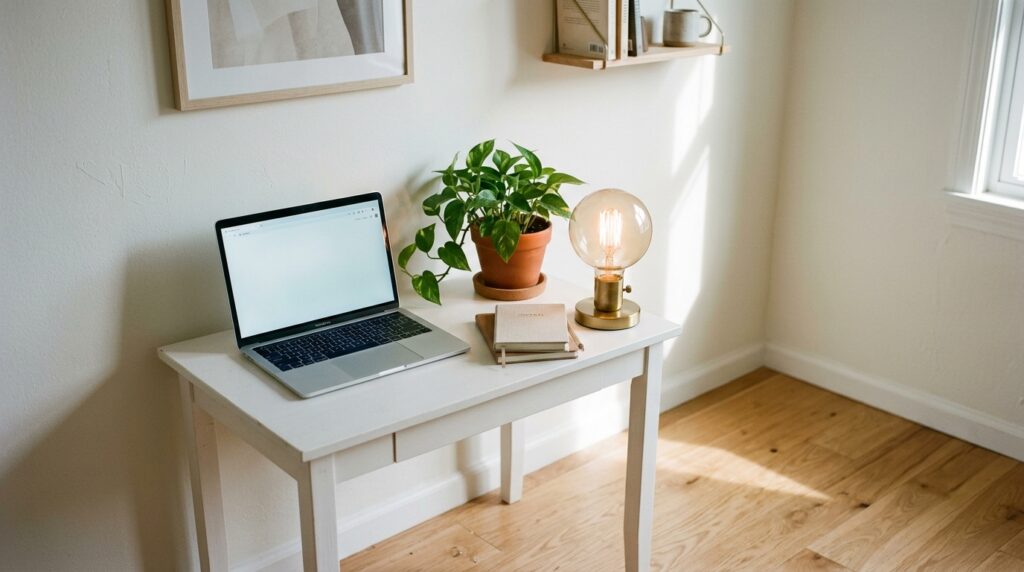
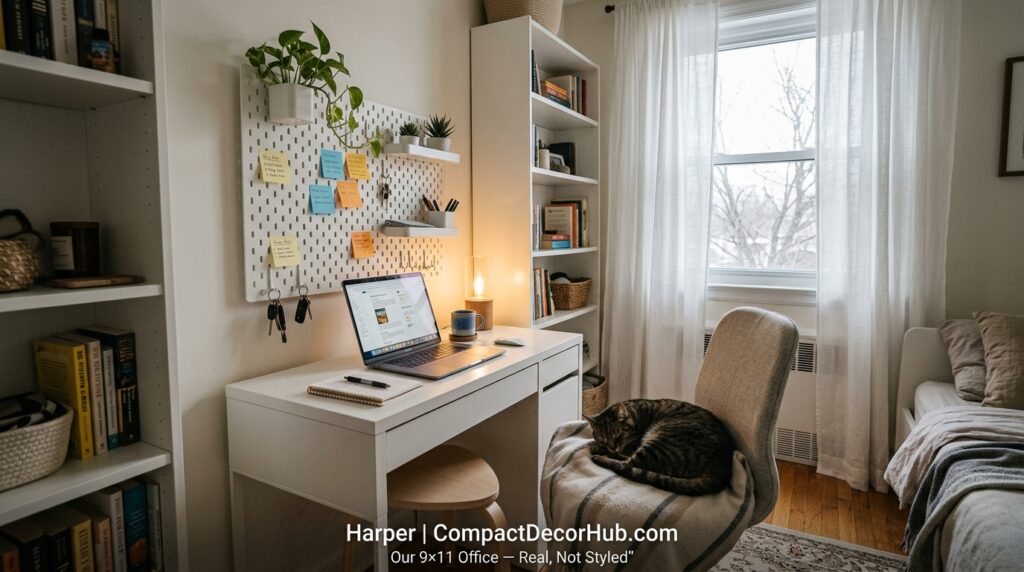
The desk we have now is the Ikea’s Micke desk, 41 inch version, in white. Runs $130 140 depending on stock. No hutch, no side shelving unit, nothing hanging off the edges. Just a flat surface and one small drawer.
The depth is 19.5 inches. After two failed attempts, that number mattered more to me than anything else on the spec sheet. A 24 inch deep desk in a small room eats floor space in a way you feel every single day. At 19.5 inches, the MICKE sits against the wall and almost disappears. White finish against white paint helps too it reads as background rather than furniture, which is exactly what you want in a room that also needs to function as a guest space.
We put it on the only wall without a door, vent, or window frame cutting into it a 7 foot stretch on the north side. The desk fits with about 18 inches of clearance on each side. Enough to pull the chair back and stand up without bumping into anything.
Two People, One 41 Inch Desk
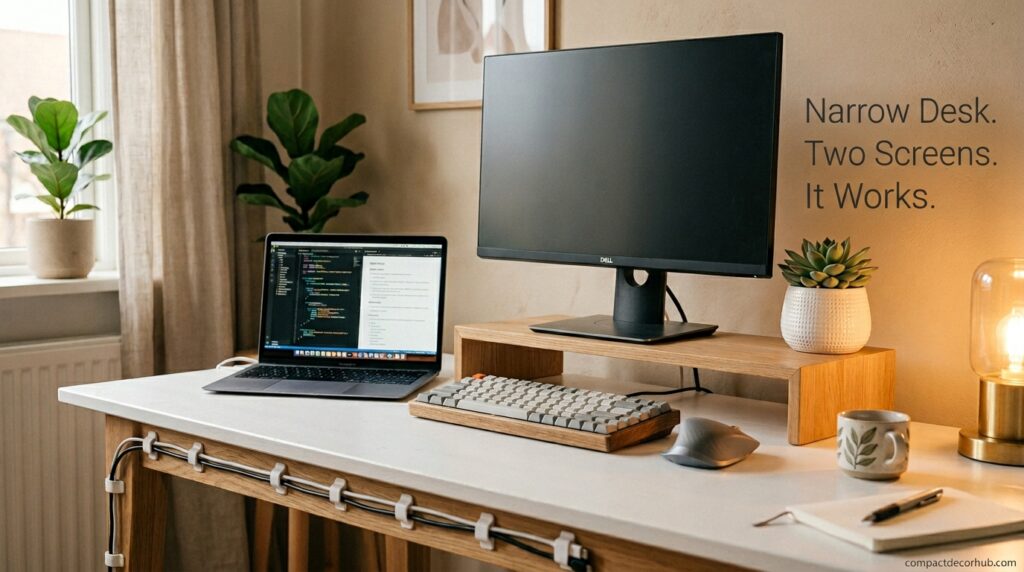
Ethan is on calls by 7:30 a.m. most days, so the desk is his through late morning. His setup is minimal: laptop, a 24 inch monitor we found at our local Goodwill for $40, one cable organizer zip tied to the back leg. When he’s done, the surface is almost clear.
My side is less disciplined. Laptop, lamp, a notebook with maybe six pages written in it, and a cup of pens where three actually work. Miso has claimed the left corner of the chair as his spot, so I’m always slightly off center when I sit down.
The 41 inch surface is enough for one focused person. If you genuinely need two people working side by side at the same time, you’d need at least 55 inches and a room that can handle the depth without feeling cramped.
The Styling Project That Took Three Weekends
Getting the desk there was one thing. Getting the room to feel like a real workspace took longer.
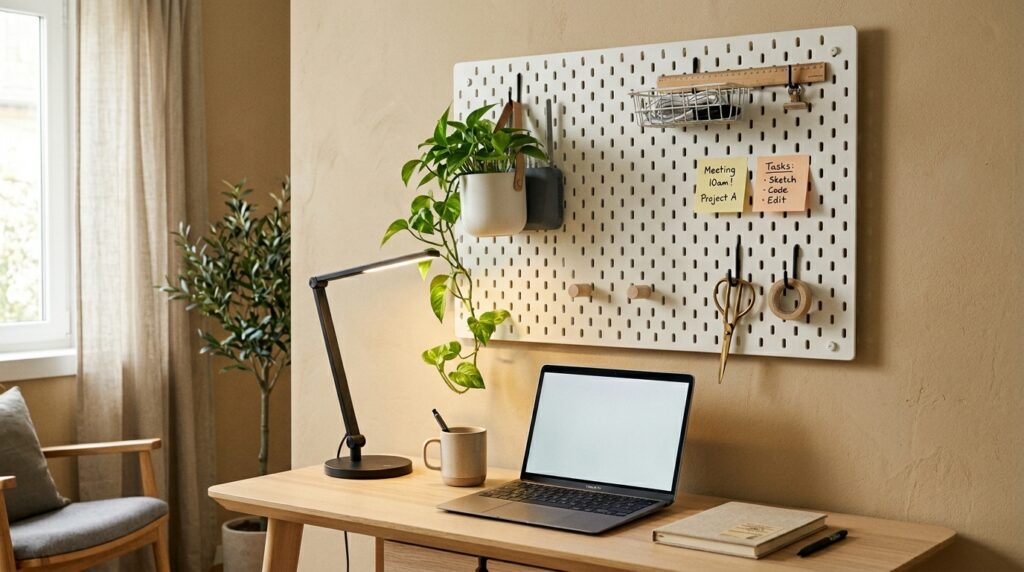
Weekend one: pegboard. A 24×18 inch white pegboard from Home Depot, around $22. The goal was to clear the router off the desk surface and add a small plant and a spot for notes. I watched two YouTube videos about felt confident, drilled on the third try. The board went up crooked. Rather than patch and restart, I shimmed the lower bracket with folded cardboard and re leveled it. It’s been straight for over a year. Not a clean solution, but it works.
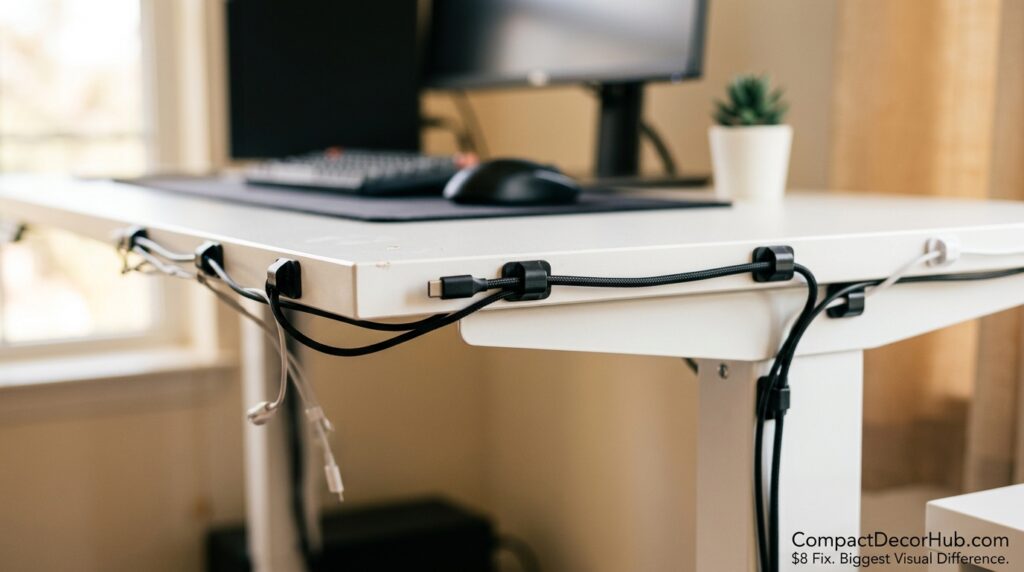
Weekend two: cables. Adhesive cable clips from Amazon, 30 pack for around $8, running along the back edge and down one leg. Sounds minor. The difference in how organized the setup looks without buying a single storage piece was bigger than I expected.
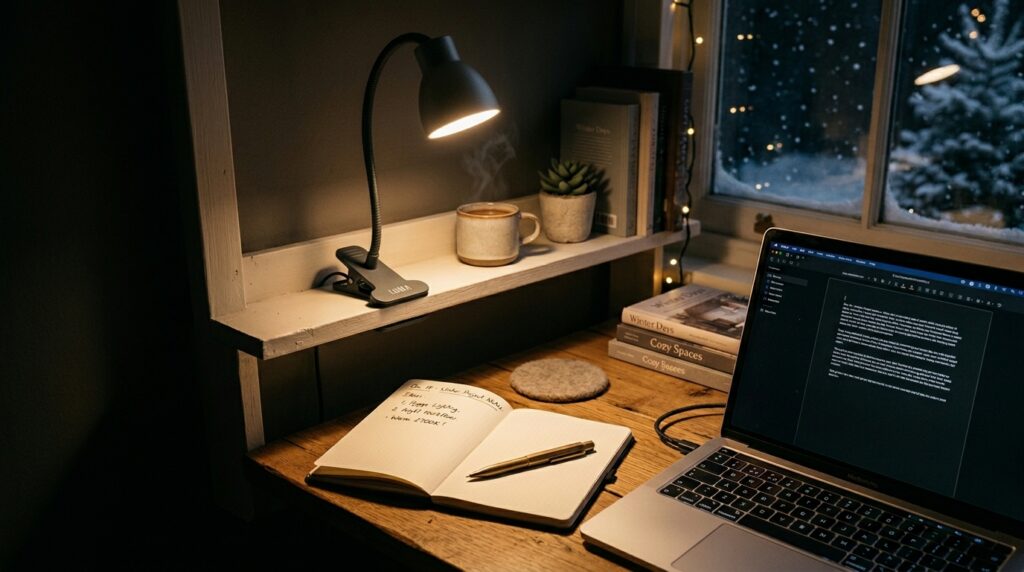
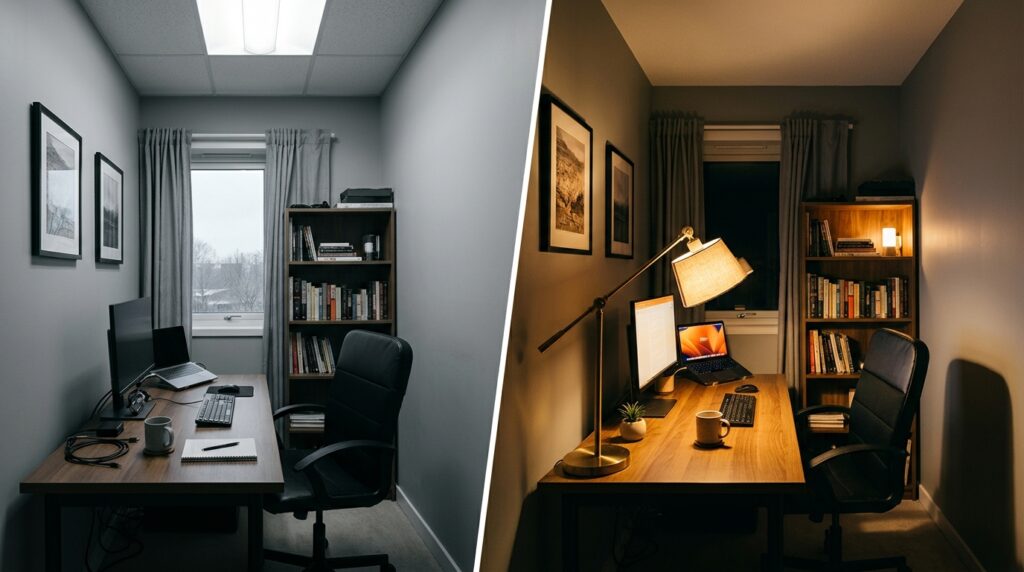
Weekend three: lighting. Colorado winters are short on daylight and our north-facing window gets no direct sun from November through March. We’d been working under the original builder grade flush mount, the kind of overhead light that makes every room feel like a waiting area. A clip on LED desk lamp from Target, $24, in 2700K warm white changed the entire feel of the room. Same desk, same walls, same chair. Just a better lamp. It finally felt like somewhere worth sitting.
Total across all three weekends: around $54. The study table went from storage space with a desk shoved in it to somewhere we actually get work done
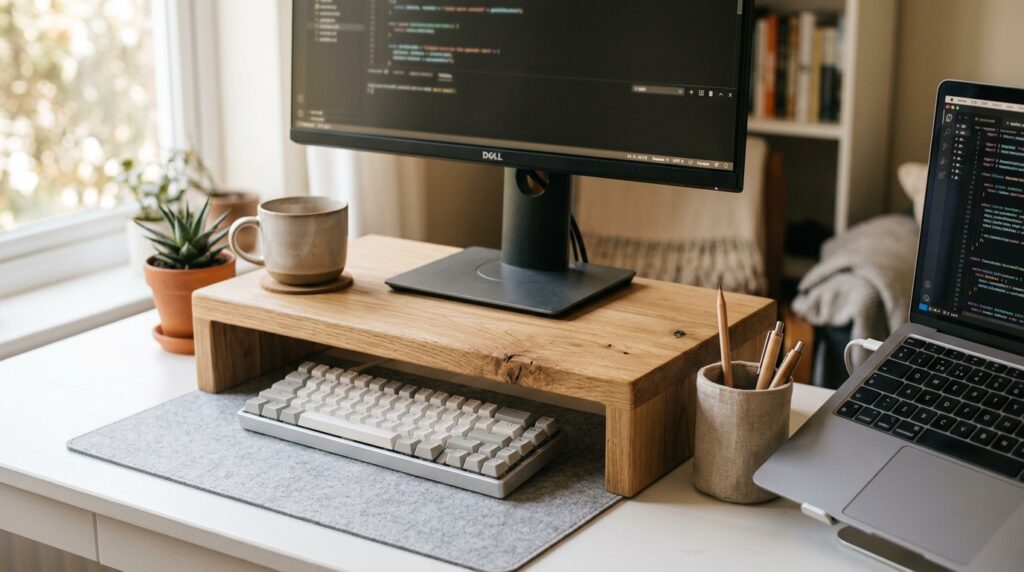
The Floating Desk That Felt Wrong After Month One
After the door situation, I went minimal. A wall mounted floating desk with a fold down panel. No floor footprint, folds flat when guests come, room doubles as a spare bedroom. Smart idea.
Installation is where it fell apart. Ethan and I drilled three bracket points. Two hit studs. The third hit drywall. Second Home Depot trip for toggle bolts. The packaging said 50 pound rating. We felt good about it.
By week two, the right side dipped slightly when I put any real weight on that corner. Not alarming. Just noticeable. By month three, I was unconsciously keeping my laptop toward the left. By month four, we took the whole thing down.
The patched holes are still faintly visible when afternoon light hits that wall at a low angle. $130 wasted, two hardware trips, one weekend gone.
The rule I follow now: every bracket needs a stud. Not a toggle bolt, not a wall anchor a stud. If your walls don’t cooperate, a narrow freestanding desk on the floor will always
What I’d Do Differently From the Start
here’s the honest list:
- Depth over width. A 41 inch desk at 19.5 inches deep takes less floor space than a 55 inch desk at 24 inches deep. For a solo setup, depth is the measurement that matters.
- Skip floating desks if you can’t confirm every stud. The concept is smart. The execution requires more precision than most walls give you.
- Fix the lighting first. A bad overhead light makes every other decision in the room look worse than it is.
- Cable management before decor. It costs almost nothing and has the highest visual return of anything on this list.
If you’re still in the tape and measure stage, I’d genuinely start there before touching a single product page. Get the footprint right first everything else is just shopping. And if you’ve already been through your own desk disaster, drop it in the comments. Ours involved a cardboard shim and a bruised shin, so the bar for embarrassing stories is already on the floor. For more small space office ideas, check out the Room Decor section I’ve been building it out with the stuff that’s actually worked in our 1,050 square feet.