inding the right small dining table for a tiny kitchen can feel surprisingly difficult. You need a table that fits your available floor space, leaves room to walk, and still gives you a comfortable place to eat. The wrong size or shape can block cabinets, crowd appliances, and make an already limited kitchen feel even smaller. These small dining table ideas for tiny kitchens will help you find practical options that save space without sacrificing everyday comfort.
In this guide, you’ll discover 10 practical small dining table ideas for tiny kitchens, including round pedestal tables, drop-leaf designs, narrow tables, folding options, and space saving seating. You’ll also learn how to measure your kitchen, avoid common layout mistakes, and choose a table that works with your daily routine. By the end, you’ll know which dining table style can make the best use of your limited kitchen space in 2026.
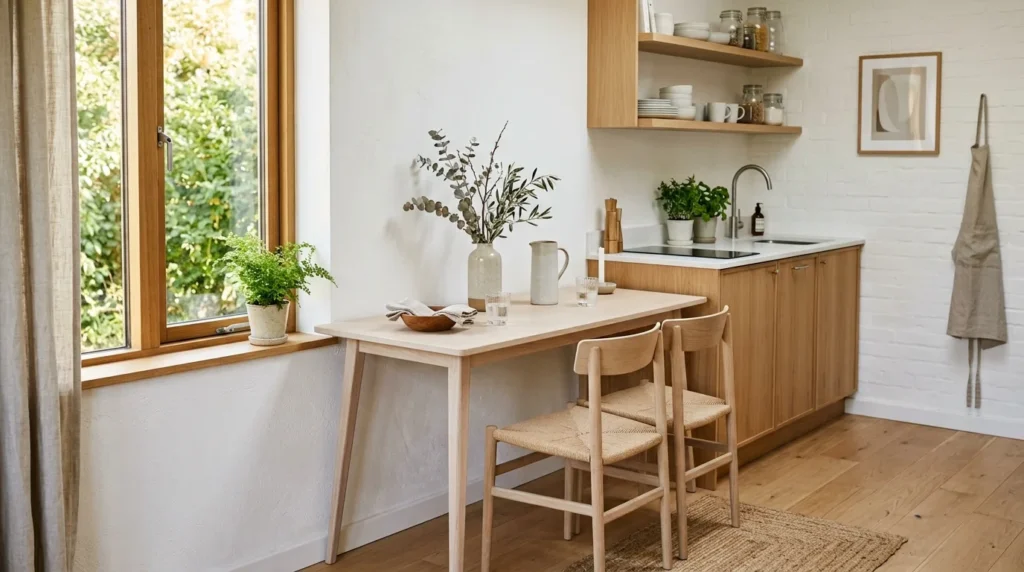
Start With the Walking Space, Not the Empty Corner
The biggest mistake with tiny kitchen furniture happens when people measure only the empty area where the table will sit. That approach ignores everything that happens around the table. A dining setup needs room for chairs, knees, cabinet doors, appliance doors, and people walking through the kitchen. A table that looks perfectly sized in an online photo may become a daily obstacle once it arrives in your home.
I now prefer to measure the entire section of the kitchen before looking seriously at furniture. I check the distance between the proposed table and the cabinets, refrigerator, oven, dishwasher, and main entrance. I also consider what happens when two people use the kitchen at the same time. Those measurements matter much more than simply finding the smallest table available.
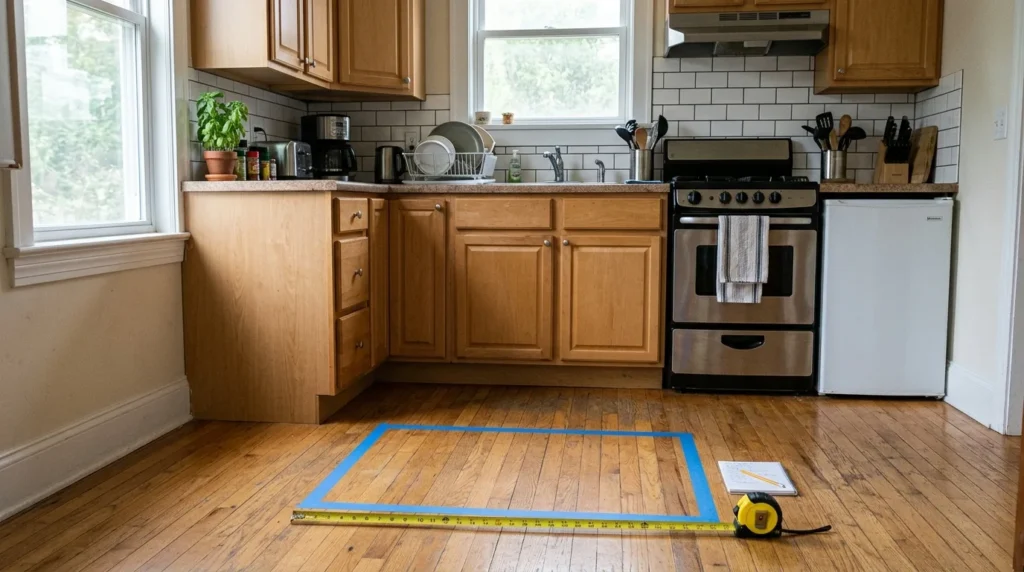
One easy way to test a potential layout involves painter’s tape. Mark the table dimensions directly on the floor and walk around the outline during your normal routine. Open the refrigerator, pull out a chair, and imagine carrying a plate through the kitchen. This simple test can reveal problems before you spend money.
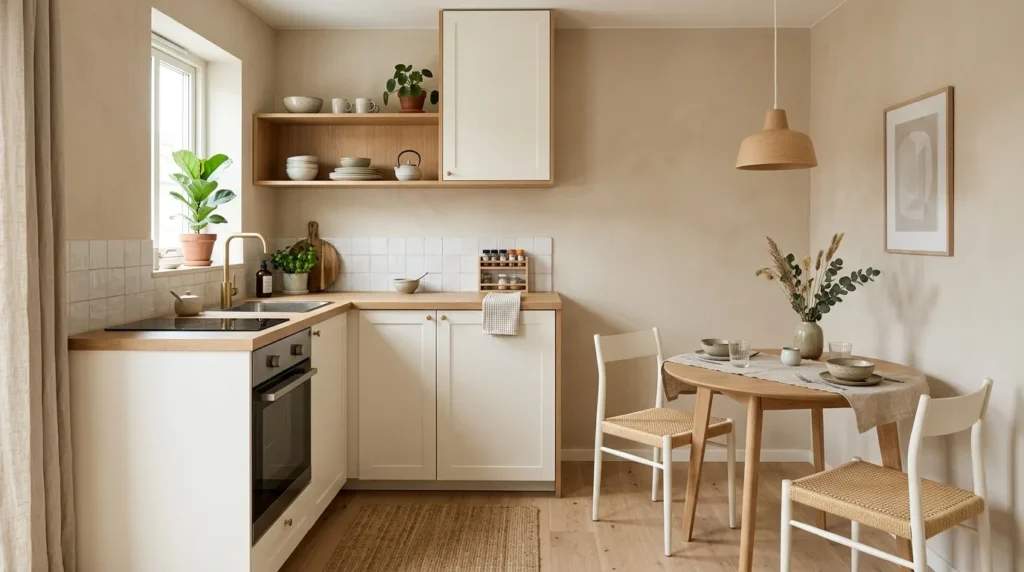
A Small Round Table Can Improve the Flow
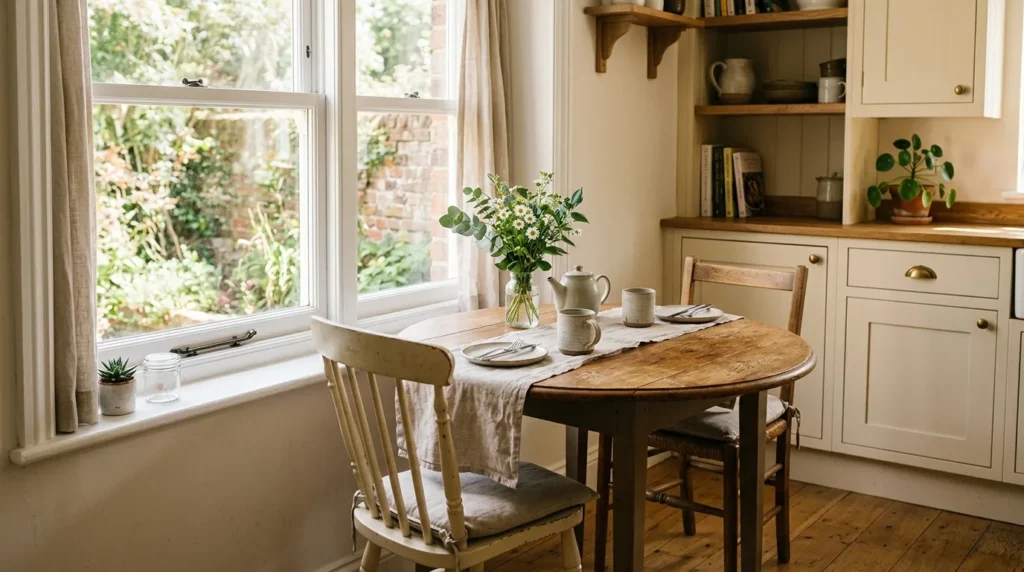
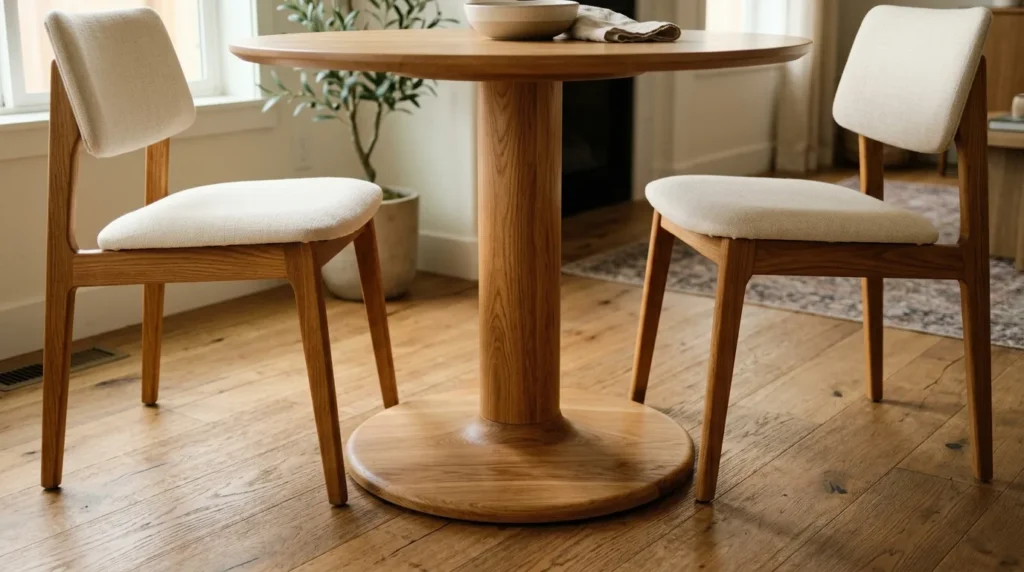
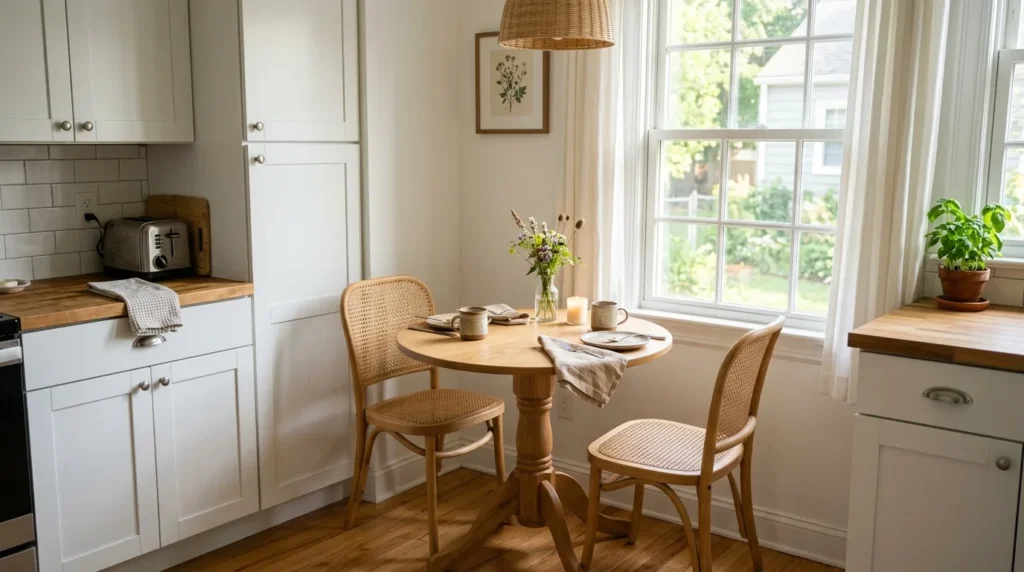
A round dining table often works well in tiny kitchens because it removes sharp corners from the walking path. When space feels tight, even one corner can become annoying if you have to squeeze around it several times a day. A round shape can make movement feel smoother while still providing enough space for everyday meals.
For a two-person household, a modest round table can create a comfortable eating area without taking over the kitchen. I especially like pedestal-style tables because the center base gives you more flexibility with seating. Traditional tables with four thick legs can limit where chairs fit, while a pedestal design leaves the edges more open.
However, round does not automatically mean space saving. A table with a large diameter can take up more usable floor area than a narrow rectangular design. Measure the full diameter and test the footprint before ordering. The best option should leave enough room to move around the table comfortably rather than filling every available inch.
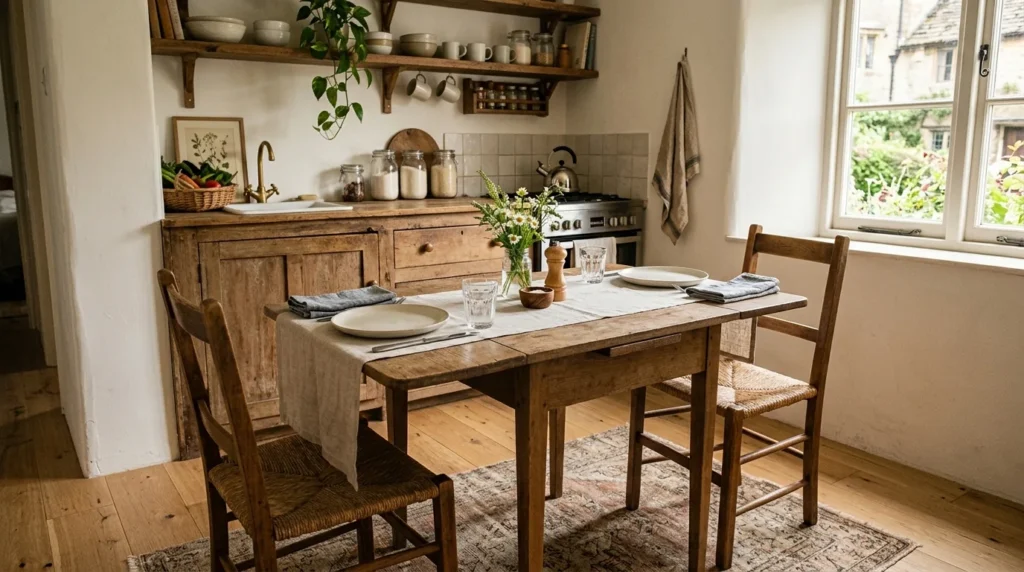
A Drop-Leaf Table Offers More Flexibility
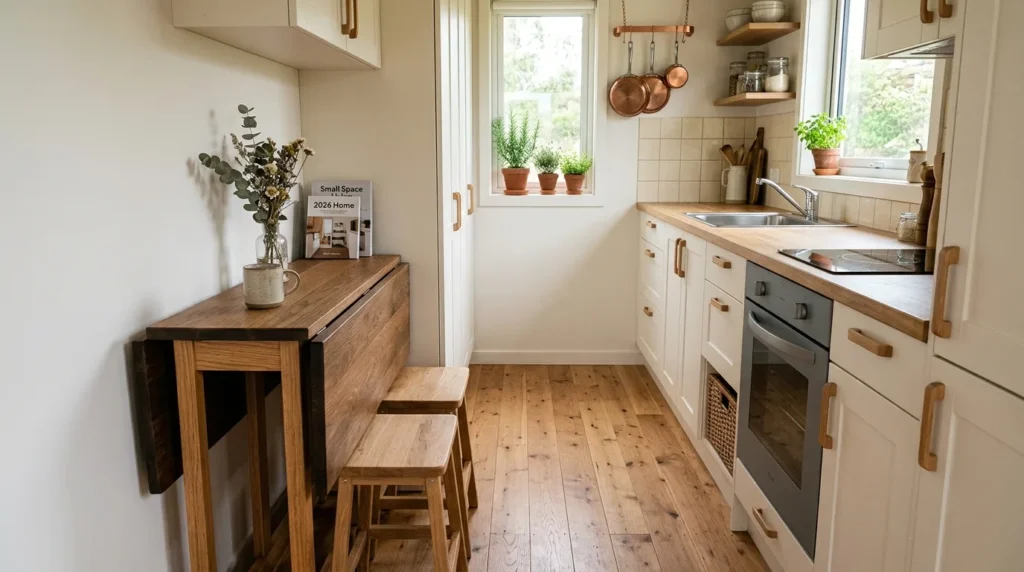
A drop-leaf table can be one of the smartest choices when your kitchen serves several purposes. You can keep the leaves folded down during busy parts of the day, open one side for breakfast, and expand the table when you need more space. That flexibility works particularly well in smaller homes where one room often needs to handle several activities.
A table like this can also provide extra preparation space while cooking. You can use it for a quick meal, then clear it and use the surface for another task. This kind of flexibility often makes more sense than choosing a permanently large table that takes up valuable floor space every day.
One mistake I would avoid involves checking only the table’s folded dimensions. A drop-leaf design may look wonderfully small in the product listing, but the fully open size can block cabinets or walkways. Check the measurements in every position before buying. You should also look at chair placement because a table may expand comfortably on one side while creating a problem on the other.
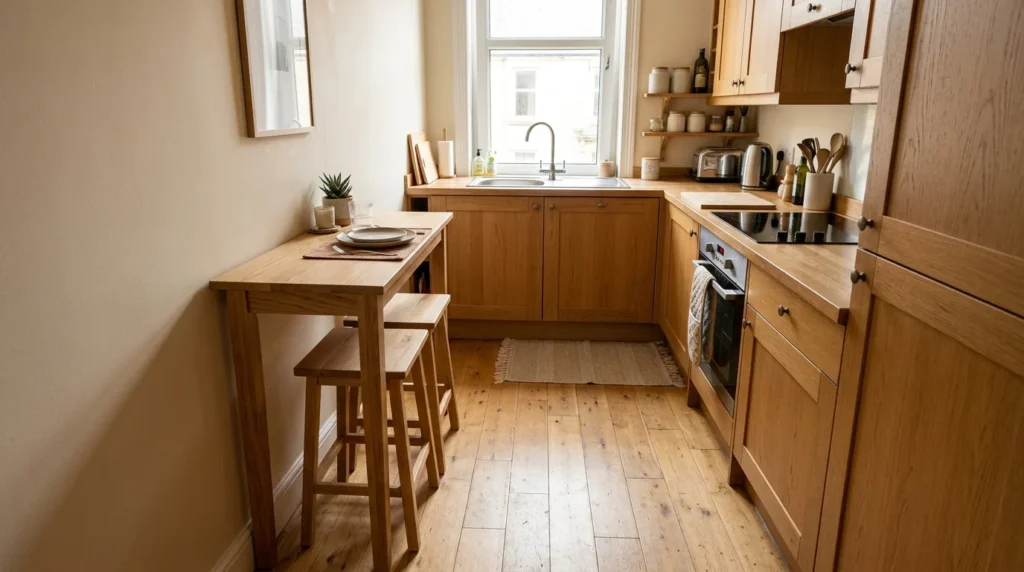
A Narrow Rectangular Table Works in Long Kitchens
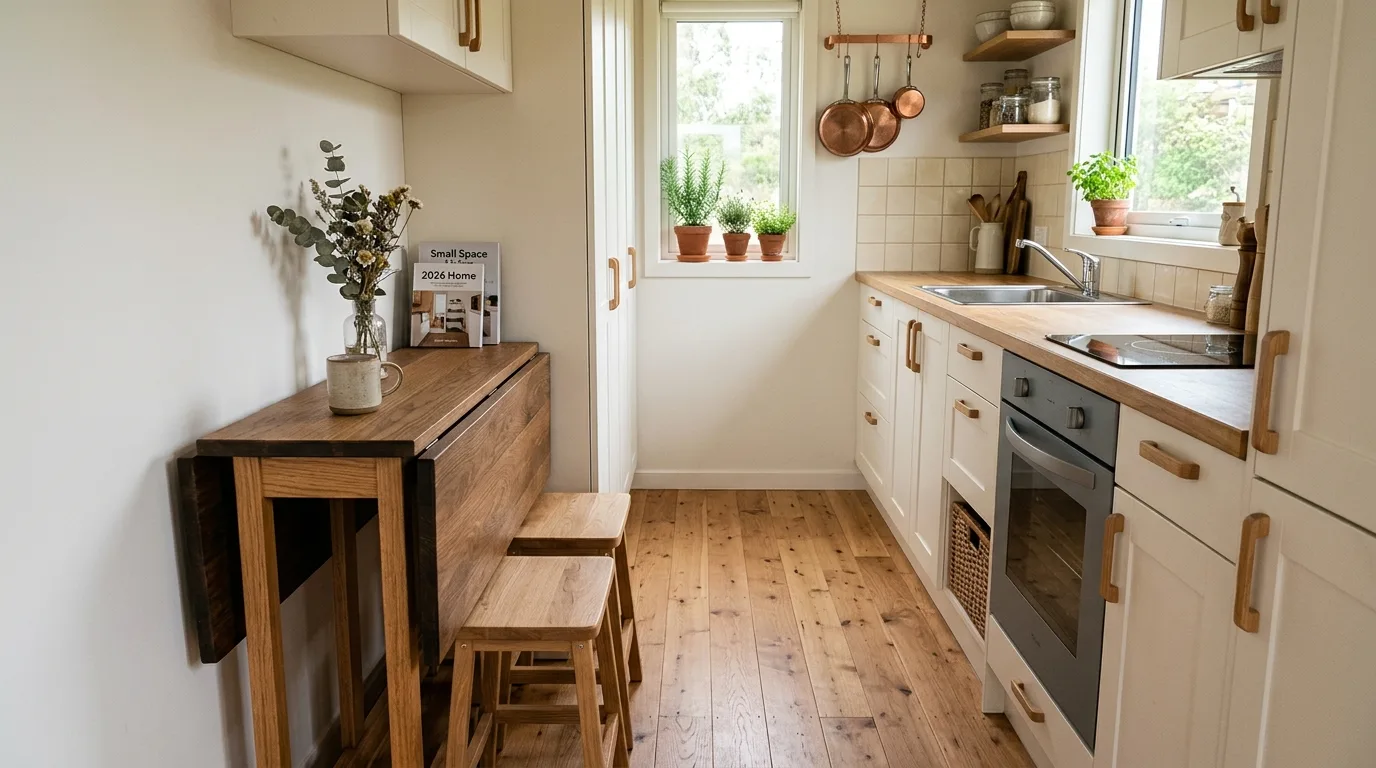
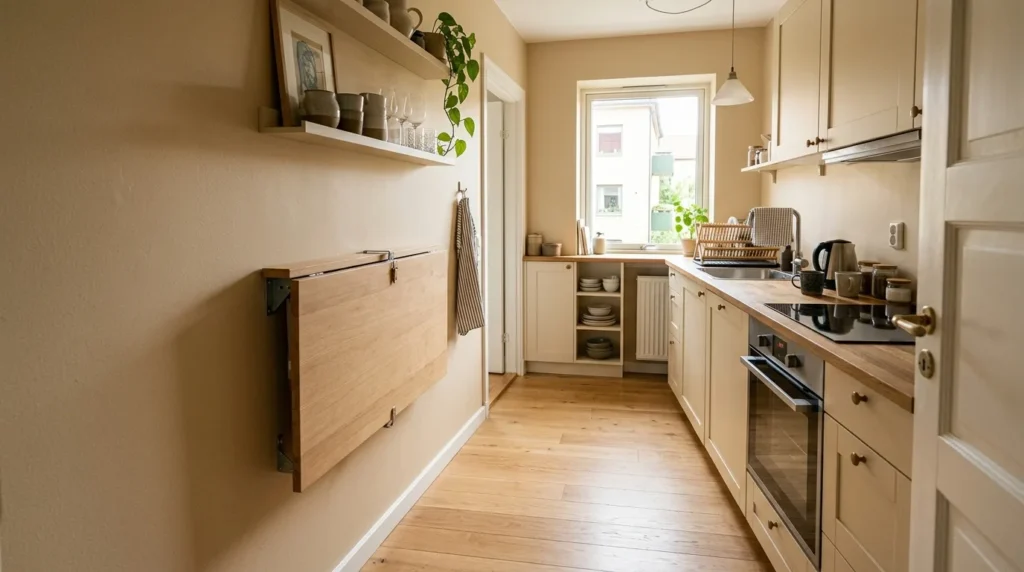
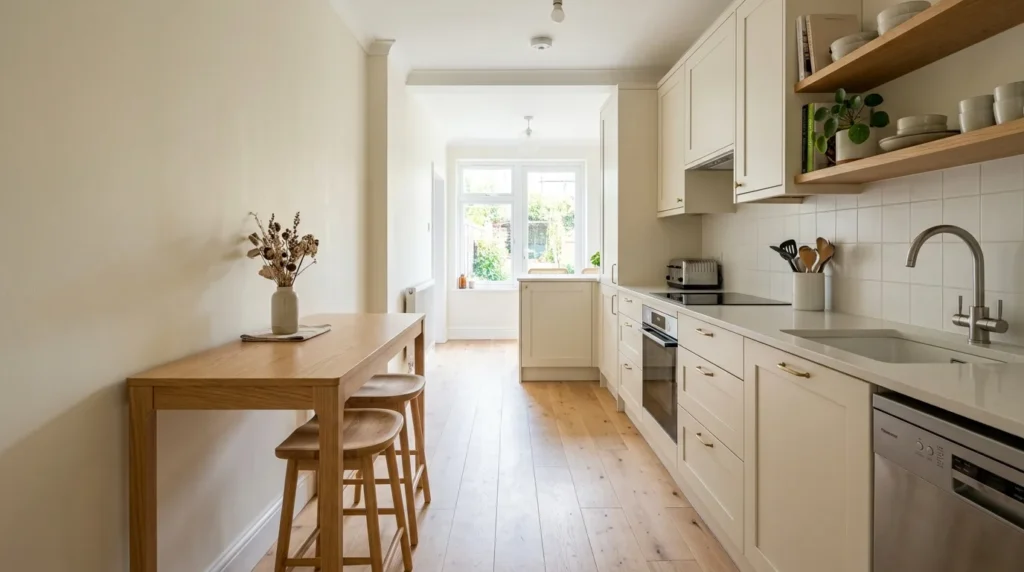
A long or galley style kitchen may benefit from a narrow rectangular table. Instead of placing furniture in the center of the room, position the table along a wall or near a window where it supports the layout without interrupting the main path. This setup can create a defined eating area while preserving more open floor space.
The right seating can make this idea work even better. Backless stools can slide completely underneath the tabletop when you finish eating, which helps keep the kitchen clear. A slim bench can also work along one side if it fits the available space and does not block another important area.
I would avoid choosing an oversized farmhouse style table simply because it looks attractive in a large showroom. Those tables often need more clearance than tiny kitchens can provide. A narrow design with simple lines usually works better because it supports the room instead of dominating it.
Consider a Wall Mounted Table for Very Limited Space
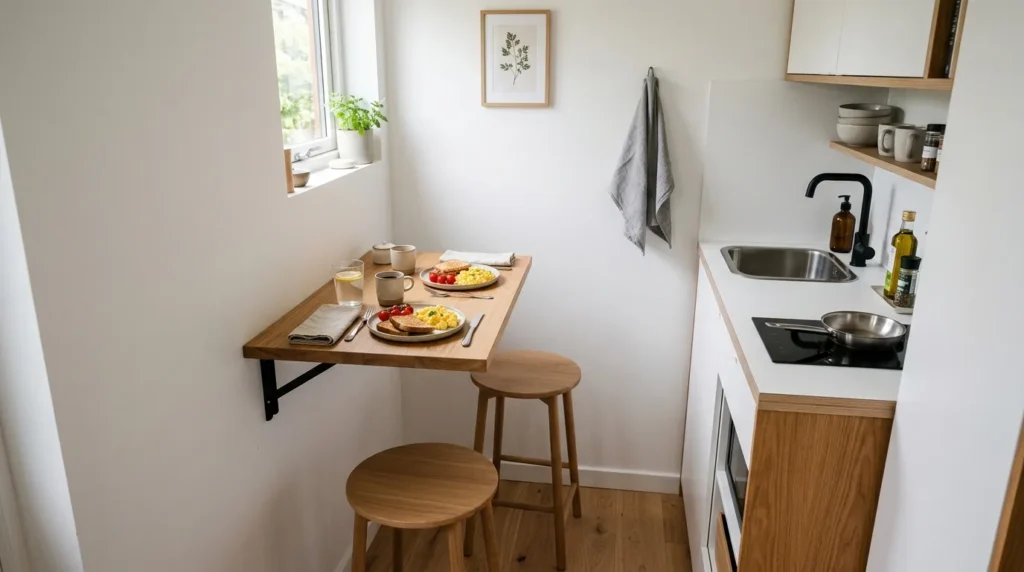
When a tiny kitchen has almost no free floor area, a wall mounted folding table may offer a practical alternative. You can open it for meals and fold it flat afterward, leaving the main walkway clear. Some designs can also serve as a compact desk or additional preparation surface.
This option requires more planning than a freestanding table. Renters should check their lease before drilling into walls, and homeowners should follow the manufacturer’s mounting instructions carefully. The wall and hardware need to support the table’s intended use, especially when you place plates, food, or other items on the surface.
I would not choose this option solely because it looks minimal. Comfort matters too. A wall-mounted table works best when it suits your daily routine and provides enough usable surface for the number of people who will regularly eat there.
Choose Seating That Does Not Take Over the Room
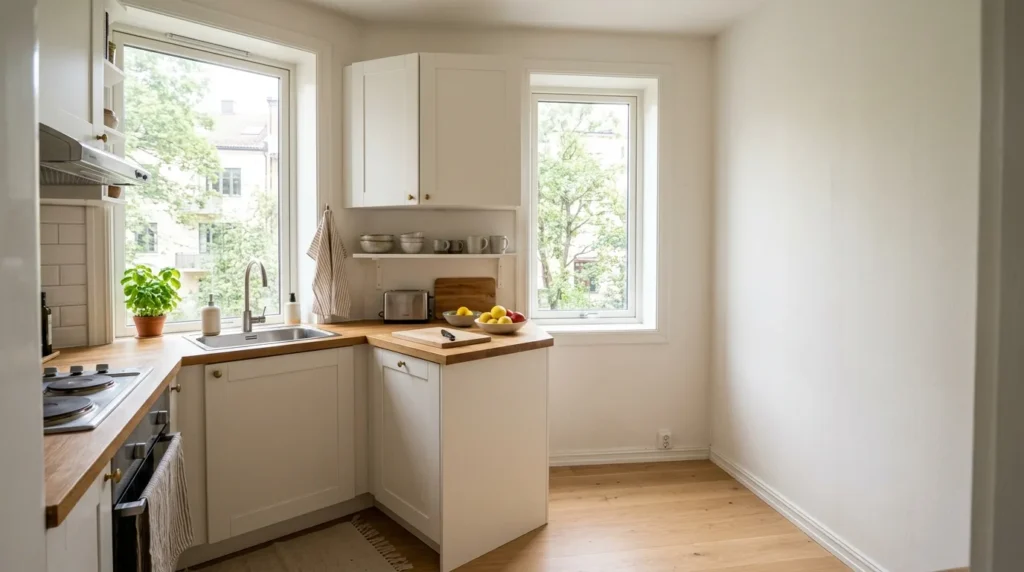
In many tiny kitchens, the chairs create more problems than the table. Large dining chairs with wide arms can block walkways and make a modest table feel much larger. When space is limited, seating needs the same careful attention as the tabletop.
Backless stools, slim open back chairs, and benches that slide underneath the table can all reduce the amount of visual and physical space the dining area uses. You also do not need to buy a complete matching set with four chairs if your household normally uses only two.
This was one of the biggest lessons I learned from small space decorating. It is easy to buy furniture for an ideal picture of how a room should look instead of how you actually live. A tiny kitchen may work much better with two everyday chairs and flexible extra seating for guests than with four large chairs permanently surrounding the table.
Use a Small Table Near Natural Light
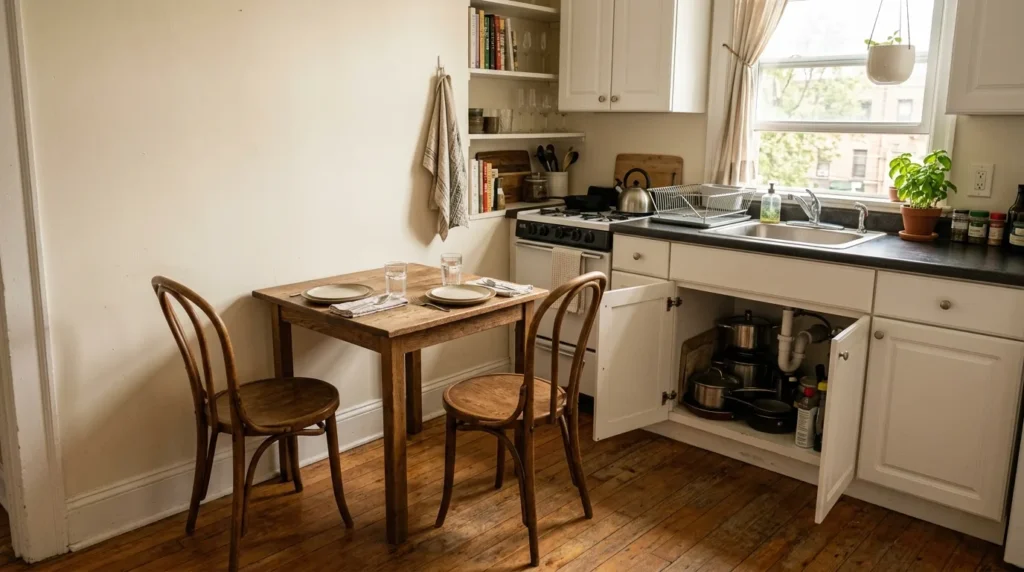
A table near a window can make a tiny kitchen feel more open and inviting. Natural light creates a sense of depth and can help define the dining area without requiring more furniture or decor. Even a simple table can look intentional when the placement takes advantage of the brightest part of the room.
In the Denver area, sunlight can become intense during different times of the day, so I also think about how direct light affects the table and surrounding materials. Delicate fabrics can fade over time, while some finishes may show wear more quickly in strong sunlight. Lightweight curtains can soften the light without making the window feel heavy.
Keep the area around the window simple. A small table and well chosen seating can create a useful dining nook without filling the wall with extra storage or bulky decorations.
Look for Furniture With Light Visual Weight
The physical dimensions of a table matter, but visual weight also affects how crowded a tiny kitchen feels. A heavy table with a thick base, oversized legs, and dark finishes can dominate a limited room even when the measurements technically fit.
Tables with slimmer legs and visible space underneath often feel lighter. Natural wood finishes can add warmth without creating the visual heaviness of a large dark furniture piece. A warm oak or light wood tone also fits naturally with modern Scandi-Japandi interiors.
I do not think everything in a tiny kitchen needs to be white. The goal is to create visual breathing room. A table with simple lines and an open base can achieve that while still adding character.
Use Built In Storage Carefully
A dining table with storage sounds useful in a tiny kitchen, especially when every piece of furniture needs to work harder. Some tables include drawers or lower shelves for placemats, napkins, and other dining essentials. That extra function can help reduce clutter elsewhere.
However, storage should not come at the cost of comfort. A large base can reduce legroom and prevent chairs from sliding underneath properly. Before buying a storage table, consider where your knees will go and how the seating will work during an actual meal.
A shallow drawer or open lower shelf can provide enough storage for everyday items without turning the table into a bulky cabinet. In small spaces, the simplest multi purpose furniture often works best.
Create a Simple Dining Nook Without Major Construction
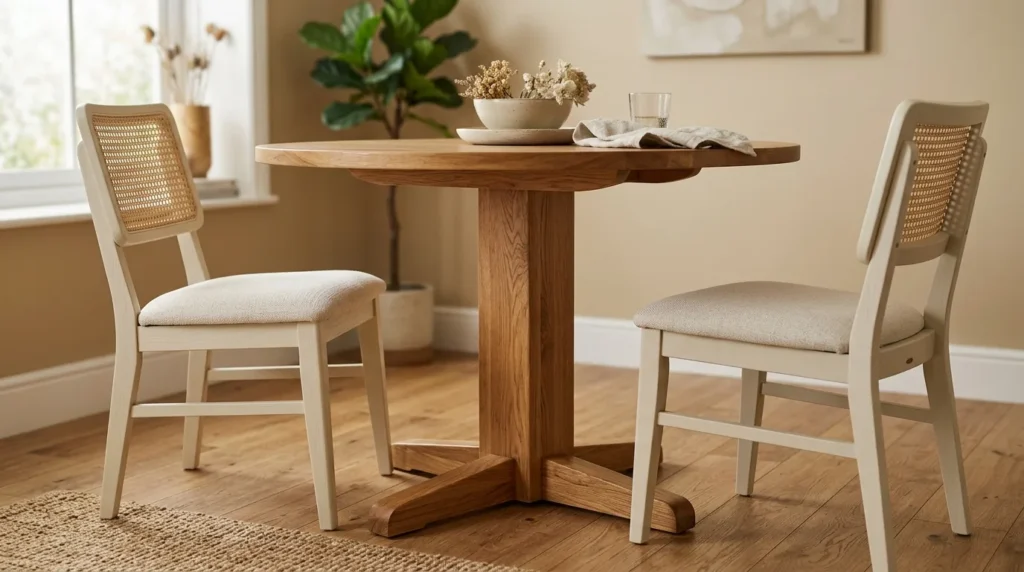
You do not need a custom banquette or expensive built in furniture to make a tiny kitchen dining area feel intentional. A small table placed near a wall with a slim freestanding bench on one side can create a practical dining nook with very little construction.
I would start by getting the table and seating arrangement right before adding decorative details. Once the layout works, add one washable cushion or a small piece of wall decor if the area needs more personality. This approach prevents the common mistake of decorating a space before confirming that the furniture actually functions well.
One styling attempt taught me how quickly a few inches can change the comfort of a tiny room. Thick seat cushions looked great, but they pushed the seating position forward and reduced the already limited space around the table. Switching to thinner cushions made the setup more comfortable without changing the overall look.
That experience reminded me to think about depth, not just width and length. Every dimension matters in a small kitchen.
Let One Table Handle More Than One Job
One of the most practical small dining table ideas for tiny kitchens involves choosing a table that can support more than meals. In a smaller home, the dining surface might also become a work-from-home desk, a place for paperwork, extra preparation space, or a serving area when guests visit.
A flexible table can make the entire home work better. The key is choosing a finish that cleans easily and a design that does not require you to move heavy furniture every time you change activities.
I also prefer keeping a small basket or storage container nearby for chargers, notebooks, and other items that tend to collect on the table. When dinner is ready, you can clear the surface quickly instead of moving clutter from one corner to another.
Avoid the Mistakes That Make Tiny Kitchens Feel Smaller
The first mistake I would avoid is buying a table before testing the complete footprint. A table can fit inside an empty space while the chairs make the surrounding kitchen unusable. Always consider what happens when someone actually sits down.
The second mistake involves adding more seating than the room needs. Four matching chairs may look balanced in a product photo, but they can block the refrigerator or create a narrow passage in a tiny kitchen. Buy for your normal daily routine rather than designing the entire room around occasional guests.
Another common mistake is choosing style over function. A beautiful table becomes frustrating when you have to move it every time you open an appliance or access a cabinet. The best furniture should make your daily routine easier.
Choose the Right Table for Your Kitchen Shape
A small square kitchen may work best with a round pedestal table because the curved shape improves movement around the seating area. A long, narrow kitchen may benefit from a slim rectangular table placed along the wall, especially when stools can tuck underneath.
For a flexible multi-use kitchen, a drop-leaf table can provide extra surface area only when you need it. For extremely limited floor space, a properly installed wall-mounted table may create an eating area without permanently occupying the center of the room.
There is no single best choice for every tiny kitchen. The right table depends on your layout, your household, and the activities that happen there every day.
Keep the Dining Area Simple and Intentional
A tiny kitchen can quickly feel cluttered when the dining table becomes a storage surface for mail, bags, chargers, and random household items. Keeping the tabletop mostly clear can make the entire room feel more organized.
You do not need a large centerpiece or several decorative objects. One simple tray, a small fruit bowl, or a useful everyday item can add personality without creating visual clutter. The same approach works on nearby walls. Choose one intentional detail rather than trying to fill every empty space.
A small dining area should feel like part of the kitchen, not another obstacle inside it. When the furniture, lighting, and surrounding decor work together, even a modest eating area can feel comfortable and well planned.
Make Your Tiny Kitchen Work Better in 2026
The best small dining table ideas for tiny kitchens do not focus on squeezing the largest possible table into the smallest possible room. They focus on choosing furniture that respects how people move, cook, eat, and live.
Start by measuring the complete area, including chair clearance and appliance doors. Then choose a table shape that suits the room. A round pedestal table can improve flow, a drop-leaf design can adapt to changing needs, and a narrow rectangular table can work beautifully along a wall.
After living in a 1,050-square-foot townhouse for three years, I have learned that flexibility usually matters more than having more furniture. A dining table should earn its place by supporting your routine without making the kitchen harder to use.
Before you buy, mark the table’s footprint on the floor and test your normal kitchen routine around it. Choose the setup that gives you a comfortable place to eat while keeping the rest of the room easy to use. For more realistic layouts, budget-friendly decorating ideas, and smart solutions for limited homes, explore more guides on CompactDecorHub.