The hallway mirror in our townhouse outside Denver was one of those spaces I ignored for almost a year. It measured barely four feet wide, had builder grade beige walls, and collected shoes, Amazon boxes, and cat toys more than anything decorative. Every guest walked through it, yet it looked like an afterthought.
After moving into our 1,050 square foot townhouse in 2022, I slowly realized that hallways mirror matter much more in smaller homes. They’re not just paths between rooms. In a tight layout, every wall has to work harder.
Our upstairs hallway receives strong Colorado sunlight for about an hour every morning. That light bounced awkwardly off the beige paint and made the entire area look darker by noon. Adding mirrors became one of the easiest updates we made.
Some ideas worked beautifully. Others didn’t. One mirror arrived from Wayfair nearly four inches wider than the wall space we measured, and another inexpensive frame warped because our dry climate pulled moisture from the wood.
If you’re looking for hallway mirror ideas that feel current for 2026 and still work in modest homes, these are the approaches that made the biggest difference in our townhouse.
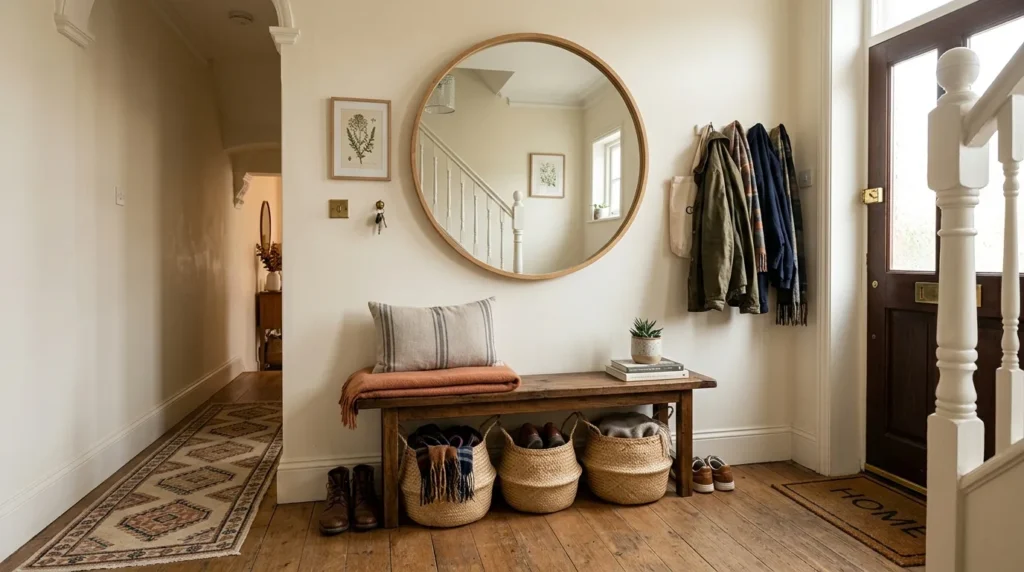
1. Install One Large Vertical Mirror at the End of the Hall
The single biggest improvement came from placing a tall hallway mirror at the end of our upstairs hallway.
Our hall measures roughly 13 feet long and only 42 inches wide. A 68 inch hallway mirror from Target immediately made the space appear longer.
Morning sunlight reflects down the entire hall, which means we no longer need the overhead light until evening.
A black metal frame works especially well with modern and Japandi inspired homes. Wood frames add warmth if your walls are white or soft beige.
Budget options:
- Target mirrors: $120 180
- options: $79 140
- West Elm mirrors: $299 450
The first hallway mirror we purchased had a thick decorative frame that projected nearly three inches from the wall. In a narrow hallway, that felt surprisingly bulky. Returning it taught me that slimmer frames usually work better.
If West Elm isn’t in budget, offers several simple designs that create a similar look.
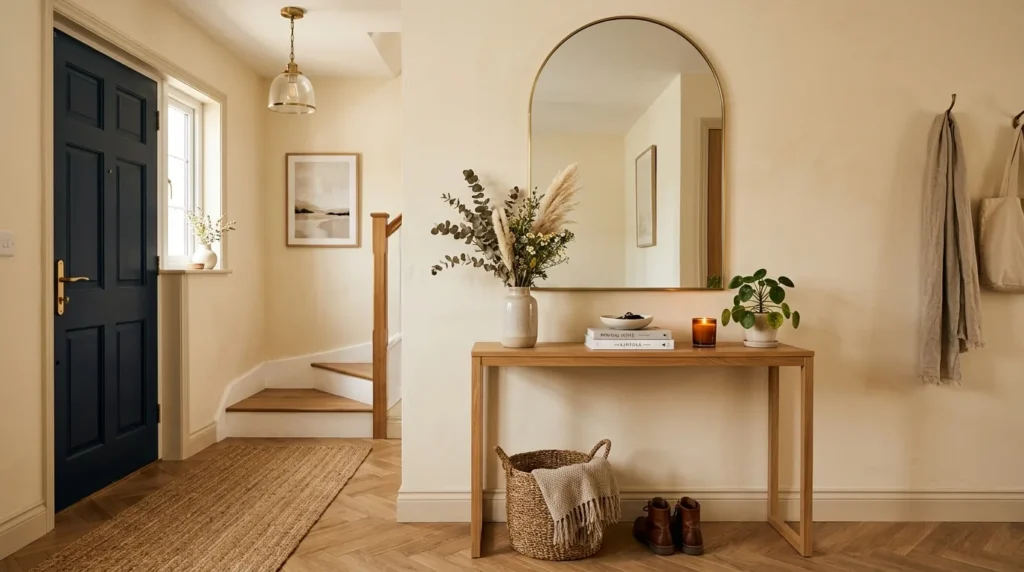
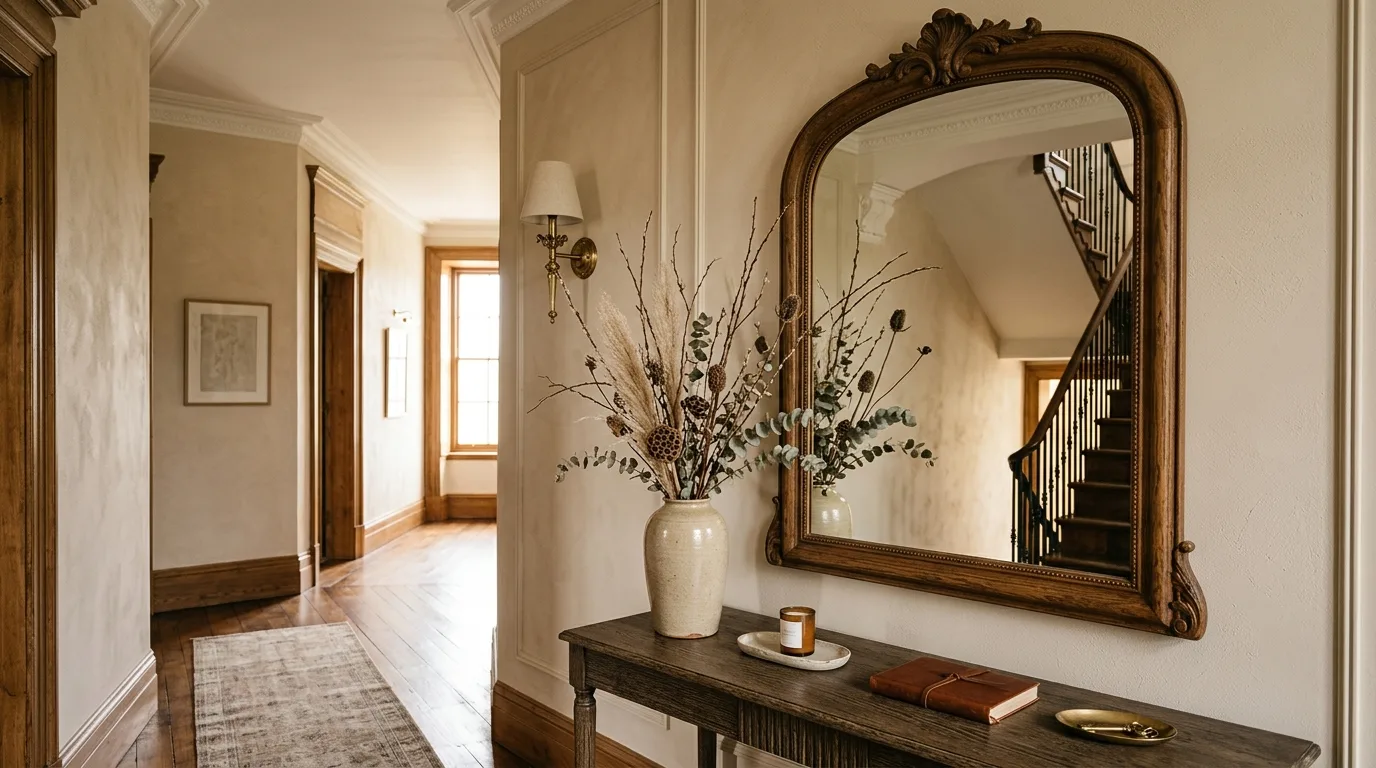
2. Try an Arched Mirror for Softer Lines
Modern homes contain many straight edges. Doors, trim, cabinets, and railings all create hard lines.
An arched mirror helps break that pattern of hallway mirror .
Last fall, I added a 30 inch arched mirror above a small entry console near our front door. The curve softened the early 2000s builder details that came with the townhouse.
Our rescue cat Miso immediately decided the console belonged to her, which meant removing decorative candles and moving breakable objects elsewhere.
Arched mirrors work particularly well when paired with:
- Light oak furniture
- Warm white paint colors
- Neutral runners
- Soft brass lighting
Expect to spend:
- HomeGoods: $60 120
- Target: $90 180
- CB2: $250 500
Colorado’s intense sunlight can fade wood finishes over time, especially near windows. Rotating decorative objects every few months helps reduce uneven fading.
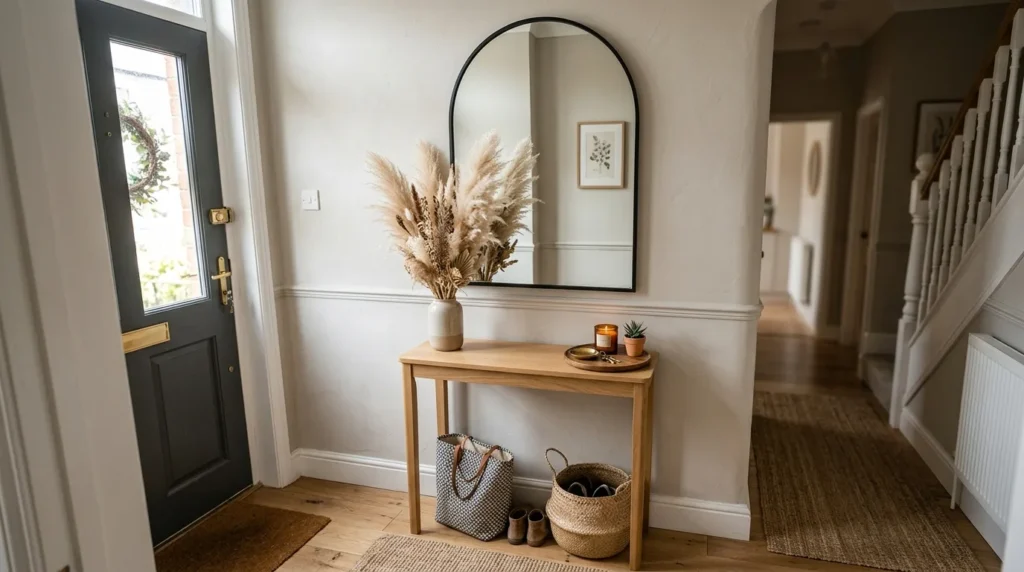
3. Create a Gallery Wall with Small Mirrors
One long mirror isn’t the only solution for hallway mirror .
A collection of smaller mirrors can add personality without overwhelming a narrow hallway.
I tried this in our upstairs hallway after finding several vintage mirrors at our local Goodwill. The entire project cost around $48.
The DIY Project That Didn’t Go Perfectly
The first attempt was a disaster of hallway mirror.
I measured everything on paper, drilled two holes, and immediately realized the arrangement looked crooked because I forgot to account for the frame sizes.
That mistake led to a second Home Depot trip for wall patch compound and extra anchors.
Eventually, I traced each mirror onto kraft paper, taped the templates to the wall, and adjusted the spacing before drilling.
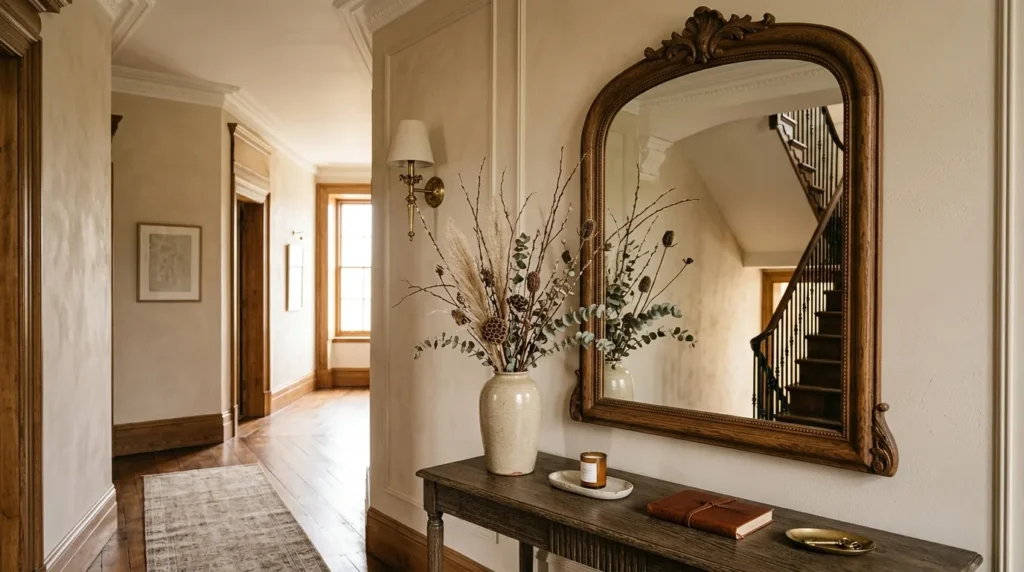
The finished arrangement includes:
- One round mirror
- Two rectangular mirrors
- One vintage brass frame
- One small oval mirror
The imperfect mix actually feels more personal than buying a matching set.
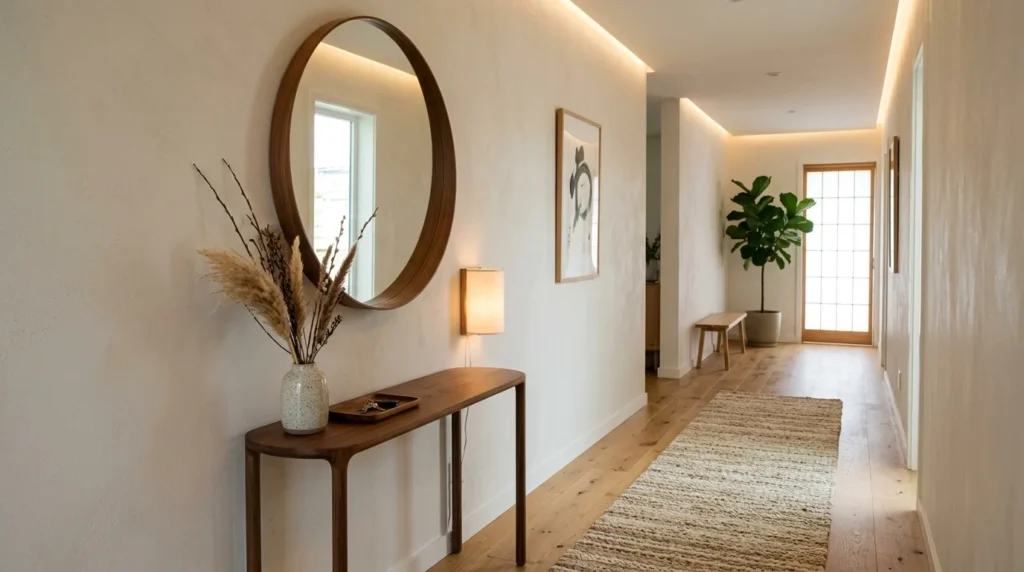
4. Add a Mirror Above a Slim Console Table
Our entry area doesn’t have room for a traditional foyer.
The front door opens directly into a hallway, so every inch matters.
A narrow console table measuring 10 to 12 inches deep can provide storage without blocking traffic.
We found a wood console through Facebook Marketplace for $85 and paired it with a round mirror above it.
The setup holds:
- Mail tray
- Keys
- Small lamp
- Cat treats
- Winter gloves
During snowy Colorado winters, this area also collects hats and scarves.
One lesson I learned quickly: avoid glass-top tables if you have pets. Miso once launched herself onto the table at 3 a.m., sending everything onto the floor.
A solid wood or MDF surface feels much more practical.

5. Use Round Mirrors in Narrow Hallways
Round mirrors create visual contrast in hallways filled with rectangular doors and straight walls.
A 28 inch hallway mirror above a bench or console usually works well.
Our downstairs hallway originally felt very boxy because every surface was square or rectangular.
Adding a circular mirror changed the balance immediately.
Popular price ranges:
- Amazon: $40 90
- Target: $60 140
- Pottery Barn: $180 350
Large round mirrors also reflect more light than many people expect.
Because Colorado receives sunshine most days of the year, even a small amount of reflected daylight makes a noticeable difference.
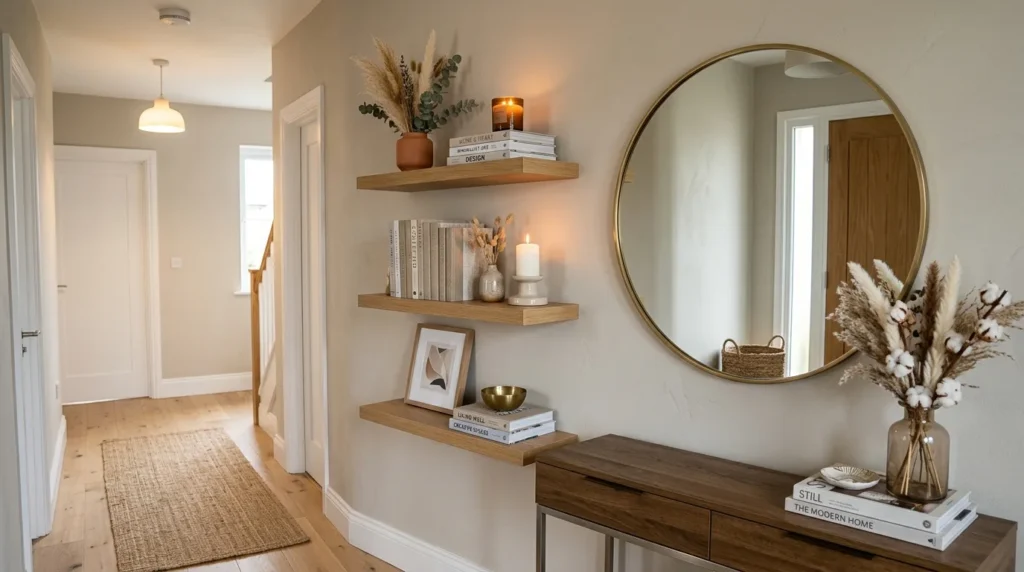
6. Pair Mirrors with Wall Sconces
Lighting matters just as much as the mirror itself.
The overhead fixture in our hallway mirror was builder grade brushed nickel and produced harsh 5000K light. Everything looked cold.
Replacing the bulbs with warmer 2700K LEDs changed the entire mood.
Adding wall sconces beside a mirror creates layered lighting that works especially well during winter.
If wiring new fixtures isn’t practical, plug-in sconces are widely available.
Costs typically run:
- Plug in sconces: $40 80 each
- Hardwired fixtures: $90 250 each
- Electrician installation: varies by area
If you’re installing new electrical components, consult a licensed electrician. Hallways are high traffic areas, and safety should always come first .
7. Lean a Full Length Mirror Against the Wall
Not every hallway allows wall mounting. If you’re renting or simply don’t want to drill into the walls, a leaning mirror can work surprisingly well.
A full-length mirror between 65 and 72 inches tall creates height and reflects natural light across the hallway. We tested this idea in our upstairs hallway for several months before finally mounting the mirror permanently.
The only downside was Miso occasionally rubbing against the frame at night, which convinced us to secure it to the wall.
Good options include:
- Target: $120 220
- Wayfair: $140 300
For homes with pets or children, always anchor leaning mirrors properly to prevent tipping.
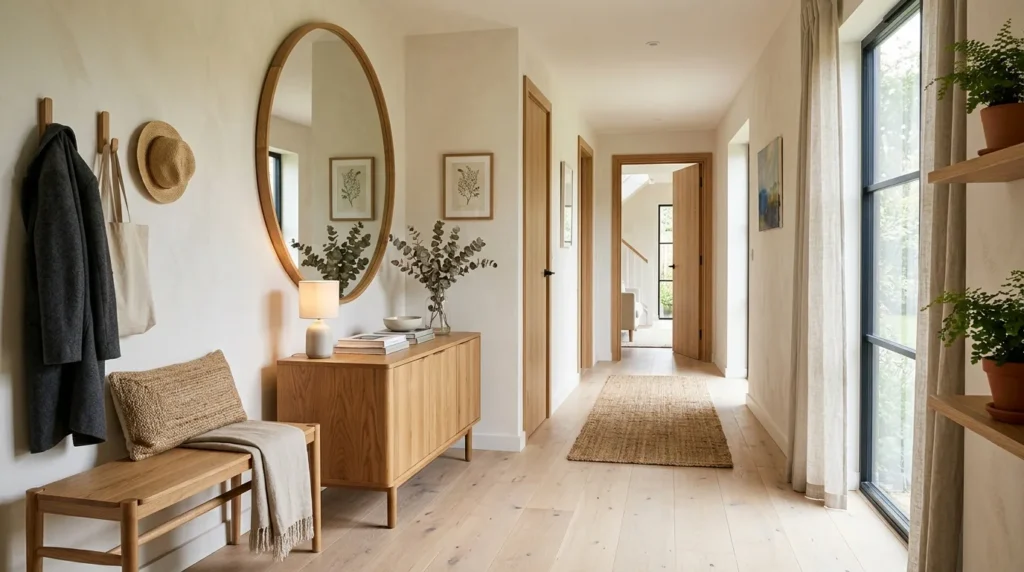
8. Use Wood Framed Mirrors for Warmth
Builder grade hallways often feel cold because of white trim, beige walls, and basic flooring. Natural wood frames add warmth without making the area feel crowded.
In our townhouse, oak finishes help balance the black fixtures and neutral paint colors throughout the house.
Light oak, walnut, and ash frames work particularly well with modern and Japandi styles. Because Colorado’s dry air can cause wood to crack over time, applying furniture oil once or twice a year helps protect the finish.
Budget choices:
- HomeGoods: $50 100
- World Market: $90 180
- West Elm: $250 450
If premium options aren’t in budget, peel and stick wood trim can upgrade inexpensive mirrors for under $30.
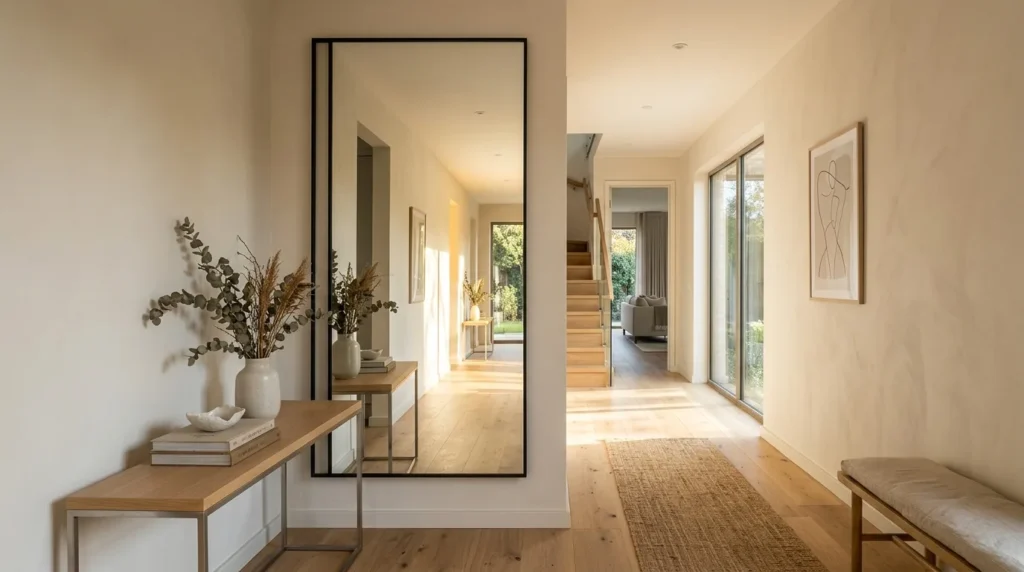
9. Add a Mirror Above a Hallway Bench
A small bench paired with a mirror creates a practical stopping point in the hallway mirror .
Our entry bench measures only 36 inches wide but provides a place to put on shoes, set down bags, and store baskets underneath.
Above it hangs a simple round mirror that reflects light from the nearby window.
This arrangement works especially well for:
- Townhouses
- Apartments
- Narrow entry halls
- Homes without mudrooms
Storage baskets from Target or IKEA usually cost $15 35 each and help hide everyday clutter.
During winter, our bench quickly fills with gloves, scarves, and boots, so having both seating and a mirror in one area keeps the entry organized.
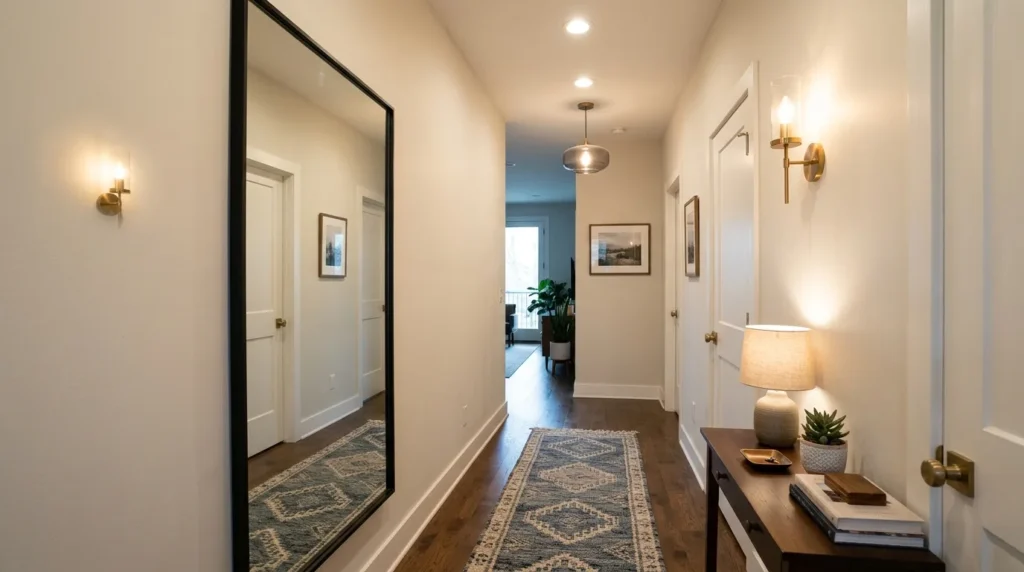
10. Install Multiple Mirrors Along a Long Hallway
Very long hallways sometimes feel like tunnels. Instead of one large hallway mirror , placing two or three smaller mirrors along the wall can break up the length.
A friend with a narrow townhouse used three identical black framed mirrors spaced evenly down the hallway, and the effect looked much more balanced than one oversized piece.
Spacing matters.
Leaving 18 to 24 inches between mirrors usually creates enough breathing room.
This approach also allows you to:
- Mix artwork between mirrors
- Add small wall sconces
- Create visual rhythm
- Reflect light from multiple angles
Matching mirrors from Target or Amazon often cost $50 100 each, making this idea affordable.
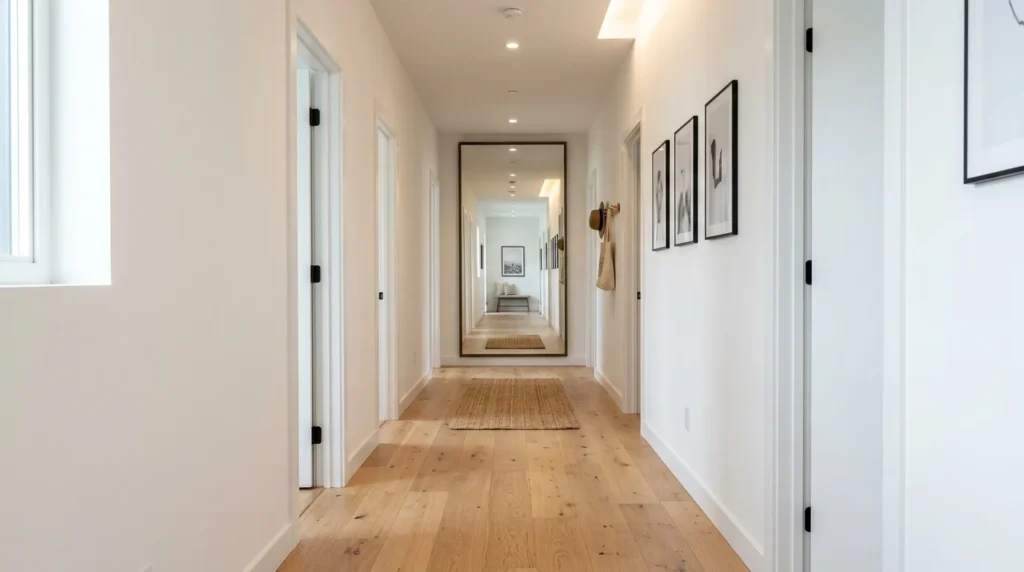
11. Combine a Mirror with Floating Shelves
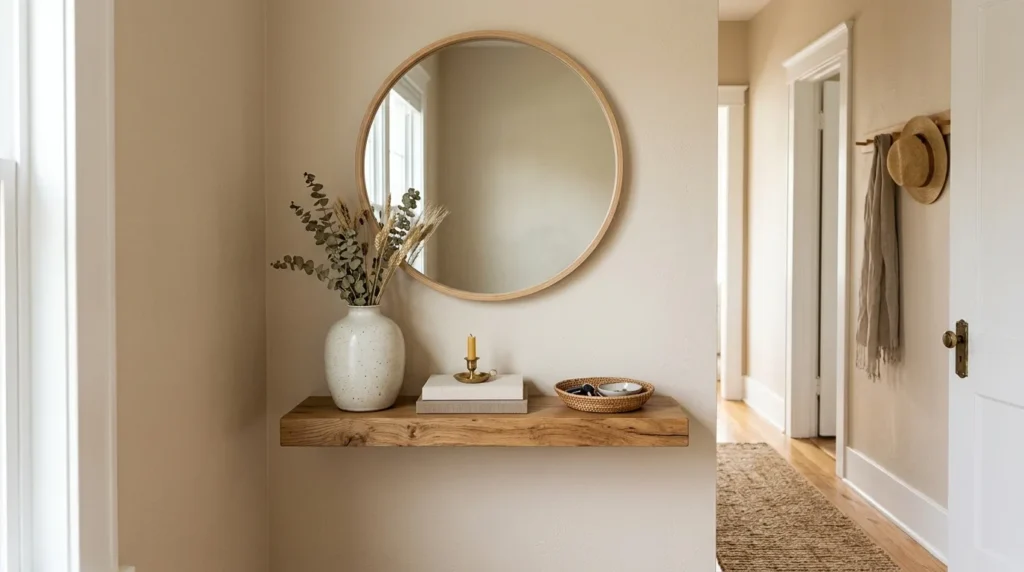
One of the most useful hallway mirror ideas for smaller homes is pairing a mirror with floating shelves.
We added a narrow oak shelf beneath a round mirror near our front door. The shelf holds keys, sunglasses, and a small ceramic bowl.
The first shelf installation did not go smoothly. I cut one bracket slightly short, which meant the shelf tilted noticeably. That mistake required another trip to Home Depot and a new bracket.
After correcting the measurements, the shelf became one of the most practical updates in the entire house.
A setup like this usually costs:
- Floating shelf: $25 60
- Round mirror: $60 140
- Hardware: $10 20
For renters, adhesive shelves and lightweight mirrors can provide a similar look without permanent damage.
These five additional hallway mirror ideas work especially well in modest homes where every wall needs to serve both a decorative and practical purpose.
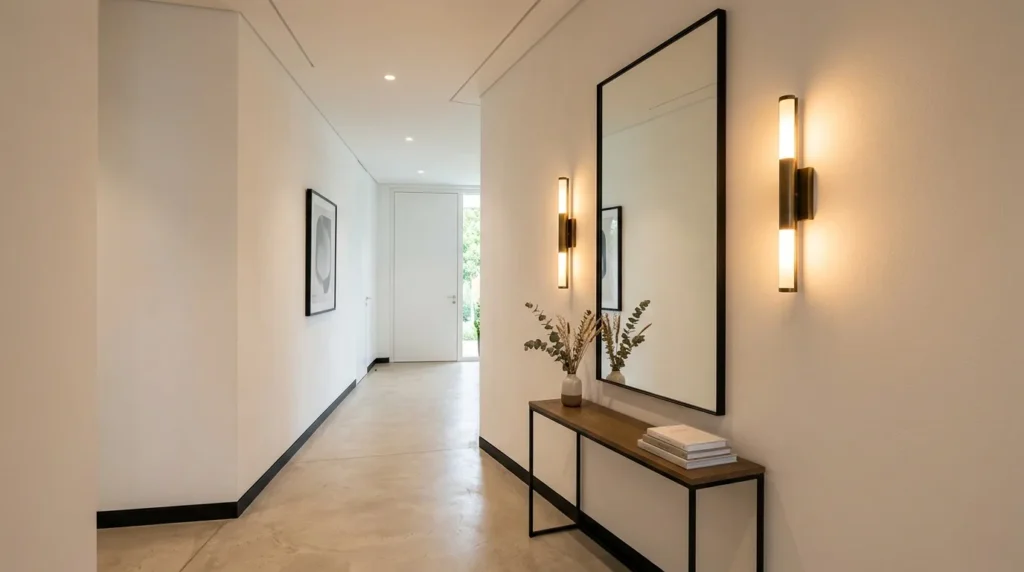
What I’d Do Differently
After nearly three years of decorating our 1,050 square foot townhouse, there are several things I would change if I started over.
First, I would’ve measured every hallway mirror wall twice before ordering anything online. One hallway mirror arrived from Wayfair that looked perfect on the website, but it extended several inches into the walkway once installed. In a narrow hallway, even a small difference can make the space feel crowded.
Another mistake was buying inexpensive mirrors with thin plastic frames. Colorado’s dry climate can be hard on certain materials, and one frame began separating at the corners after only a year. Spending a little more on solid wood or metal frames has worked much better for us.
I also followed a trend of placing too many decorative objects around our hallway mirrors. Small vases, candles, and framed prints looked nice in photos, but they quickly collected dust and made the hallway feel busy. In a modest home, fewer pieces usually create a calmer look.
Lighting was another lesson. The bright daylight bulbs we originally installed made the hallway mirror feel cold and harsh, especially during winter evenings. Switching to warm 2700K LED bulbs completely changed the atmosphere and made the mirrors reflect softer light.
Which hallway mirror idea would you try first? Leave a comment below and share your favorite style. For more small home decorating ideas, explore other rooms on CompactDecorHub.